Orazio Borgianni
Orazio Borgianni (c. 1574-1616) stands as a pivotal transitional figure in Italian art, operating expertly at the nexus between sophisticated late Mannerism and the dramatic visual language of the emerging Baroque period. Although his recorded activity spanned a relatively short period, primarily from 1609 to 1615, his influence was disproportionately significant, driven by his dual mastery of painting and etching.
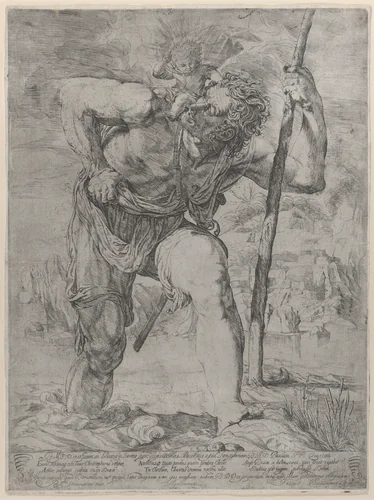
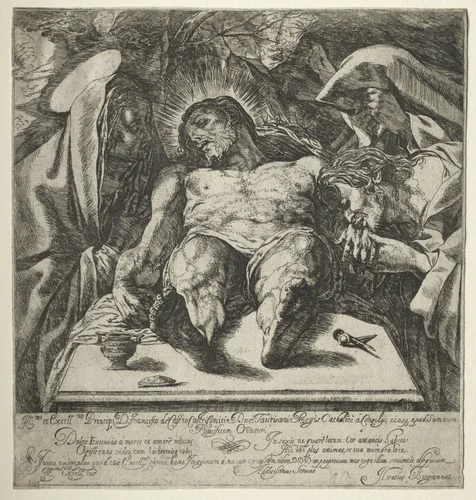
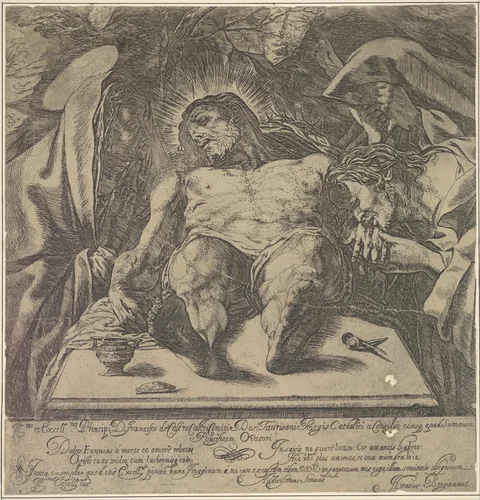
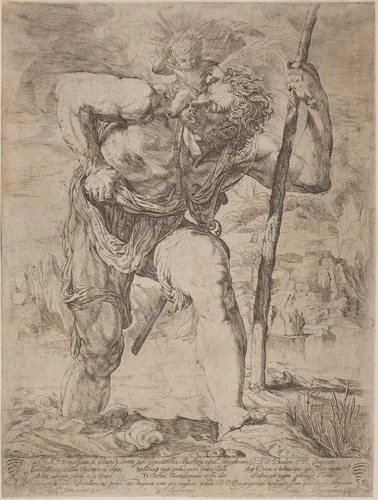
Born in Rome, Borgianni’s work possessed an earthy realism and intensity of expression that aligned him stylistically with revolutionary contemporary masters. He was particularly celebrated for his proficiency as a printmaker, utilizing the etching medium not merely for reproduction but as a vehicle for complex, original compositions. Works such as The Lamentation and Saint Christopher with the Christ Child on his shoulders reveal an acute sensitivity to light and deep shadow, demonstrating a technical finesse that cemented his reputation among print cognoscenti. These large-format etchings were crucial in disseminating his stylistic innovations across Europe.
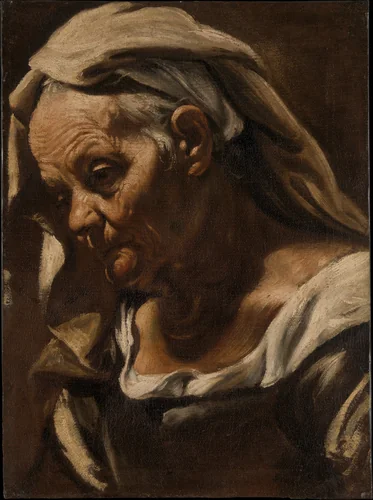
His formal output includes important works across media, ranging from the singular recorded oil painting, Lamentation over the body of Christ, to powerful character studies like Head of an Old Woman. Borgianni’s commitment to emotional honesty and structural clarity provided an important counterpoint to the more stylized trends preceding him. His familial connection to the Roman art world, underscored by the fact that he was the stepbrother of the notable sculptor and architect Giulio Lasso, suggests a profound embeddedness in the city's complex visual culture. While Lasso defined space in stone and marble, Borgianni skillfully manipulated it through ink and oil, often achieving a sculptural monumentality in his printed subjects.
The enduring interest in his distinctive style ensures that Orazio Borgianni prints and paintings are mainstays in global institutional holdings, notably at the National Gallery of Art, the Metropolitan Museum of Art, and the Cleveland Museum of Art. Because of their historical significance and early creation, many of these museum-quality prints have passed into the public domain, making high-quality impressions available as downloadable artwork for scholars and enthusiasts worldwide. Borgianni’s concise but brilliant career thus represents an essential step toward the full maturity of the Roman Baroque.
Source: Wikipedia · CC BY-SA 4.0