Okumura Toshinobu
Okumura Toshinobu occupies a distinctive, if brief, position within the chronology of Japanese ukiyo-e. Active primarily between 1713 and 1720, his principal significance stems from his documented relationship as the only known pupil of Okumura Masanobu, a key figure in the shift toward large-scale, popular woodblock printmaking. Toshinobu’s short output forms a crucial bridge, illustrating the direct transmission of technique and aesthetic concerns at the beginning of the eighteenth century.
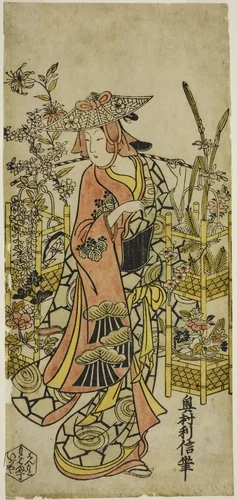
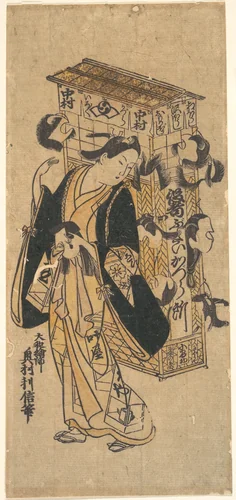
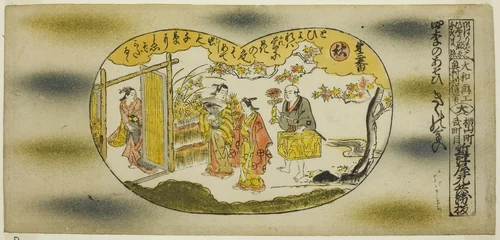
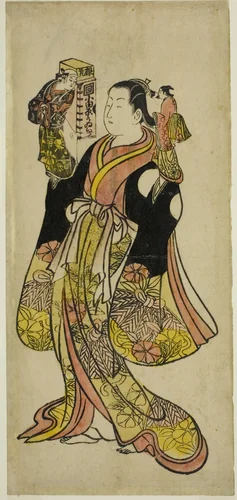
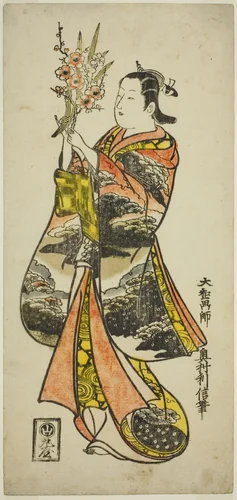
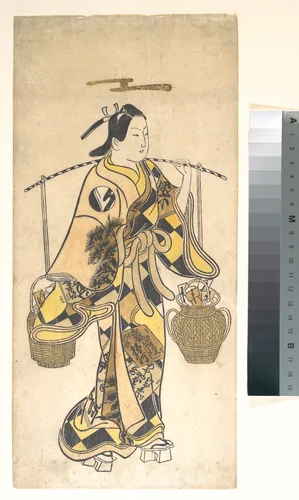
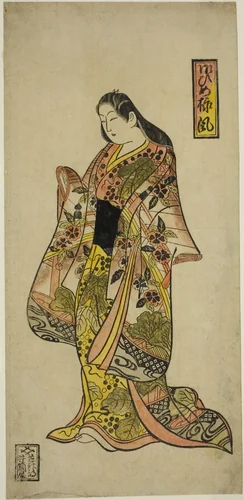
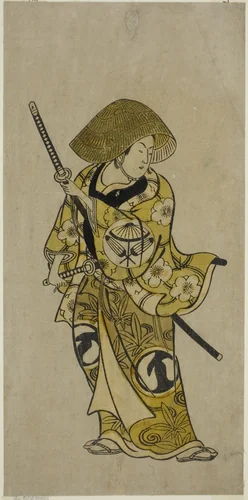
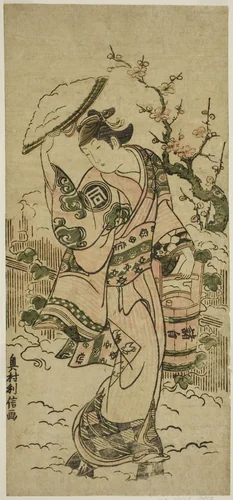
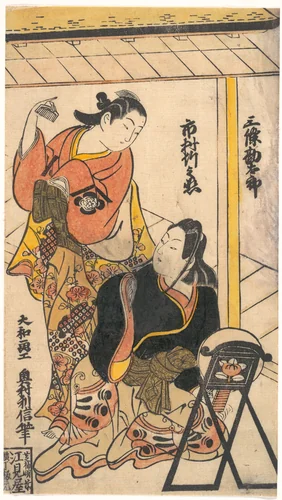
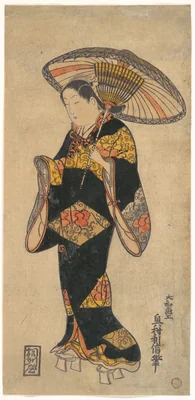
His known body of work, estimated at only about fifteen prints, focuses almost exclusively on the classic ukiyo-e subjects: actors (yakusha-e) and elegant women (bijinga). These surviving examples, now preserved as museum-quality works in institutions such as the Metropolitan Museum of Art and the Art Institute of Chicago, demonstrate a competence in both theatrical portraiture and narrative scene-setting. Notable among his actor prints is The Actor Ichikawa Monnosuke I, which captures the performative gravitas of the era. He also successfully executed complex compositions involving multiple figures, evident in the intimate pairing of Osome and Hisamatsu and the intriguing dual representation found in The Actors Ichikawa Monnosuke as a nobleman and Dekishima Daisuke as a noblewoman.
While his artistic lineage connects him directly to Masanobu’s circle, an unusual element of Toshinobu’s professional path is his frequent tendency to utilize publishers other than his master’s firm. This minor deviation suggests a degree of restless professional independence within the competitive structure of Edo’s early print market. It underscores the commercial forces that were already driving the production of woodblock images and separating artistic instruction from distribution necessity.
Toshinobu’s concise career nonetheless produced valuable artifacts that contribute essential context to the development of Japanese visual culture. Though time has limited the number of surviving Okumura Toshinobu prints, the historical importance of the extant works ensures their continued relevance. Today, thanks to institutional preservation efforts, many of these high-quality prints and related works are available in the public domain for research and scholarly appreciation.
Source: Wikipedia · CC BY-SA 4.0