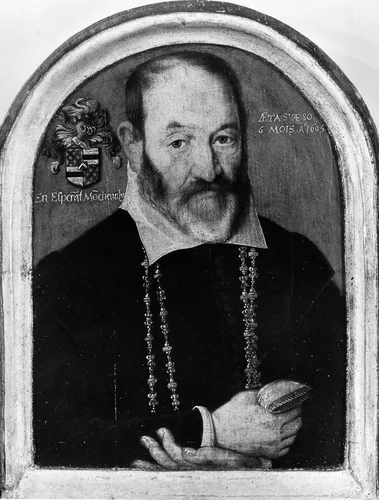
Northern French Painter
The Northern French Painter is the name attributed to an artist or workshop active in Northern France across an extensive period, documented as spanning from 1445 to 1605. This long chronology suggests the name may encompass several generations of related artistic practice or a consistent regional style operating during the transition from the late Gothic era into the early modern period.
Five paintings attributed to the Northern French Painter or workshop are currently represented in museum collections, confirming the artist’s significance in devotional and secular art of the era. These museum-quality works are held by the Metropolitan Museum of Art, New York.
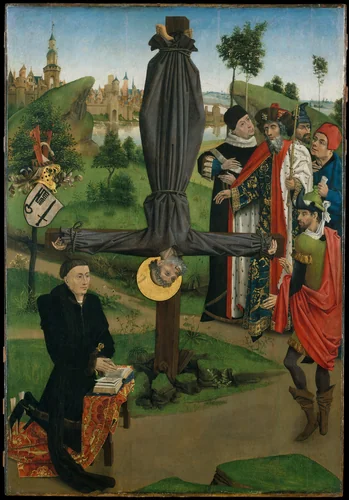
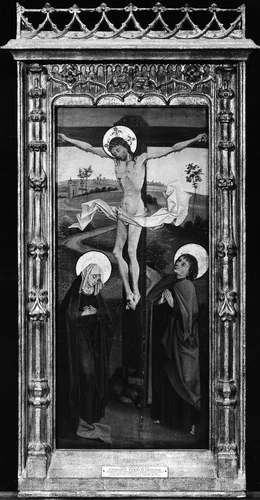
The known oeuvre focuses primarily on complex religious narratives and panel portraiture. Notable examples in the collection often feature complex compositions or diptych formats, such as the multi-paneled work The Crucifixion of Saint Peter with a Donor; The Legend of Saint Anthony Abbot with a Donor; The Annunciation. Another significant holding is the double-sided pairing, The Crucifixion, (reverse) Saint Francis of Assisi; The Resurrection, (reverse) An Abbot Saint, Possibly Saint Benedict.
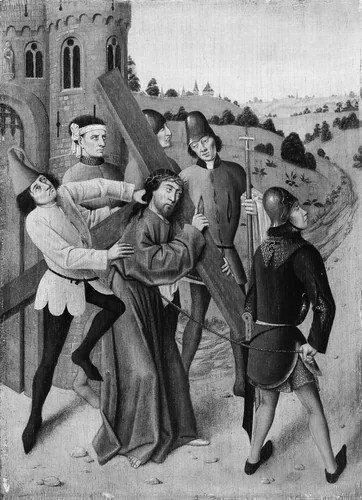
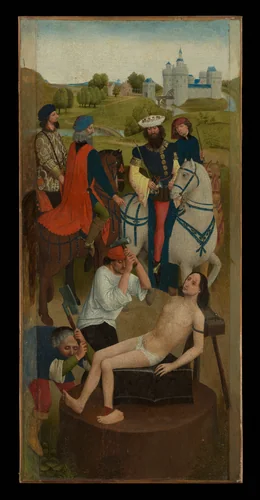
Further documented works include the focused devotional painting Christ Bearing the Cross, and the panels depicting martyrdom, The Martyrdom of Saint Adrian; The Martyrdom of Two Saints, Possibly Ache and Acheul. The artist’s skill in documenting aristocratic identity is evidenced by the painting Portrait of a Man of the Moncheaux Family. These Northern French Painter paintings, held in major institutions, are frequently available as high-quality prints for scholarly research and public viewing.