Northern European
The designation “Northern European” describes an expansive region encompassing cultures and workshops generally situated north of the Baltic Sea’s southern coast, around the 54°N parallel. Active across three centuries, from 1550 to 1850, the artistry attributed to this region demonstrates remarkable consistency in technical quality, specializing particularly in the sophisticated creation of small-scale decorative metalworks.
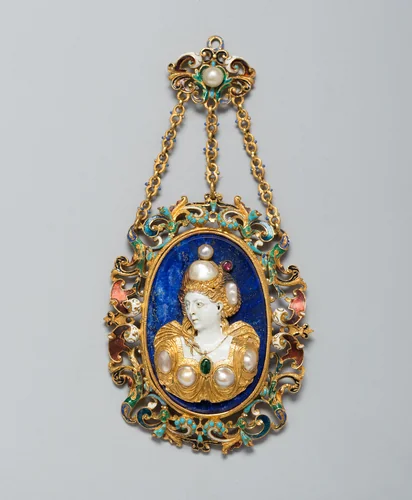
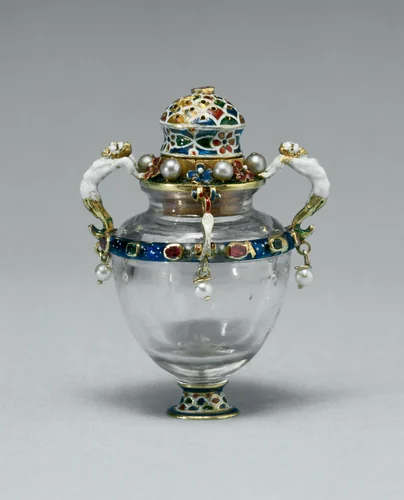
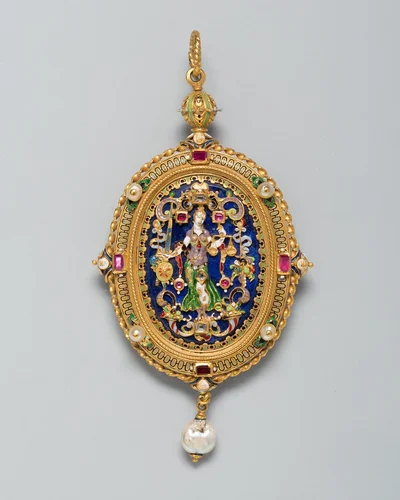
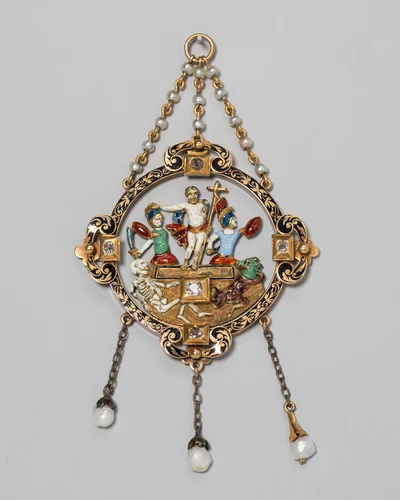
The collected corpus of five metal pieces, supplemented by a single drawing, provides a concise yet definitive summary of the regional preoccupation with intricate design and detailed execution. These metal objects served dual roles, acting as both practical implements and refined allegorical statements. Mastery of casting and chasing is evident in the functional yet elegant Casting Bottle, while pieces like the Pendant with the Bust of a Woman reflect the prevailing tastes for personalized, intimate jewelry.
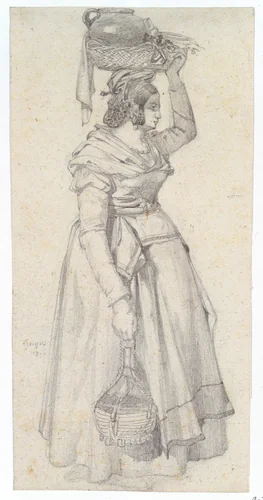
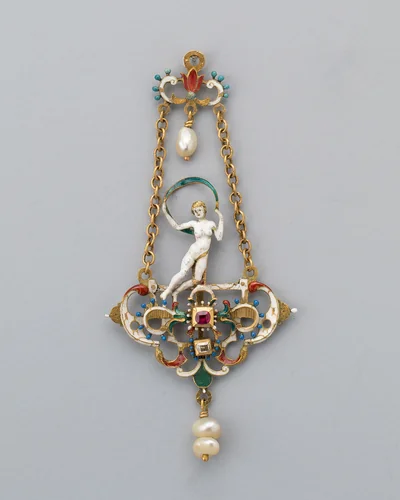
The pendants focusing on classical and moral personifications are especially instructive. They capture the era’s fascination with symbolic rhetoric, where concepts of governance, fate, and fortune were rendered in wearable form. The Pendant with Figure of Justice displays the assured sobriety expected of such moral emblems, contrasted subtly by the livelier representation found in the Pendant with Figure of Fortune, a common and often slightly mischievous subject in 17th-century European metal arts. Complementing these metal objects is the insightful preparatory drawing, Italian Peasant Woman with Basket on her Head, which reveals the underlying drawing skills and keen observational capacity required of these multidisciplinary workshops.
The inclusion of these artifacts in globally recognized collections, such as the Metropolitan Museum of Art and the Art Institute of Chicago, attests to their enduring historical and aesthetic significance. These museum-quality works continue to serve as benchmarks for early modern Northern European decorative production. While scholarship often emphasizes Northern European paintings, the legacy preserved in these metalworks provides vital context for the material culture of the period. Analogous designs and visual documents from this era are increasingly accessible as public domain resources, making high-quality prints and downloadable artwork available for detailed modern study.
Source: Wikipedia · CC BY-SA 4.0