Norman de Garis Davies
Norman de Garis Davies (d. 1941) was a pivotal figure in the early twentieth-century documentation of Egyptian tomb painting. Working primarily as an illustrator and copyist, his primary achievement was the meticulous, high-fidelity preservation of painted funerary and daily life scenes before their inevitable deterioration. His career was inextricably linked with that of his wife, Nina M. Davies, forming one of the most remarkable and productive professional partnerships in the history of archaeological illustration.
Their methodology established a new standard for in situ recording of fragile wall paintings. Working across the early and mid-twentieth century, the couple systematically produced renderings that were published under the singular, often ambiguous attribution ‘N. de Garis Davies.’ While this collaborative structure makes the attribution of individual drawings challenging for modern researchers, it is ultimately irrelevant to their collective historical contribution: a massive visual archive of unparalleled documentation that secured visual records for scenes now severely damaged or lost in the original monuments.
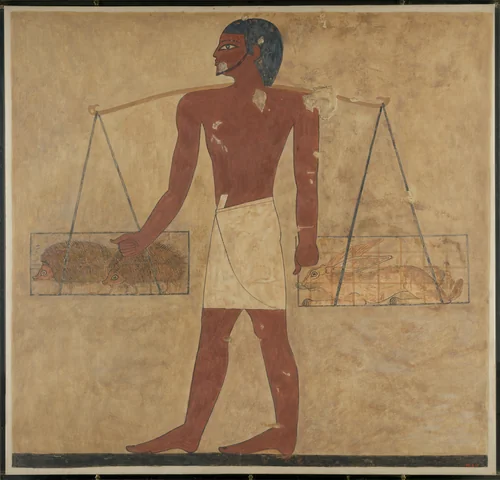
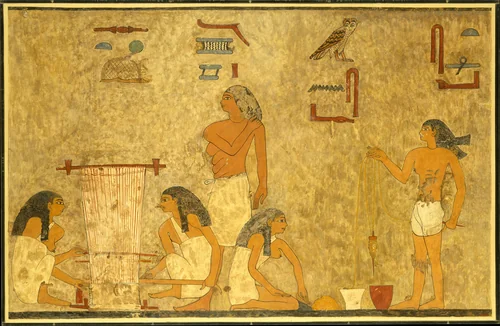
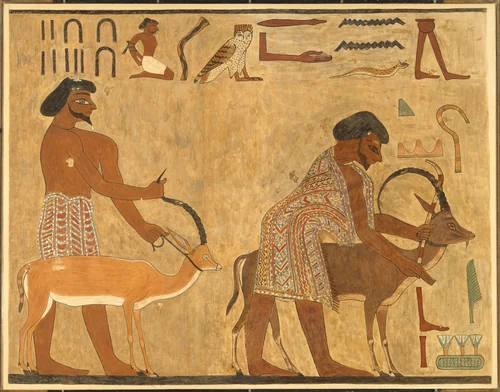
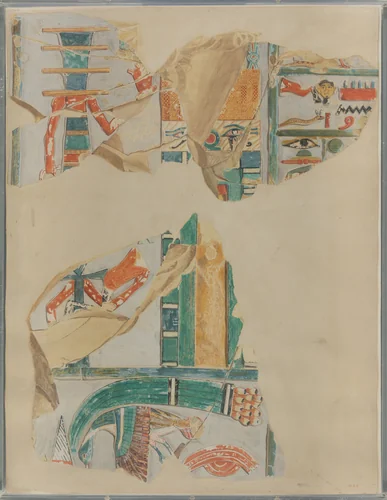
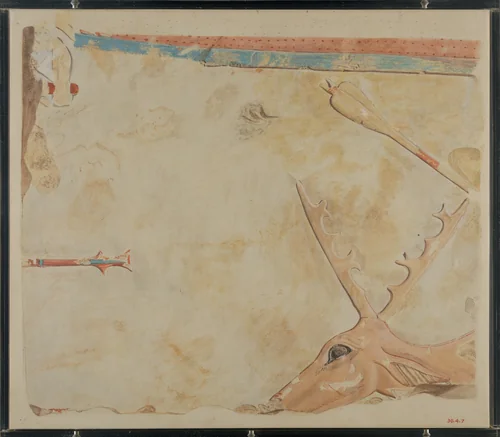
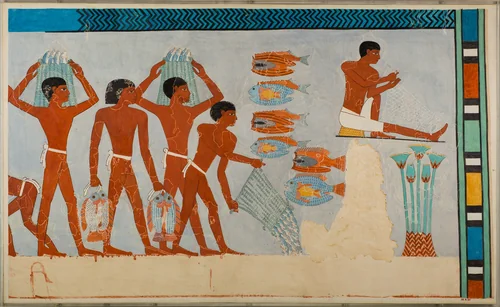
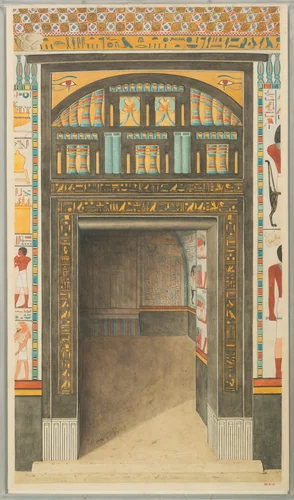
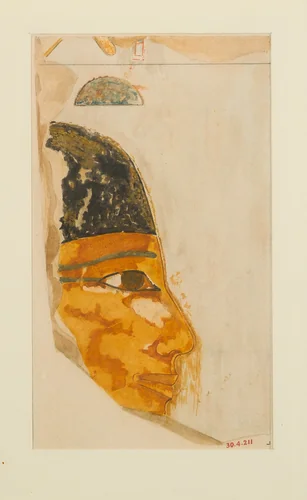
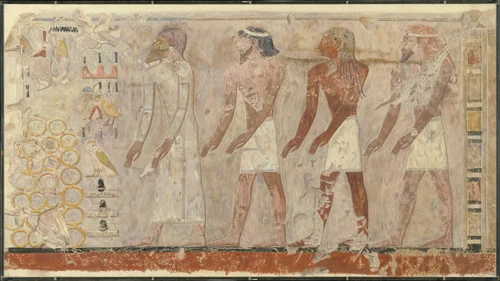
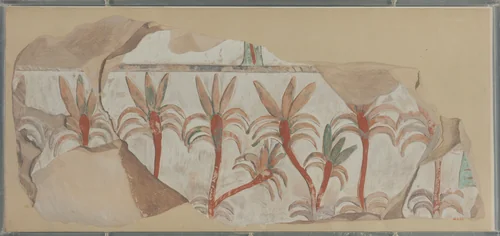
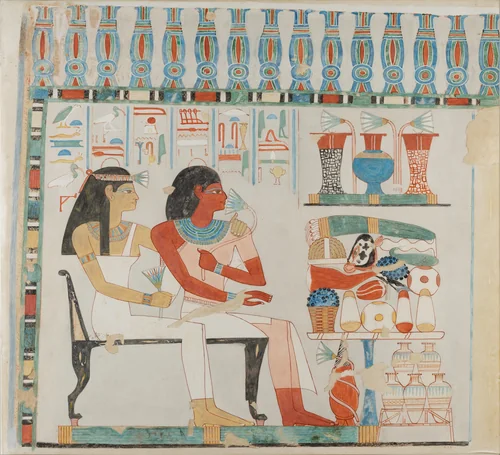
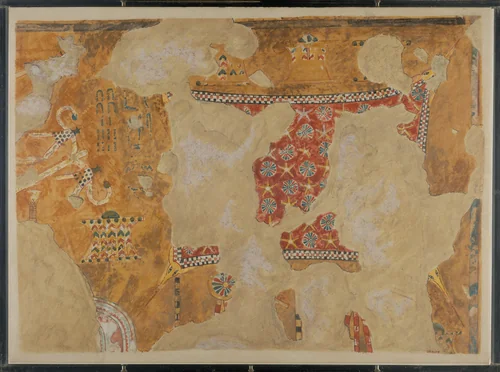
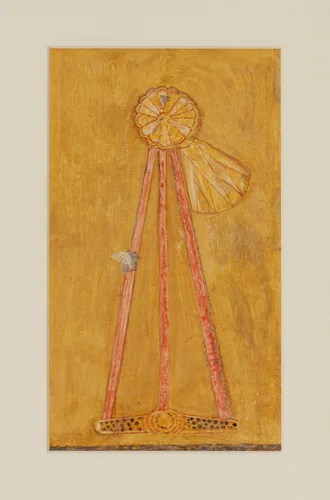
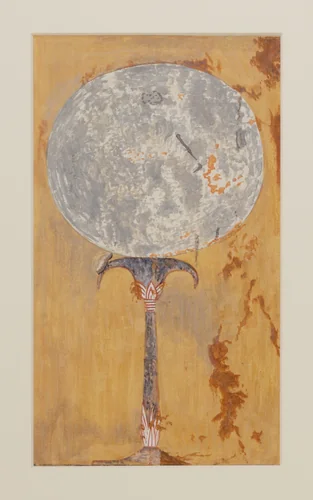
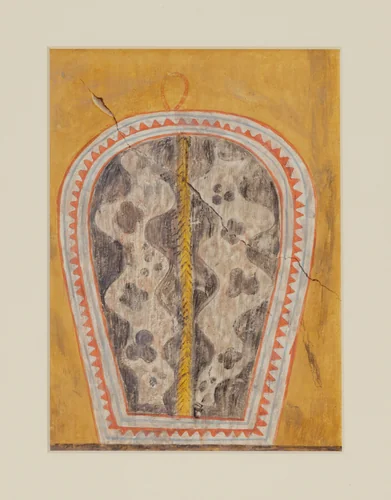
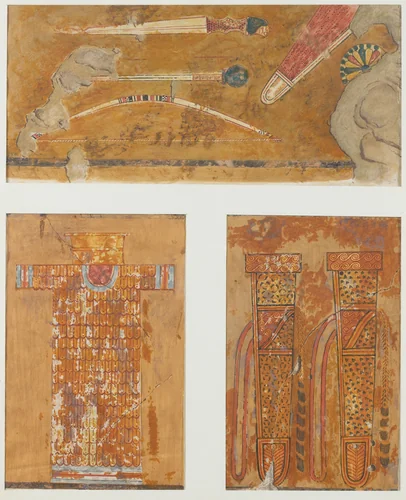
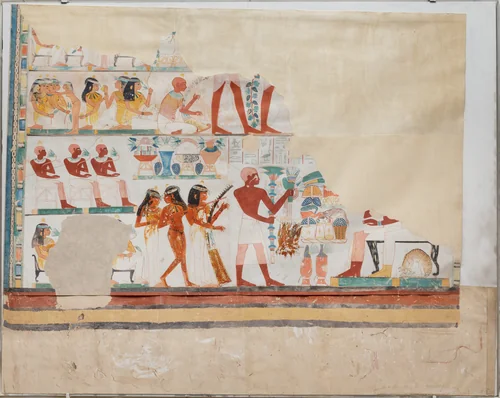
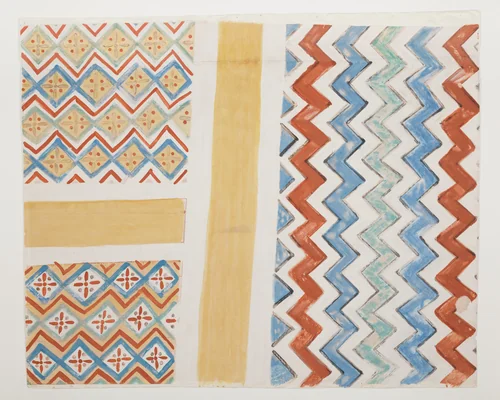
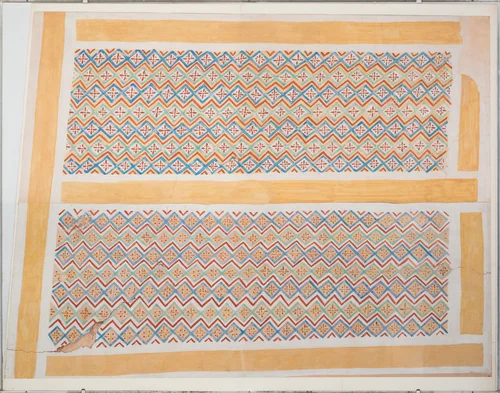
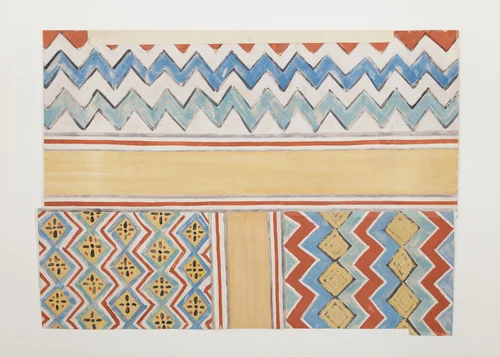
The Davies’ technique prioritized color accuracy and line fidelity, capturing the vibrancy and complexity of New Kingdom visual culture with what remains today as museum-quality precision. Rather than merely diagramming artifacts, they produced finished illustrations that served simultaneously as rigorous scholarly records and compelling aesthetic documents. Examples from the Tomb of Khnumhotep, such as the lively genre scenes Man Transporting a Hedgehog and a Hare and Weavers, demonstrate a keen eye for narrative detail and fluid movement that far transcended simple academic copying. Similarly, works like Leaders of the Aamu of Shu and the details preserved in the False Door, Tomb of Mentuherkhepeshef, underline the ethnographic and historical importance of their detailed corpus.
Their output effectively revolutionized the study of Egyptian art, providing scholars and institutions worldwide with a comprehensive visual library. This painstaking commitment to documentation, extending across decades, was driven by an underlying ethic of accessibility. It is perhaps the highest compliment to their illustrative dedication that much of their published work, including valuable Norman de Garis Davies prints and drawings, now resides in the public domain. This widespread access ensures that researchers, educators, and enthusiasts can easily find and use downloadable artwork, securing the couple’s legacy not just as preservationists, but as foundational figures in the broad dissemination of ancient visual culture.
Source: Wikipedia · CC BY-SA 4.0