Norbert Goeneutte
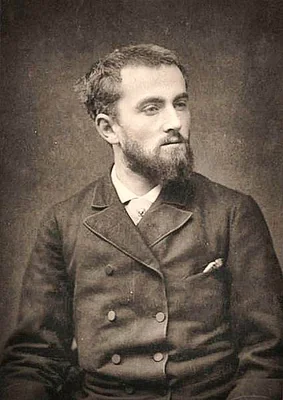
Norbert Goeneutte (1854-1895) was a vital figure in late 19th-century Parisian art, achieving recognition simultaneously as a skilled painter, a meticulous etcher, and a compelling illustrator. Active during a period marked by rapid stylistic transition, Goeneutte’s output provides an essential bridge between academic Realism and the developing nuances of Impressionism, focusing intensely on the everyday environment of the capital. The inclusion of his works, ranging from delicate prints to finished drawings, in significant institutional holdings such as the Rijksmuseum and the National Gallery of Art confirms his lasting museum-quality stature.
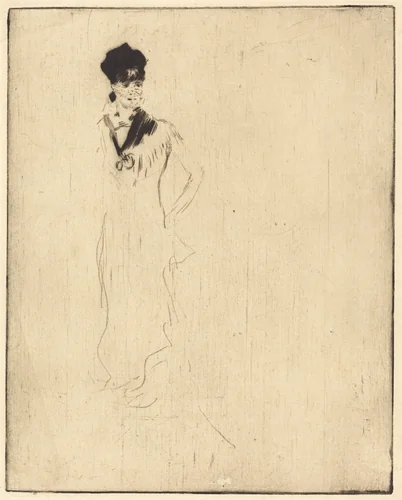
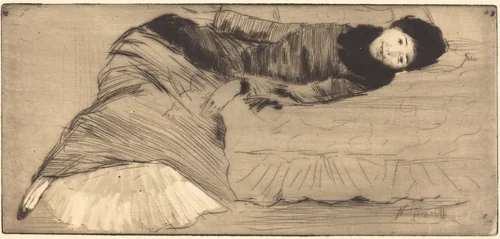
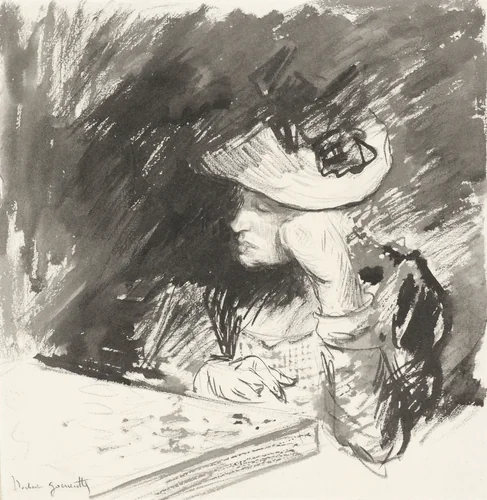
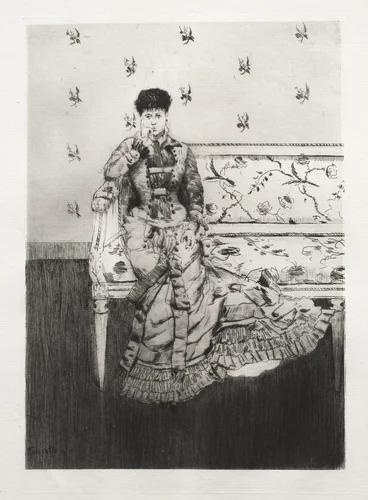
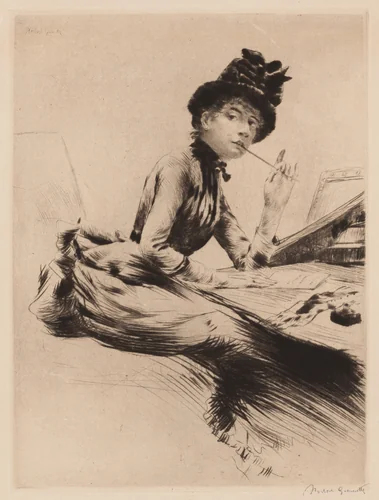
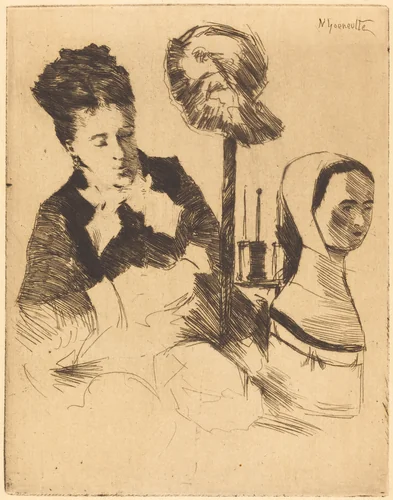
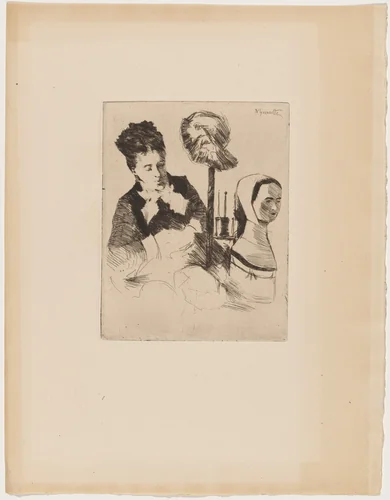
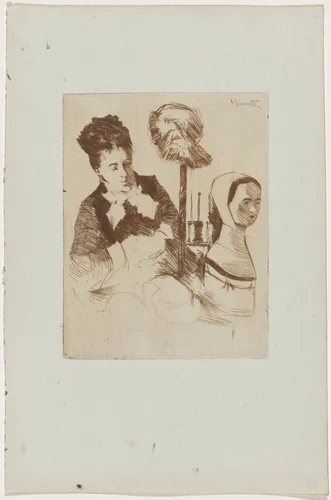
Goeneutte’s technical mastery was particularly evident in his prints, where he developed a sophisticated handling of the etching needle to capture atmospheric effects and texture. He possessed a keen psychological eye, allowing him to render the subtle complexities of his sitters, as seen in the pensive pose of Dame met stroohoed zit peinzend aan een tafel or the delicate observation captured in Sketch of a Young Lady in Violet (Esquisse de jeune femme a la violette). His ability to evoke intimacy, even in formal compositions like Smiling Woman Reclining on a Sofa (Femme souriant etendue sur un canape), distinguishes his contribution to fin-de-siècle graphic arts.
A key aspect of Goeneutte’s career was his robust engagement with contemporary literature. He holds a unique position in art history as a notable illustrator for Émile Zola’s controversial 1887 Naturalist novel, La Terre. Though his commission required him to depict the often-grim narratives associated with Zola’s work, Goeneutte’s independent etchings consistently maintain a characteristic light, elegant line and an understated Parisian charm. This stylistic duality suggests an artist who was comfortable capturing both the gritty realities and the fleeting domestic pleasures of modern life.
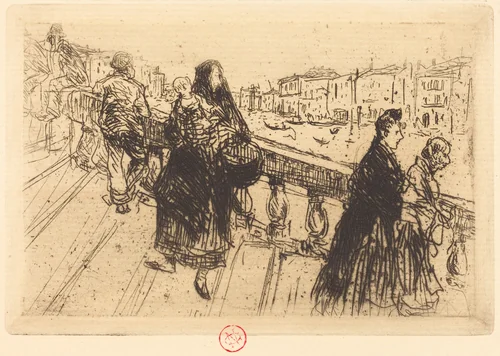
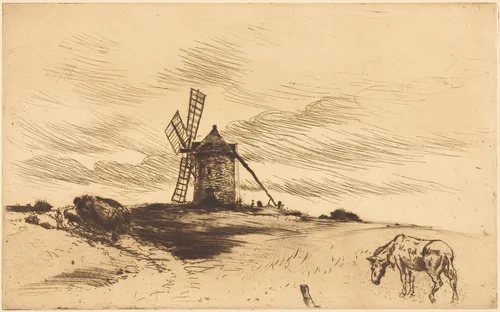
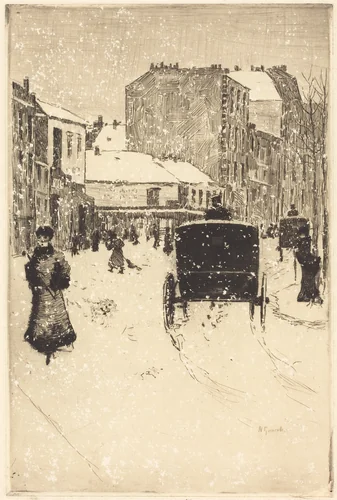
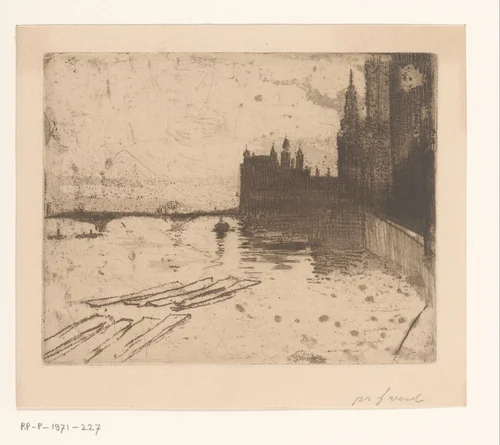
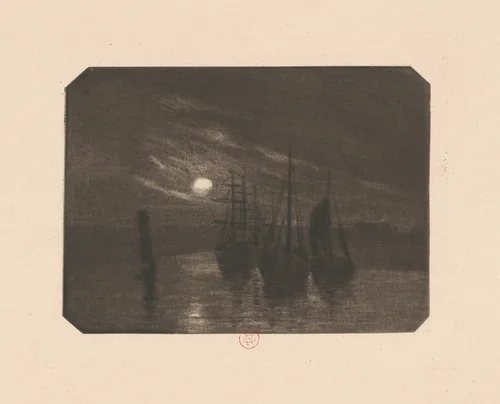
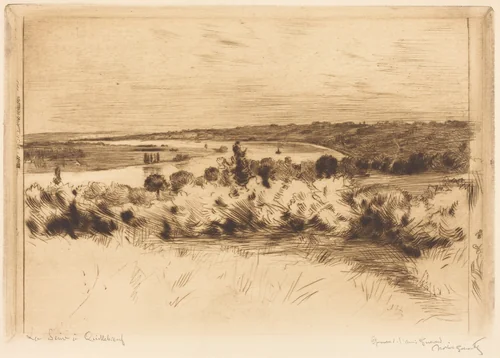
Despite a career cut relatively short, the legacy of Norbert Goeneutte prints remains strong. His extensive catalog of work, which includes both urban scenes like Rialto and nature studies like The Mill at Saint Jacut (Le moulin de Saint Jacut), often circulates in the public domain. These high-quality prints are frequently available as downloadable artwork, providing valuable access for researchers studying the detailed draftsmanship of the late 1800s.
Source: Wikipedia · CC BY-SA 4.0