Nicolás Enríquez
Nicolás Enríquez de Vargas (1704-1790) stands as one of the essential figures of mid-eighteenth-century New Spanish painting, representing the final generation of masters working within the Baroque idiom before the rise of Neoclassicism. Active as late as 1773, his documented output reveals a skillful engagement with complex theological narratives and large-scale devotional works, confirming his status among the most sought-after ecclesiastical painters of the Viceroyalty.
Enríquez was educated under the influential hand of Juan Rodríguez Juárez, absorbing the compositional rigor and chromatic sensibilities that characterized the established academic traditions of Mexico City. While drawing heavily upon these established models, Enríquez developed a refined, slightly attenuated style, notable for its clear linearity and attention to narrative clarity.
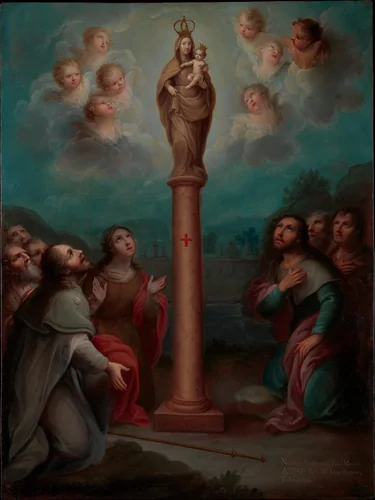
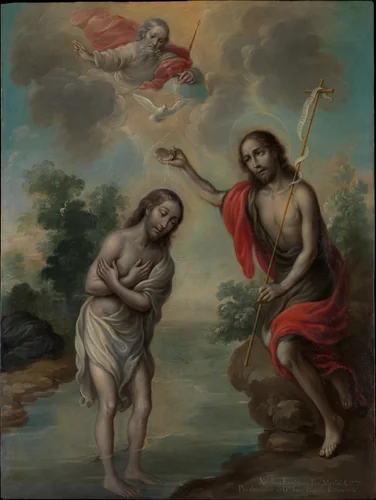
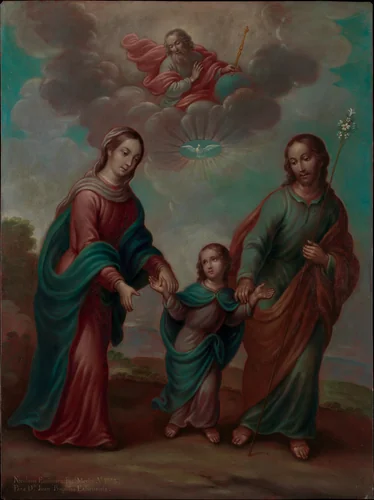
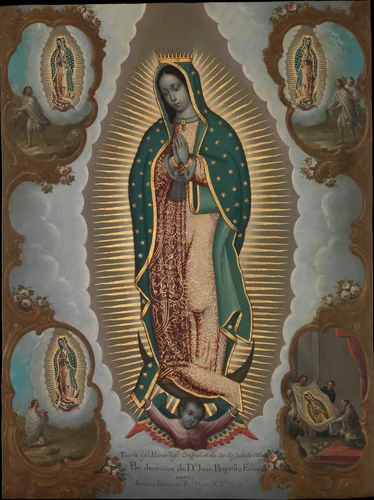
His body of work demonstrates a particular proficiency in complex Marian iconography, as seen in pivotal commissions like The Apparition of the Virgin of El Pilar to St. James and the expansive The Virgin of Guadalupe with the Four Apparitions. The latter exemplifies the enduring importance of this national symbol within New Spanish visual culture, handled by Enríquez with both reverence and technical assurance. His output also included major sacramental and biblical themes, notably The Baptism of Christ and the graceful scene of The Return of the Holy Family from Egypt.
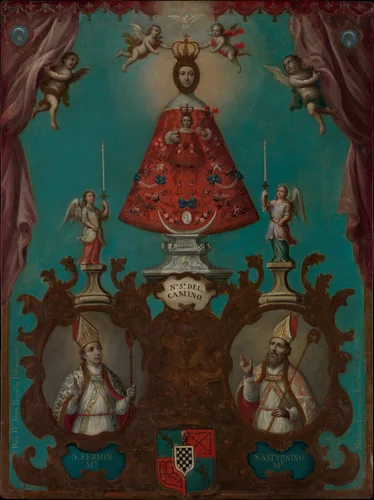
A subtle, recurring characteristic in the painter’s work is his mastery of rendering specific devotional accessories and textiles; he had a knack for making even the most severe saint look fashionably adorned. Today, significant Nicolás Enríquez paintings are held in prestigious international institutions, including the Metropolitan Museum of Art, testament to the enduring museum-quality of his production. The availability of his works as high-quality prints and downloadable artwork through public domain initiatives ensures that the legacy of this important Novohispanic master remains widely accessible for study and appreciation.
(Word Count: 305)
Source: Wikipedia · CC BY-SA 4.0