Nicolas Dorigny
Nicolas Dorigny (1652/1658-1746) was an accomplished French engraver whose work serves as a crucial visual record of major Baroque and High Renaissance compositions, disseminating their complex forms across Europe. The younger son of artist Michel Dorigny, his career trajectory was notably unconventional. Having received a rigorous education preparing him for the legal profession, he practiced law until his thirtieth year. The historical record confirms that an unexpected onset of deafness prompted a dramatic and immediate career change toward the visual arts. It is a striking irony that the loss of one faculty should propel him toward mastering the entirely visual medium of engraving, but this late start did not impede his eventual prolific output, which quickly established his reputation.
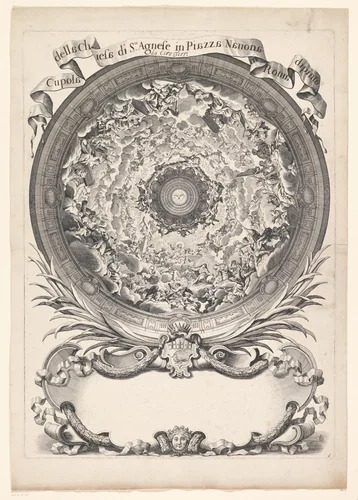
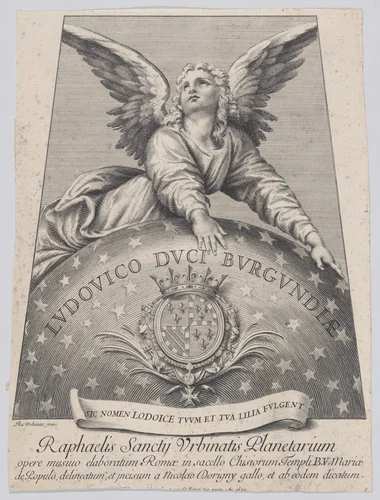
Dorigny’s active period, roughly 1690 to 1702, saw him excel in translating complex, often monumental paintings into precise line engravings. His technical skill was particularly evident in reproductive work, allowing him to effectively capture the scale and texture of frescoes. This is exemplified in the detailed representation of the dome vault decoration in Sta. Agnese in Rome, captured in his print Titelprent met decoratie van het koepelgewelf van Sta. Agnese in Rome.
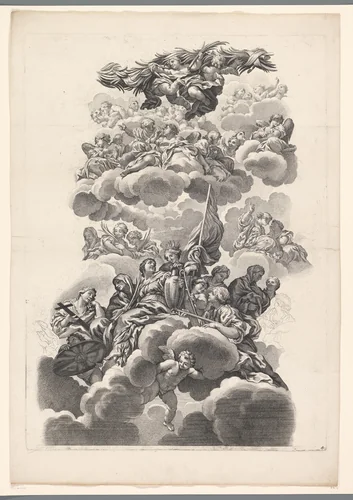
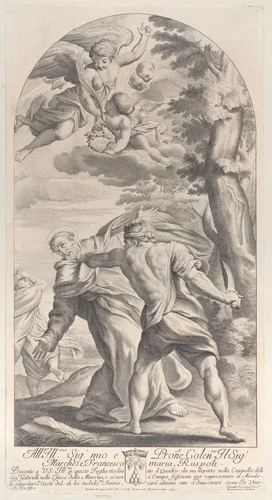
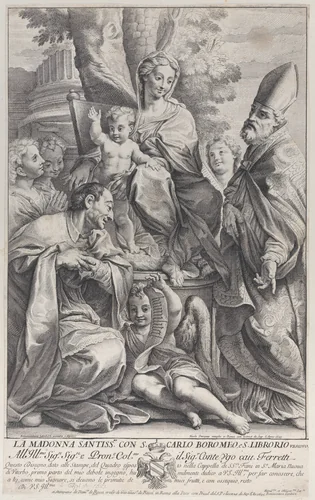
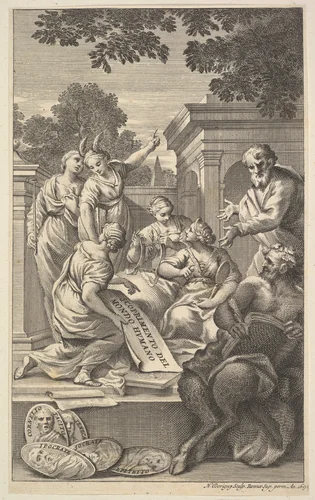
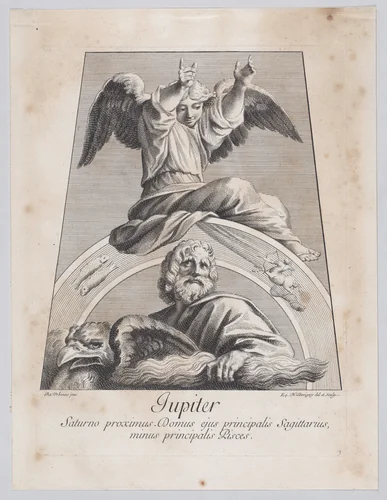
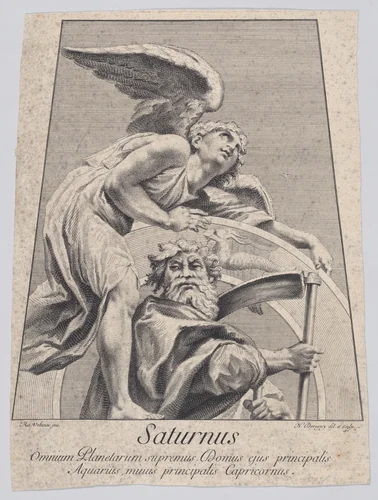
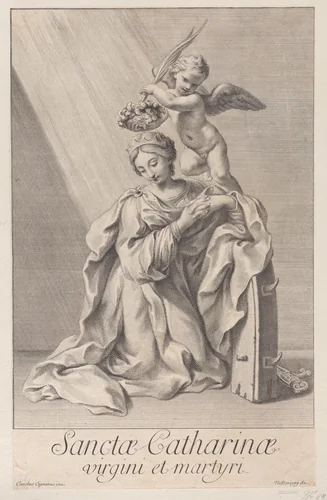
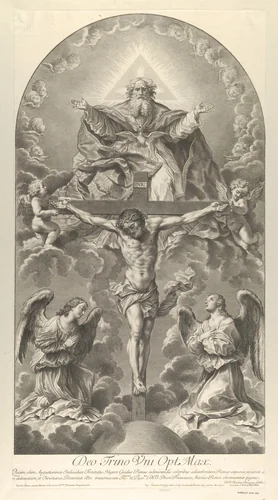
This expertise in rendering grand scale extended to intense religious imagery like Martyrdom of a saint and the devotional scene of Virgin and Child with Saint Ciborius and Carlo Borromeo, alongside sophisticated humanist subjects such as Allegorical composition celebrating the Humanities. These detailed, museum-quality prints were essential instruments in relaying the aesthetic achievements of Roman masters to a wider European audience in an era before mass photography.
Dorigny’s output, though numerically concise with approximately ten major surviving plates identified in core databases, secures his position as an important figure in the history of reproductive printmaking. His plates offer both clarity and technical refinement, ensuring that his artistic legacy persists through major institutional holdings. Works are presently held in distinguished international collections, including the Rijksmuseum and the Metropolitan Museum of Art. As many of these historical plates now enter the public domain, the precise detail of Nicolas Dorigny prints is widely accessible as downloadable artwork, allowing scholars and enthusiasts to study the nuanced visual language he employed to render the grand artistic visions of his time.
Source: Wikipedia · CC BY-SA 4.0