Nicolas de Largillierre
Nicolas de Largillierre was the preeminent French painter and draughtsman whose active career spanned the late Baroque and the emergence of the Régence style, roughly from 1685 to 1729. As the primary rival to Hyacinthe Rigaud, Largillierre secured a foundational position in the history of French portraiture by specializing in grand, highly theatrical depictions of the aristocracy, the high bourgeoisie, and important municipal officials. He navigated the challenging transition from the formal rigor of Louis XIV’s era to the lighter, more elegant tastes of the early eighteenth century, bridging the two epochs with effortless grace.
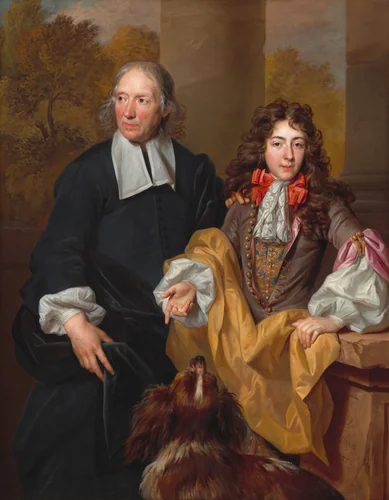
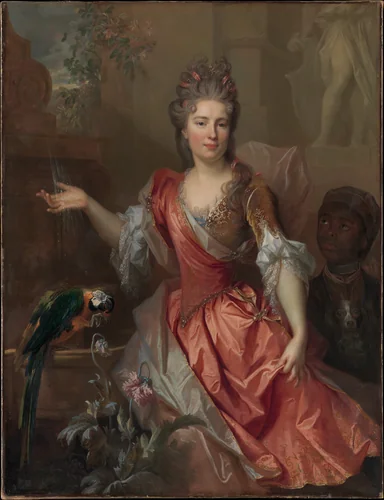
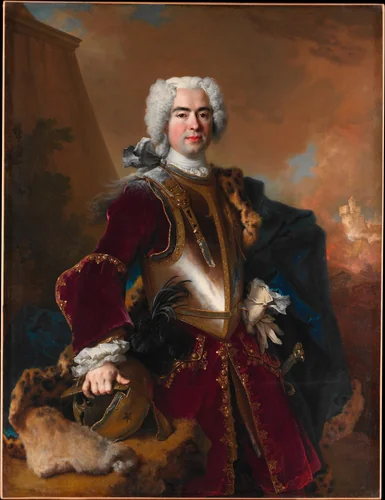
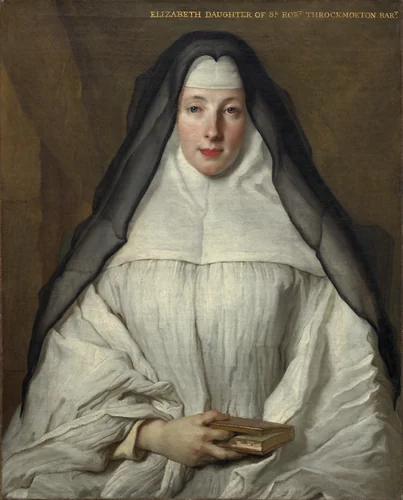
Largillierre’s compositional strength lay in his meticulous delineation of materials and texture, a signature technique that lent an almost tactile verisimilitude to his canvases. He possessed an acute sensibility for light and fabric, allowing the viewer to appreciate the crispness of lace, the reflective sheen of silk, and the substantial weight of velvet. This mastery is evident in detailed commissions such as Portrait of a Young Man and His Tutor and the complex societal dynamic captured in Portrait of a Woman and an Enslaved Servant, where status and costume are rendered with equal importance. Largillierre often allowed the sheer quality of the sitter’s attire to speak volumes about their power, a necessary element in establishing museum-quality portraiture during the era of absolute monarchy.
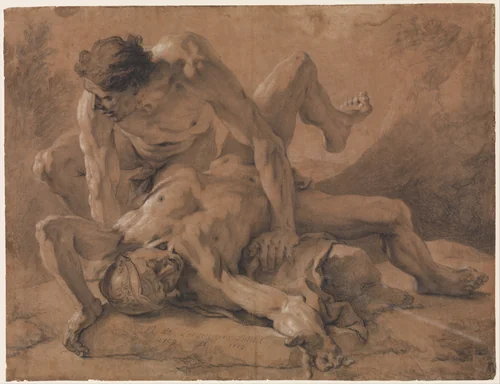
His skills were not limited exclusively to the brush; as a highly accomplished draughtsman, his foundational academic training is confirmed by surviving studies, including the vigorous sketch Two Nude Male Figures Struggling Together. This versatility allowed him to infuse his finished works, such as the refined rendering of André François Alloys de Theys d'Herculais (1692–1779), with structural integrity beneath the surface opulence. His prolific output of well over a thousand documented canvases cemented his influence on the subsequent generation of portraitists.
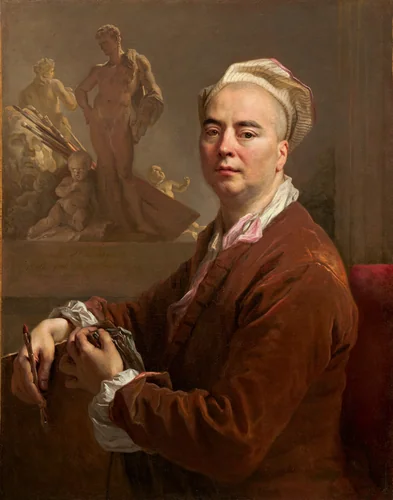
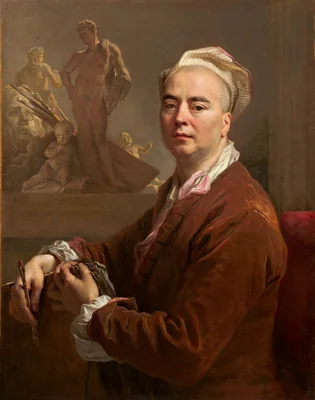
Largillierre’s psychological insight is perhaps best observed in his own introspective study, the Self-Portrait, which conveys a sense of quiet authority rather than bombastic courtly display. His compositions remain fixtures in international institutions, including the Metropolitan Museum of Art and the National Gallery of Art. Today, the study of the artist is readily supported as many Nicolas de Largillierre prints and high-quality images of his work are now available as royalty-free downloadable artwork, ensuring that the legacy of this key figure remains accessible worldwide.
Source: Wikipedia · CC BY-SA 4.0