Nicolas-Bernard Lépicié
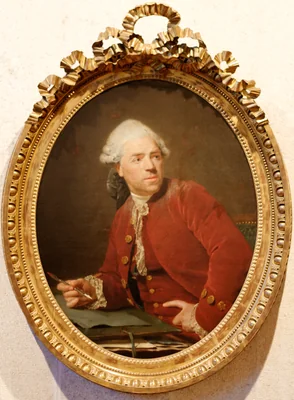
Nicolas-Bernard Lépicié (1735-1784) was a highly respected French painter and educator whose critical career spanned the pivotal decades leading up to the French Revolution. Active primarily between 1745 and 1775, Lépicié was born into a distinguished family of Parisian printmakers, the son of well-known engravers François-Bernard Lépicié and Renée-Élisabeth Marlié. This foundational exposure to the precision of graphic arts fundamentally informed his later approach to line and composition, setting him apart as an unusually sophisticated draftsman capable of great formal rigor.
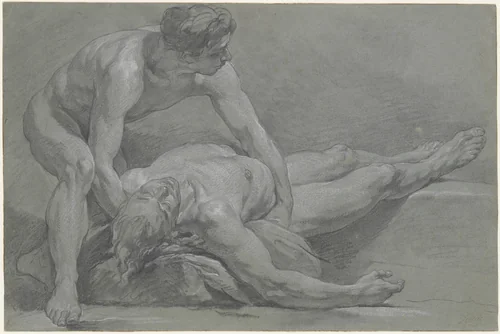
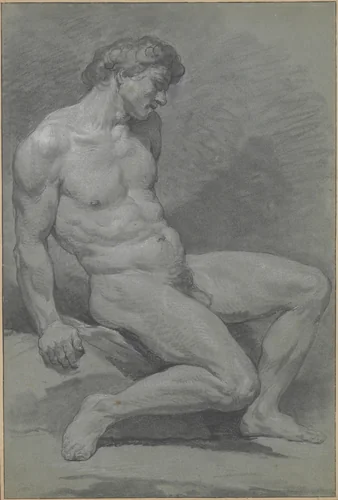
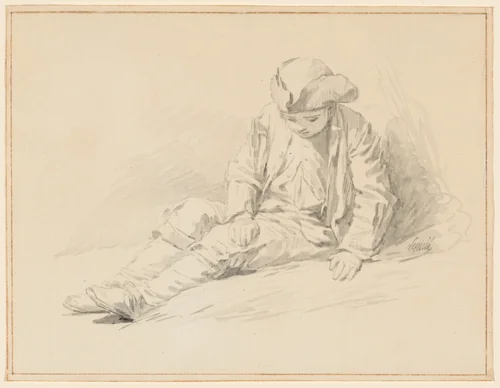
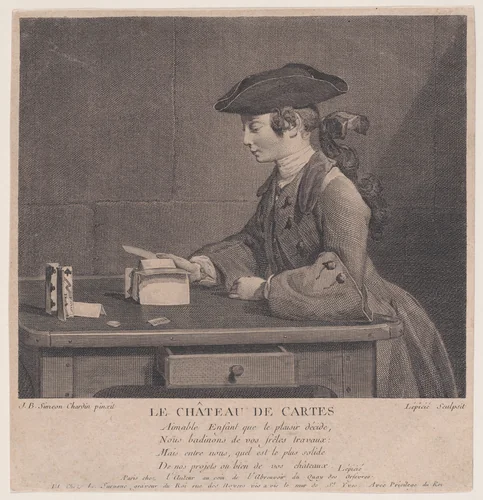
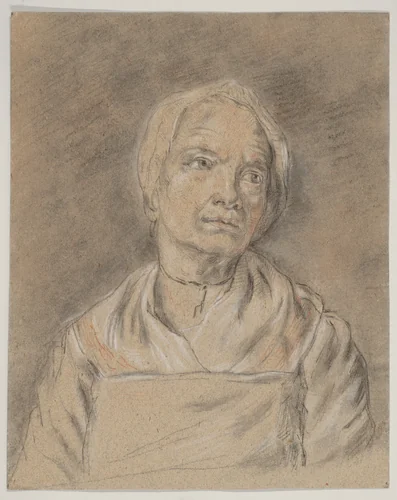
Lépicié achieved considerable official recognition and popular fame during his lifetime, an era when critics often positioned his work favorably alongside established masters. He was specifically compared to Jean Siméon Chardin and Jean-Baptiste Greuze, reflecting his success in bridging two seemingly disparate stylistic tendencies: the subtle realism of domestic genre scenes, and the meticulous, often sentimental, narrative power of academic painting. His commitment to rigorous drawing, essential for his teaching roles within the Royal Academy, is evident in demanding academic studies like Two Nude Male Figures and Seated Male Nude Facing Right, as well as precise copies after old masters such as Jusepe de Ribera.
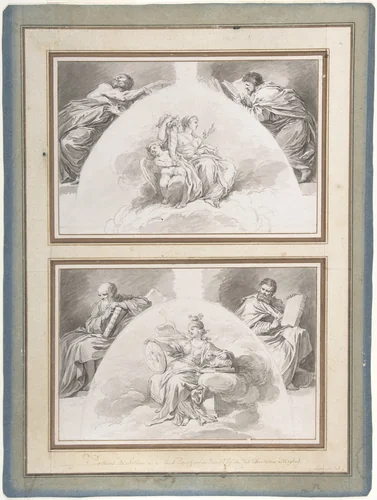
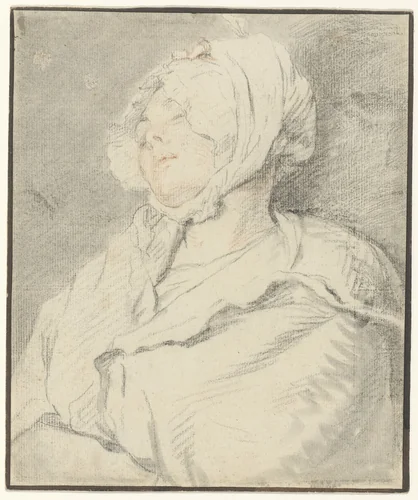
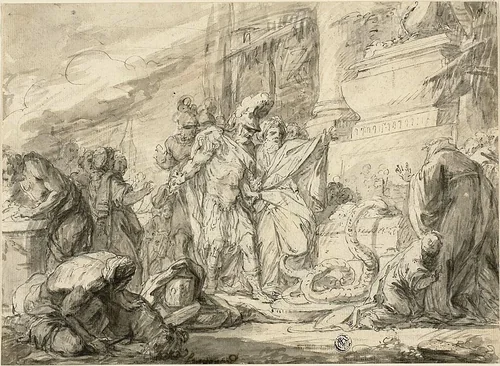
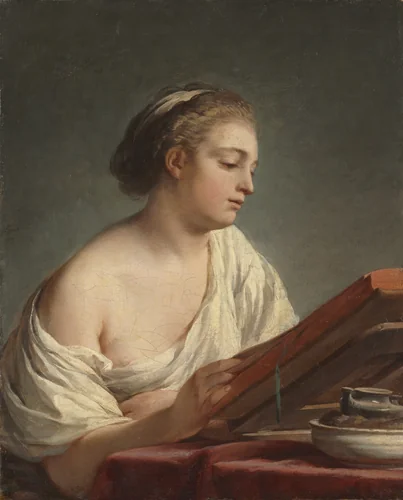
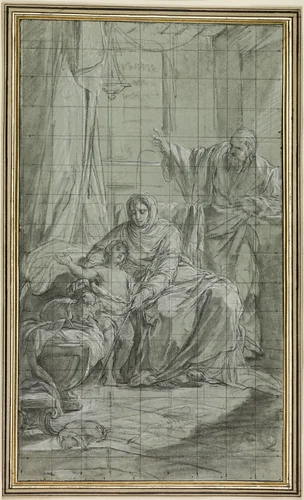
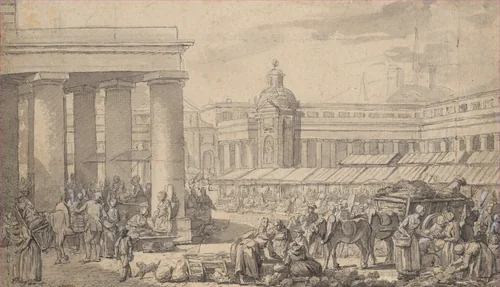
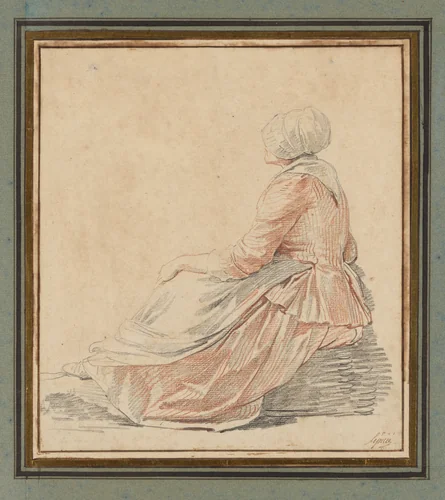
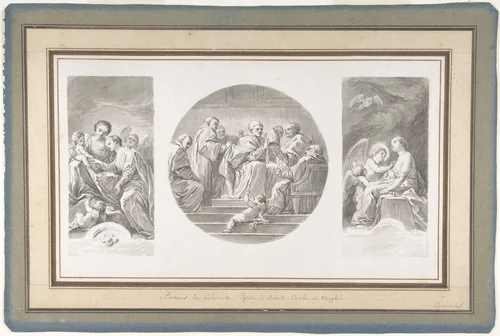
While Lépicié’s finished canvases, such as the evocative genre scene Slapend meisje (Sleeping girl), reveal a painter of quiet introspection, his true technical genius arguably resides in his extensive graphic output. His drawings, frequently executed in black chalk with precise white highlighting, possess a structural clarity that makes them essential examples of transitional 18th-century draftsmanship. The compositional complexity demonstrated in narrative sequences like Aeneas at the Tomb of Anchises (recto); Aeneas at the Tome of Anchises (verso) showcases his mastery of classical figure grouping.
Today, Lépicié’s legacy persists through his inclusion in major collections worldwide, including the Art Institute of Chicago and the National Gallery of Art. The accessibility of Nicolas-Bernard Lépicié prints and drawings ensures that their refinement remains available for scholarly review; many examples are frequently available as downloadable artwork for study purposes. Through his versatile practice, Lépicié successfully reconciled the refined intimacy of the Rococo age with the burgeoning classicism that would dominate the end of the century.
Source: Wikipedia · CC BY-SA 4.0