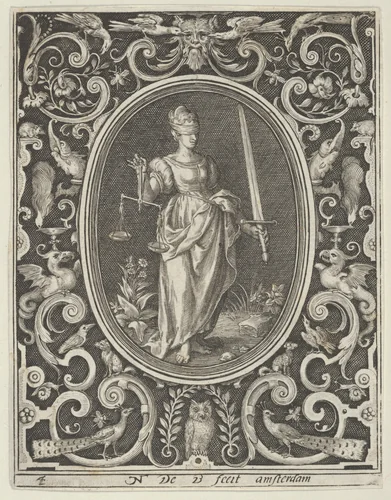
Nicolaes de Bruyn
Nicolaes de Bruyn (active 1522-1594) was an important Flemish engraver whose lengthy career spanned nearly the entire second half of the 16th century, a period of immense upheaval and transition in the Low Countries. Trained in the high-demand printmaking environment of Antwerp, he successfully transitioned his practice to the nascent Dutch Republic. This geographic and stylistic movement positioned De Bruyn as an important transitional contributor to Northern European graphic arts, particularly during the era immediately preceding the flourishing of the Dutch Golden Age. His mastery of the burin and ability to handle complex, large-format narrative compositions secured his reputation among contemporary collectors and ensured the lasting influence of his specific artistic vision.
De Bruyn’s surviving oeuvre is composed almost entirely of high-quality prints, generally dedicated to demanding moral or scriptural subjects. A core sequence of his output meticulously traces the famous New Testament parable of the Prodigal Son. This series includes detailed, sometimes visceral, scenes like De verloren zoon als varkenshoeder and the climactic De verloren zoon heeft zijn geld verspild en wordt weggejaagd. While these prints meticulously convey the spiritual lessons regarding the wages of sin, De Bruyn displays a particular, sometimes subtly judgmental, talent for rendering the spectacle of wasted wealth and subsequent destitution, giving his narratives an immediate, worldly edge. He also addressed foundational themes, notably in John the Baptist Preaching in the Desert, a work that showcases his command of crowd orchestration and landscape depth.
Working exclusively in the demanding medium of engraving, De Bruyn developed a style that emphasized sharp delineation and dramatic contrast. This technical rigor resulted in images that maintained exceptional clarity even when reproduced in great numbers. These Nicolaes de Bruyn prints, highly valued by early connoisseurs, remain cornerstones of major institutional holdings today, including the Cleveland Museum of Art, the Rijksmuseum, and the Metropolitan Museum of Art. Due to their historical significance and the passage of time, many of De Bruyn’s compositions now fall under the public domain. This accessibility ensures that museum-quality reproductions of his key graphic works are widely available, securing the continued study of this influential engraver.
Source: Wikipedia · CC BY-SA 4.0