Nicolaas Verkolje
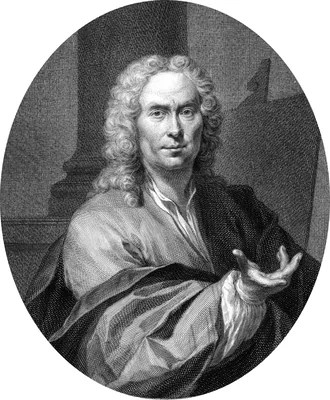
Nicolaas Verkolje (1673-1746) stands as an important, albeit sometimes overlooked, figure in the Dutch classicist movement bridging the late seventeenth and early eighteenth centuries. Operating primarily out of Delft and Amsterdam, Verkolje distinguished himself not only as a skilled painter but as a masterful practitioner of mezzotint, a demanding intaglio technique that allowed for unprecedented velvety shadow and tonal subtlety.
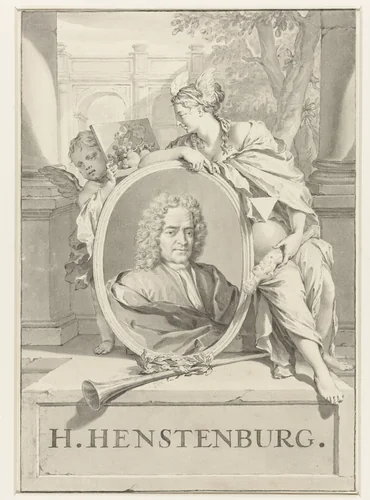
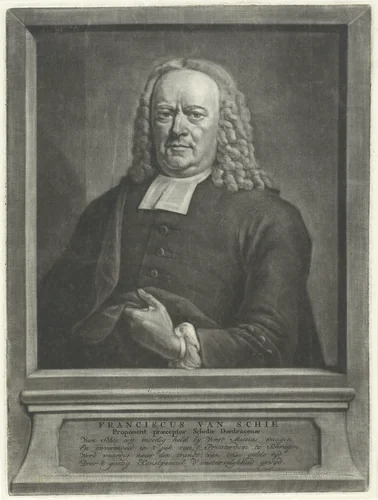
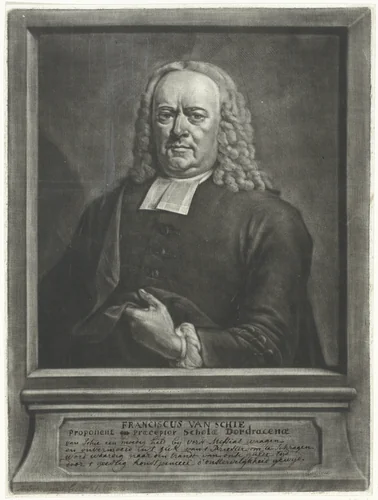
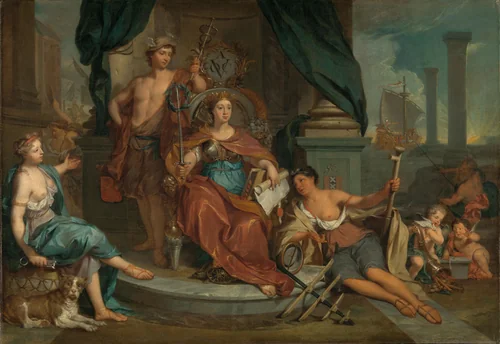
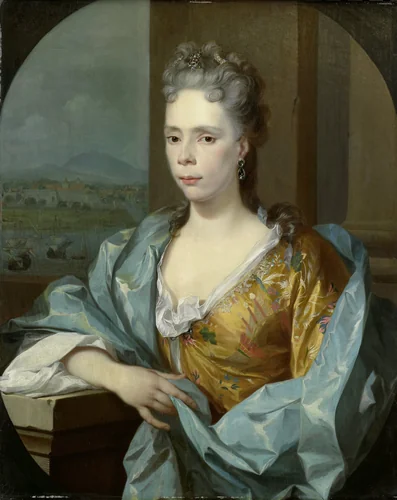
His pictorial output focused sharply on two areas: sophisticated history pieces and commissioned portraits executed in the classicistic style prevalent during the period. Verkolje demonstrated a fine ability to capture the specific character of a sitter, evident in works such as the highly decorative Portret van Herman Henstenburgh in ovaal vastgehouden door vrouwenfiguur en putto and the compelling study of an earlier master, Portret van Hugo van der Helst. While the number of his surviving Nicolaas Verkolje paintings remains relatively small, the consistent quality of the execution, particularly the meticulous handling of texture and light, speaks to a successful and commercially savvy practice.
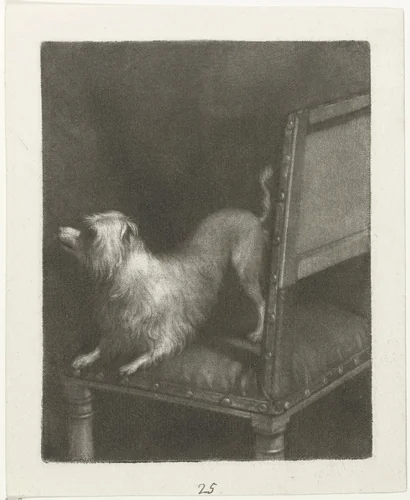
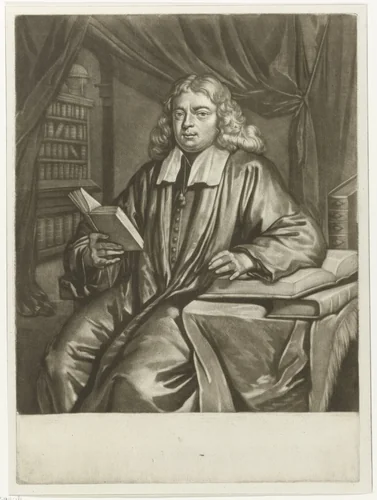
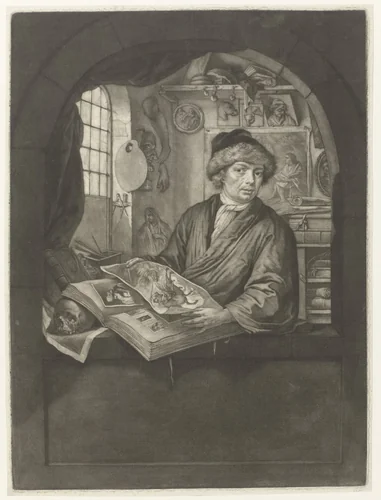
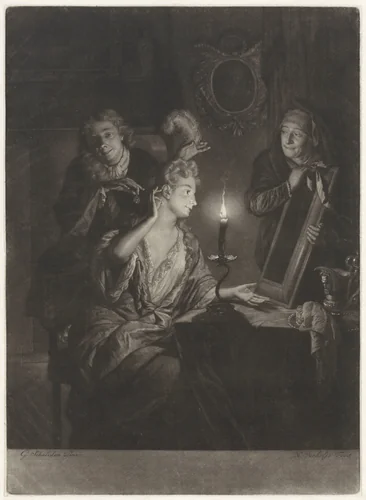
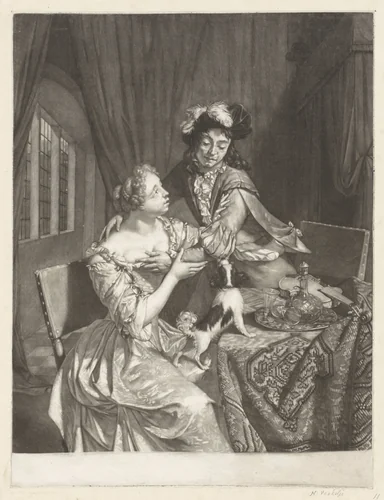
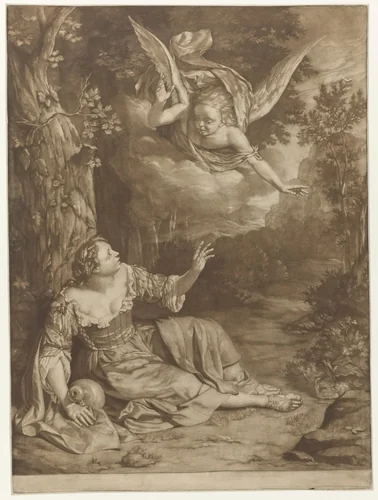
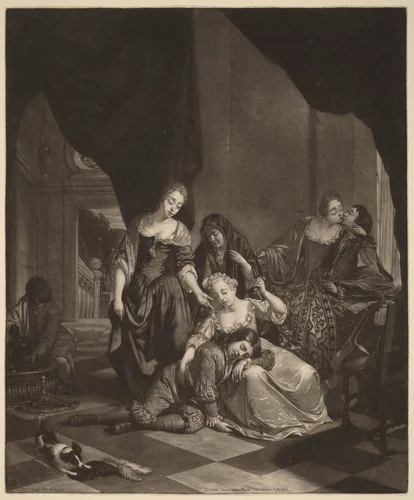
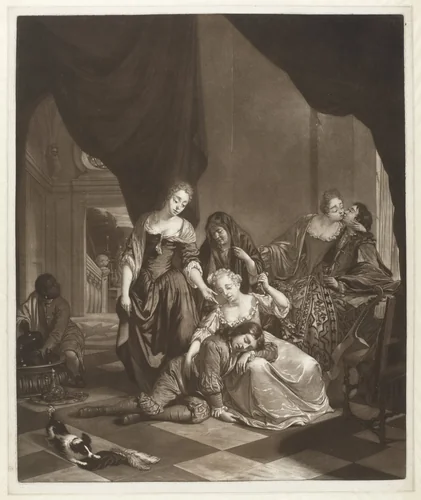
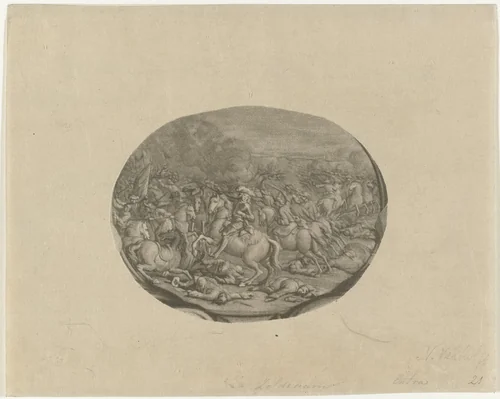
It is in the medium of mezzotint, however, that Verkolje secured his greatest technical legacy. Creating a focused body of about a dozen known prints, he skillfully utilized the technique’s ability to render the deepest black tones and nuanced gradations. This facility proved essential whether depicting serious historical subjects or engaging in genre scenes, such as the charming domestic study, Hondje op een stoel. This mastery of chiaroscuro places him among the leading printmakers of his generation, producing complex scenes and allegories that required tremendous physical effort from the artist in preparation of the copper plate. One must admire the sheer labor involved in creating the minute detail necessary for these museum-quality reproductions.
Verkolje’s active period, spanning roughly 1683 to 1710, saw him successfully balance demanding commissioned portraiture with complex printmaking projects. Today, many examples of Nicolaas Verkolje prints are widely accessible; these detailed images are often found in the public domain, making high-quality prints readily available to researchers and collectors worldwide. His works are held in prestigious international collections, including the Rijksmuseum in Amsterdam and the National Gallery of Art in Washington, D.C., cementing his position as a meticulous and technically rigorous practitioner of late Dutch classicism.
Source: Wikipedia · CC BY-SA 4.0