Nicolaas Pieneman
Nicolaas Pieneman (1806-1860) stands as a prominent figure in 19th-century Dutch visual culture, celebrated for his mastery of both formal portraiture and dramatic historical scenes. Based primarily in The Hague, Pieneman maintained a remarkably diverse output that spanned painting, sculpture, and lithography. Known also as an astute art collector of his time, his works are considered essential components of Dutch national memory, held in prestigious institutions including the Mauritshuis and the Rijksmuseum.
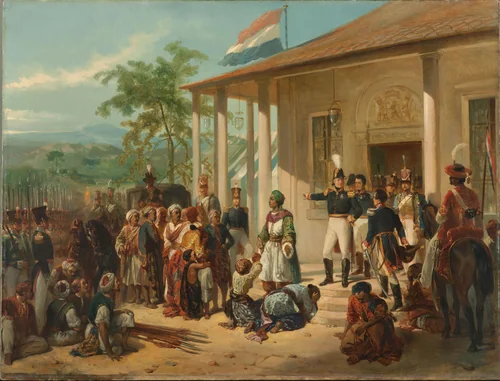
Pieneman secured lasting international renown through his monumental history painting, The Arrest of Diponegoro by Lieutenant General De Kock. Executed in 1835, this work documented the controversial 1830 capture of the Javanese prince Diponegoro, thereby cementing Pieneman’s role as the visual chronicler of Dutch colonial history and military triumph. The composition captures the moment of surrender with striking realism and theatrical lighting, yet it functions fundamentally as a piece of state-sponsored iconography, presenting a definitive and celebratory narrative for the European viewer.
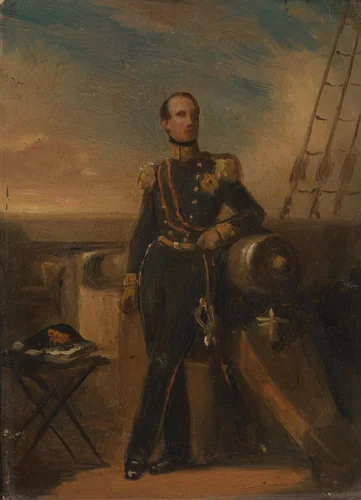
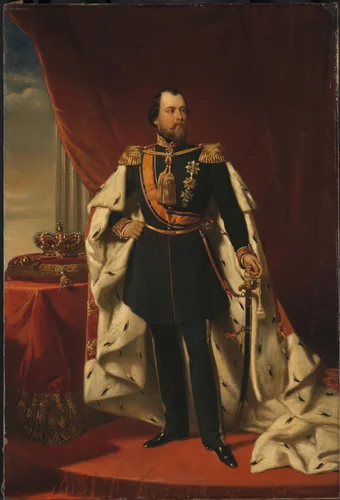
Beyond grand historical narratives, Pieneman was the pre-eminent portraitist of the Dutch elite, consistently securing commissions from the highest levels of the aristocracy and the Royal House of Orange-Nassau. His official portraits, such as Portrait of William III, King of the Netherlands and the rendering of Portrait of Hendrik, Prince of the Netherlands, demonstrate remarkable technical skill in capturing the precise textures of lace, velvet, and military regalia. A careful study of his sitters reveals a consistent effort to infuse state ceremony with subtle human dignity, though one sometimes wonders if the subjects preferred the comfort of their uniforms to the constraints of the pose.
Pieneman’s legacy rests upon his ability to transition seamlessly between documenting official history and capturing individual likeness. The historical significance and technical execution of his major works ensure that Nicolaas Pieneman paintings remain subjects of scholarly inquiry. Due to their long tenure in national collections, many of his key artworks are now considered part of the public domain, making high-quality prints and downloadable artwork widely accessible for study and appreciation today. His commitment to detail and his role in defining the visual record of the Dutch Golden Age make his output essential museum-quality material.
Source: Wikipedia · CC BY-SA 4.0