Nicholas Pocock
Nicholas Pocock stands as the foremost visual chronicler of naval engagements during the peak era of sail, his prolific output spanning the crucial six decades between 1760 and 1820. An English artist rooted deeply in maritime culture, Pocock transcended simple illustration to produce works that are simultaneously high-quality art historical documents and technically rigorous studies of 18th-century warfare.
The core of Pocock’s career focused on capturing the immense scale and inherent drama of fleet actions. His commitment to factual accuracy was paramount; a characteristic that distinguished him from many contemporaries who favored generalized, romanticized seascapes. Pocock ensured that the rigging, specific maneuvers, and even the identification marks of individual vessels were rendered with painstaking fidelity. This technical understanding, stemming from an intimate familiarity with the sea and ship construction, makes his Nicholas Pocock paintings indispensable sources for studying naval tactics of the period. This dual function, serving both aesthetic appreciation and historical instruction, grants his comprehensive documentation a distinctive museum-quality.
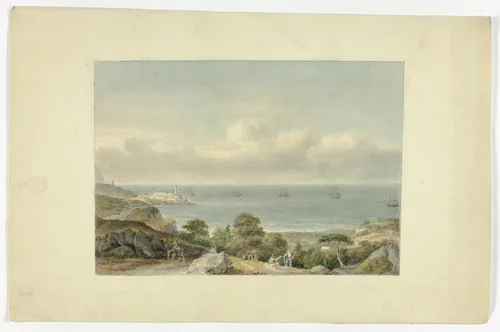
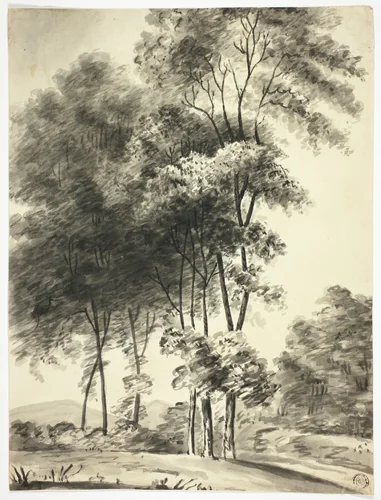
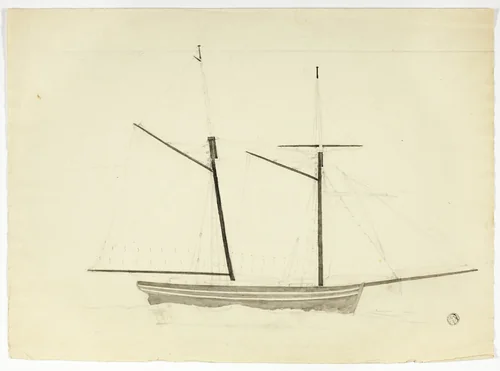
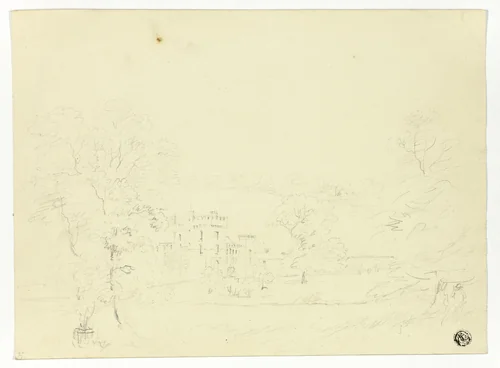
While celebrated primarily for large-scale depictions of conflict, Pocock’s oeuvre demonstrates a wider curiosity, extending to calmer waters and even terrestrial subjects. Works such as the atmospheric Mediterranean Seascape with Port and the stark, genre-defining Whaler show his mastery of light and atmosphere across various open-water conditions. His less frequent, unexpected forays onto land, exemplified by the detailed domestic study Hampton Court, Herefordshire, offer a gentle reminder that even the most dedicated marine artist occasionally preferred the quiet solitude of trees to the chaos of naval artillery.
Pocock’s enduring significance lies in the authoritative visual record he provided for the era's great conflicts. Given the age and historical importance of his works, it is valuable that many of his key compositions, including his seminal depictions of historical fleets, now reside in the public domain. Consequently, his legacy remains globally accessible, allowing enthusiasts to obtain high-quality prints and downloadable artwork that preserve the crisp detail defining his remarkable artistic contribution.
Source: Wikipedia · CC BY-SA 4.0