Nicholas Briot
Nicholas Briot (active 1630-1642) stands as a pivotal figure in the technological and artistic transition of English numismatics. Born in France, his singular expertise in die engraving and mechanical engineering earned him international repute. His emigration to England and subsequent appointment as chief engraver to the Royal Mint in 1633 signaled a critical move by the Crown to modernize its currency production, elevating Briot from a continental artisan to a key official of the Stuart court.
Briot’s enduring significance rests not merely on the aesthetic quality of his medallic art but, crucially, on his technological innovation: the invention of the coining-press. This mechanism revolutionized the production of currency and commemorative medals, ensuring unprecedented uniformity and sharp detail that the traditional, hand-hammering process could not match. By mechanizing the minting process, Briot shifted the craft of the medallist toward industrial precision, providing Charles I with a means to issue coinage and propaganda pieces that reflected the high standards of contemporary European art.
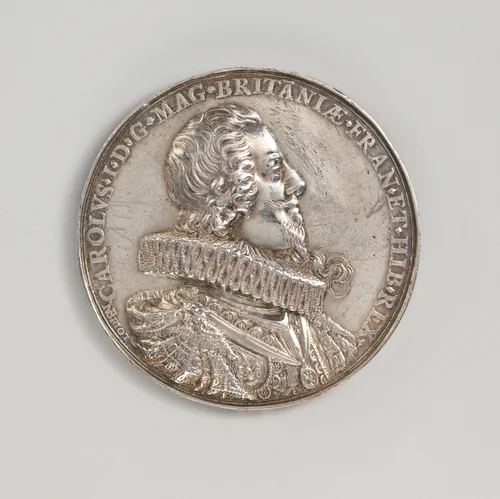
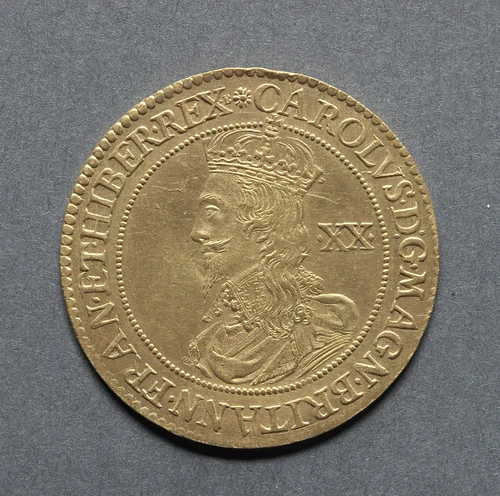
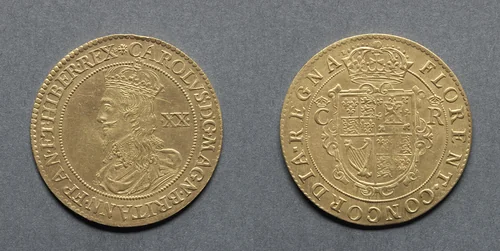
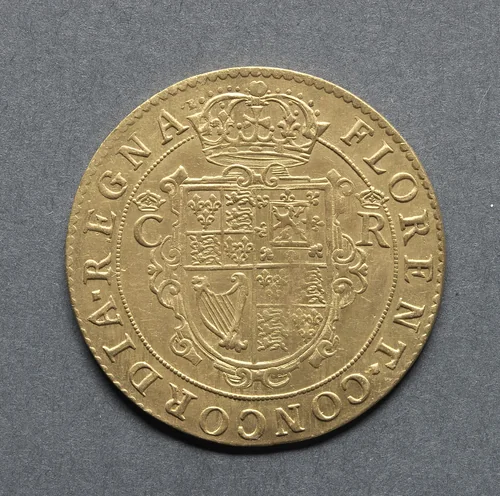
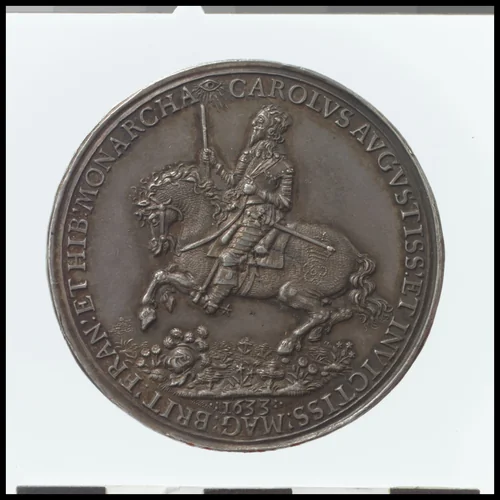
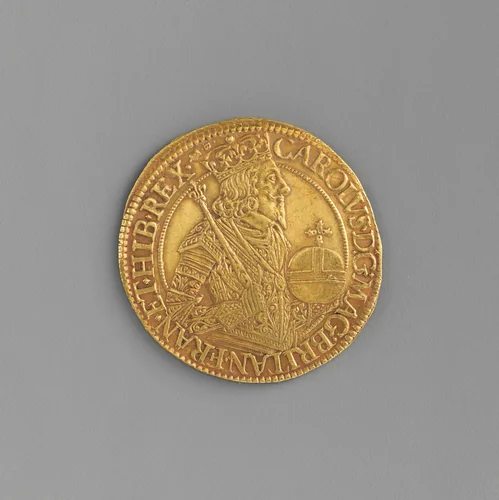
His artistic output focused exclusively on celebrating the Stuart monarchy and defining its political image. His most celebrated works are detailed metal reliefs commissioned by the King, including the substantial medal commemorating the sovereign’s maritime authority, the Charles I Dominion of the Seas medal. Briot also designed the matrices for several variations of the gold coinage, notably the Unite series, often featuring the King’s sophisticated portrait on the obverse and the regal arms, the Crowned Shield, on the reverse. While these pieces served pragmatic functions, it is perhaps the detailed, narrative style of the Return of Charles I to London after the Coronation at Edinburgh that best captures his flair for high-quality historical documentation.
Though his active period at the Mint was brief, spanning just over a decade, Briot’s impact permanently reformed English minting. Today, his work is held in major international institutions, affirming its status as museum-quality historical artifacts, with select originals preserved in the Metropolitan Museum of Art and the Cleveland Museum of Art. Fortunately for enthusiasts and researchers, the detailed artistry of pieces like the Unite series remains highly accessible. High-quality prints and detailed photographic documentation derived from these royal commissions are frequently available in the public domain, offering invaluable Nicholas Briot prints to those studying the intersection of 17th-century engineering and political iconography.
Source: Wikipedia · CC BY-SA 4.0