Netherlandish
The artistic output originating from the Low Countries represents one of the most sustained and influential creative periods in Western history. Geographically defined as the coastal Rhine-Meuse-Scheldt delta region, this area traditionally encompassed the modern nations of the Netherlands, Belgium, Luxembourg, and portions of Northern France. The term ‘Netherlandish’ refers directly to the topography, meaning "low," a nomenclature that remained standard until the political secession of Belgium in 1830.
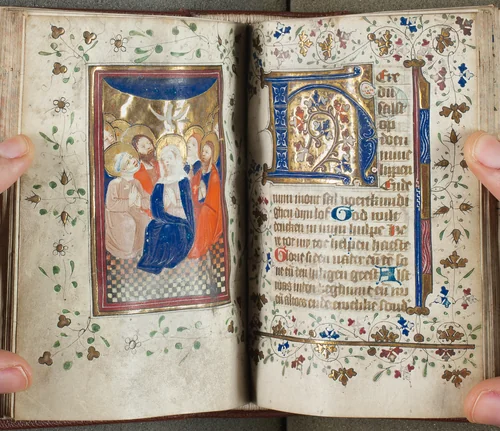
Spanning over two and a half centuries (c. 1410-1675), Netherlandish art demonstrated unparalleled innovation across diverse media, from sacred illumination to panel painting. The early 15th century saw masters revolutionize oil painting techniques, emphasizing meticulous naturalism and minute detail, techniques exemplified in illuminated texts like the elaborate Book of Hours. The region quickly became central to the Northern Renaissance, prioritizing devotional intensity and psychological realism over the classical ideals of the south.
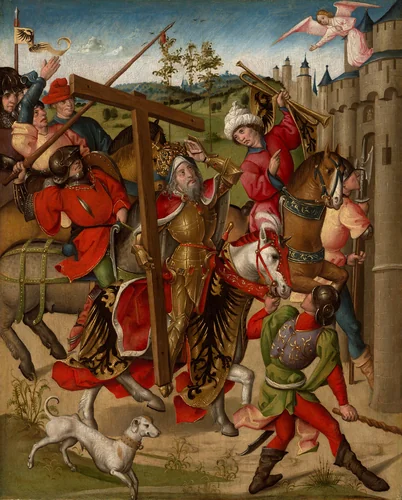
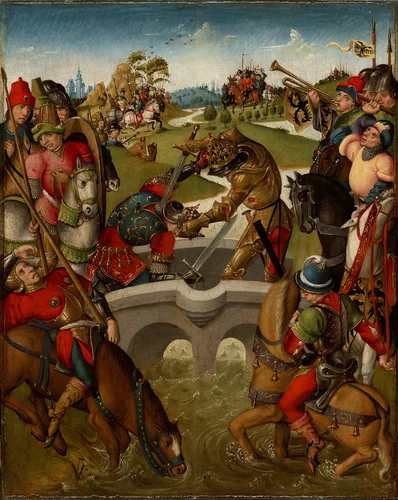
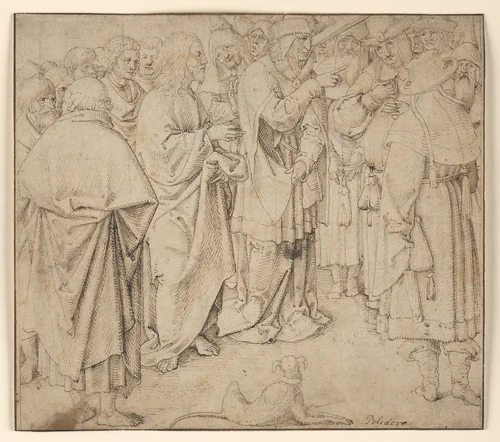
This expansive creative tradition encompasses works ranging from single-volume manuscripts to monumental panel paintings and sophisticated decorative arts. Early masters excelled at complex narrative subjects, including highly allegorical historical and biblical scenes such as Emperor Heraclius Denied Entry into Jerusalem and Emperor Heraclius Slays the King of Persia, which often functioned as vehicles for complex moral and political commentary. The works frequently addressed ethical introspection, perhaps most clearly seen in compositions like The Parable of the Beam and the Mote, showcasing the regional preoccupation with human folly and virtue.
The legacy of these foundational periods meant that artists continually pushed boundaries across both painting and the decorative arts, ultimately giving rise to the celebrated Dutch and Flemish Golden Ages. The tradition’s high-quality prints and paintings now form the bedrock of major international collections, including the National Gallery of Art and the Metropolitan Museum of Art. Because of their profound historical value, a substantial number of these iconic works are now available in the public domain, ensuring global access for scholars and institutions seeking downloadable artwork. It is perhaps a testament to the region’s lasting artistic resilience that the name "Netherlandish" itself, initially just a topographical descriptor, became synonymous with artistic innovation that flourishes even in the lowest places.
Source: Wikipedia · CC BY-SA 4.0