Neil Armstrong
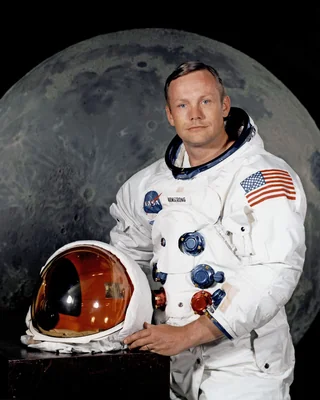
Neil Alden Armstrong (1930-2012) is historically recognized as an aeronautical engineer, test pilot, and the commander of the 1969 Apollo 11 mission, achieving global renown as the first person to walk on the Moon. However, his active period between 1964 and 1969 also established him as one of the twentieth century’s most critical documentarians. Working primarily with a customized Hasselblad camera carried to the lunar surface, Armstrong captured images of unparalleled historical significance, translating an abstract scientific goal into immediate, visceral reality.
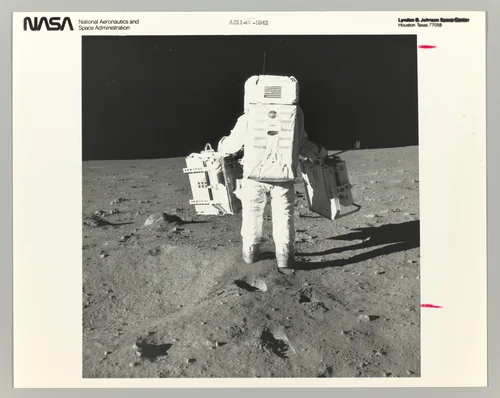
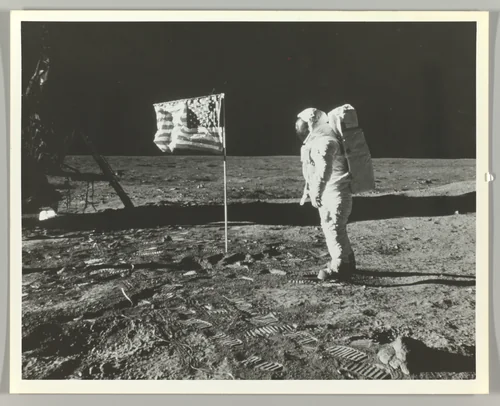
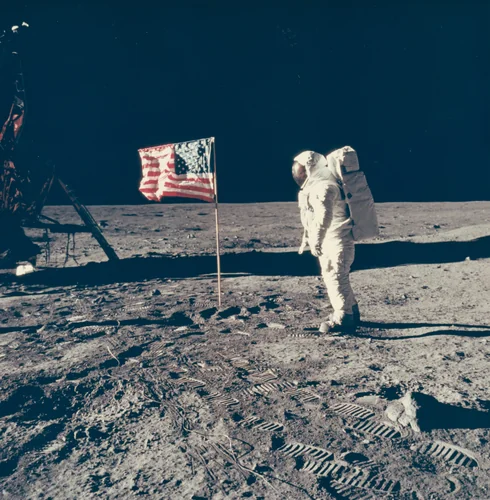
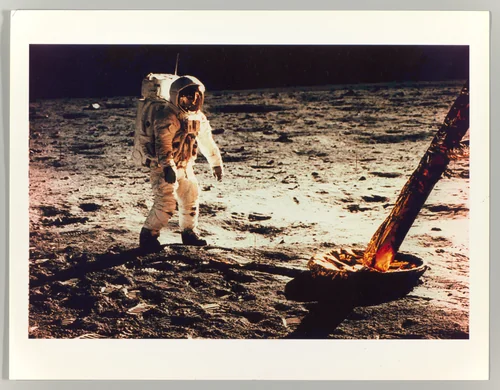
Though photography was a necessity of the mission rather than a primary artistic pursuit, the resulting five-piece corpus is essential viewing. These compositions, taken in the unforgiving, high-contrast environment of the lunar surface, possess an almost sculptural quality rarely achieved in documentary photography. His images consistently feature his co-pilot, Buzz Aldrin, establishing a visual narrative of human presence in an alien landscape. Works such as Buzz Aldrin on the Moon with the American Flag transcend mere scientific documentation; they are meticulously framed visual monuments to technological mastery and national ambition, defined by the sharp shadows and unexpected stillness of the vacuum.
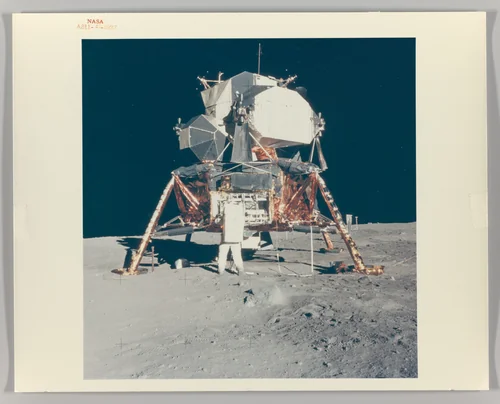
The photographs explore themes of isolation, scale, and the staggering vulnerability of the human figure against a backdrop of cosmic dust and profound distance. The collection is highly regarded, with examples like Buzz Aldrin with Apollo 11 Lunar Module on the Moon held in major institutions including the Metropolitan Museum of Art and the National Gallery of Art. The accessibility of these photographs, many of which are designated public domain, allows these Neil Armstrong prints to circulate globally.
Armstrong's disciplined background as a naval aviator and later a university professor informed his rigorous approach to visual documentation. His photographic output, including Buzz Aldrin Poses with Flag, operates at the unusual intersection of pure science, photojournalism, and conceptual art. A subtle, yet defining characteristic of this body of work is the near total absence of Armstrong himself. While his partner is the consistent subject, Armstrong famously captured only two poorly-defined self-portraits via reflections, maintaining his role strictly as the observational lens through which humanity first viewed the Moon. These historical images are frequently reproduced as high-quality prints, affirming their enduring status not only as artifacts but as globally resonant images of human endeavor.
Source: Wikipedia · CC BY-SA 4.0