Near East
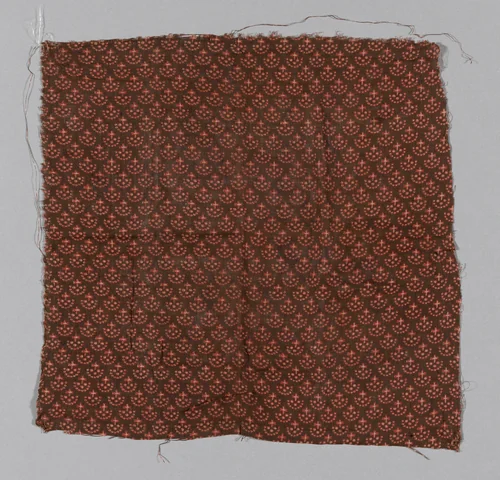
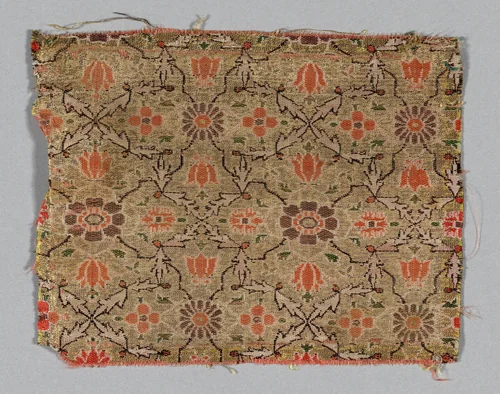
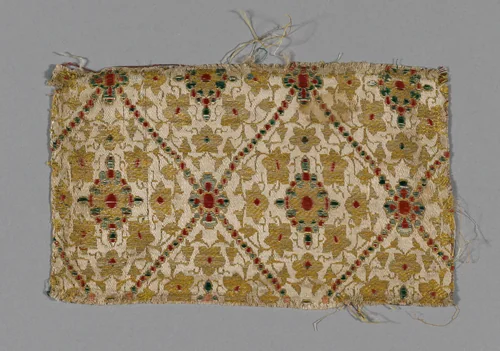
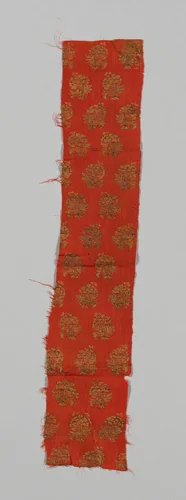
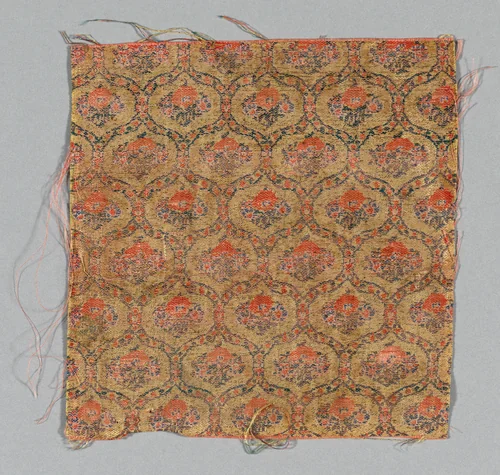
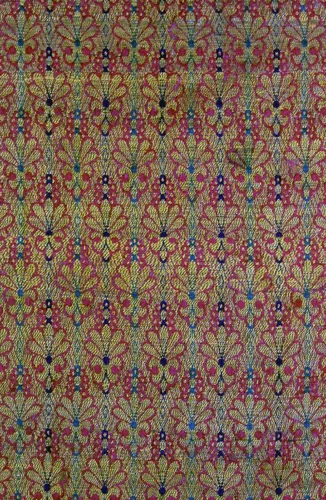
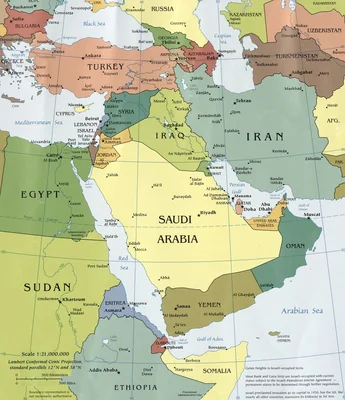
The Near East represents a vast transcontinental artistic heritage, encompassing the historical territories of the Levant, Anatolia, Mesopotamia, and coastal Arabia. Its creative output is immense, spanning millennia of innovation in architecture, ceramics, and metalwork. However, a specific grouping of technical mastery is cataloged around the year 1601: a collection of six registered textile works, including five highly similar artifacts titled Fragment (Dress Fabric), currently preserved in major institutions like the Art Institute of Chicago.
These 17th-century pieces exemplify the sophisticated textile arts of the region, which reached a pinnacle under Ottoman influence. The fragments attest to complex weaving structures and the expert application of mordants and dyes, demonstrating a highly centralized and regulated production process. Fabric arts in this environment were far more than decoration; they functioned as markers of status, trade commodities, and diplomatic gifts, reflecting imperial power and control over the most luxurious materials. The enduring quality of these materials ensures that even small, rescued pieces are still regarded today as museum-quality artifacts, providing invaluable insight into the period’s material culture.
It is necessary to contextualize the term used to define this artistic origin. "Near East" is not a historical self-designation but a modern label, a Eurocentric geographical invention coined primarily by Western scholars in the 20th century. Historically applied to the domains of the Ottoman Empire, the term served to differentiate the region from the "Middle East" and the "Far East," collectively forming the "three Easts" in earlier European nomenclature. It is perhaps one of history’s more curious ironies that a region defined by its exceptional, millennia-spanning artistic legacy should be permanently known by a label invented just yesterday by external geographers.
Today, while academics debate the precise demarcation between "Near East" and "Middle East"—terms often used interchangeably by contemporary reporters—the aesthetic influence remains indisputable. Researchers seeking specific technical details or patterns can access institutional archives that offer downloadable artwork images related to Near East prints and textiles. The legacy originating from this profound convergence of cultures continues to inspire, confirming the region’s perennial role as a fountainhead of innovation in high-quality prints and decorative arts.
Source: Wikipedia · CC BY-SA 4.0