National Aeronautics and Space Administration
The National Aeronautics and Space Administration (NASA), an independent agency of the US federal government established in 1958, redefined the boundaries of both scientific endeavor and visual documentation. Succeeding the National Advisory Committee for Aeronautics (NACA), NASA was intentionally structured with a distinct civilian orientation, emphasizing the peaceful application of space science and aeronautics research. While leading America's foundational exploration programs—including Project Mercury, Project Gemini, and the pivotal 1968–1972 Apollo program missions—the agency simultaneously generated the most significant and transformative body of non-terrestrial photography in history.
NASA’s collective visual output, active primarily between 1964 and 1972 for these iconic works, transcends mere scientific data; it represents a profound shift in human perspective. Operating without precedent, the astronauts and automated instruments served as the ultimate conceptual artists, utilizing specialized equipment to capture vistas previously known only to theory. The resulting images, now held in collections such as the Metropolitan Museum of Art, possess both chilling technical precision and overwhelming dramatic scale.
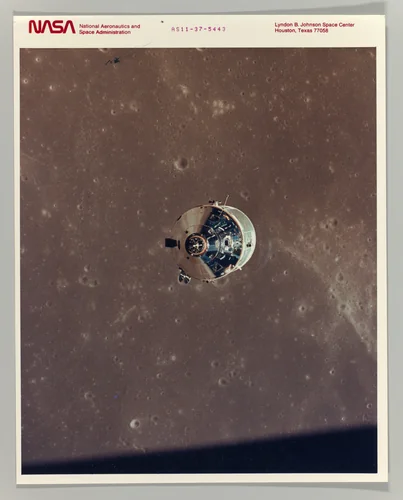
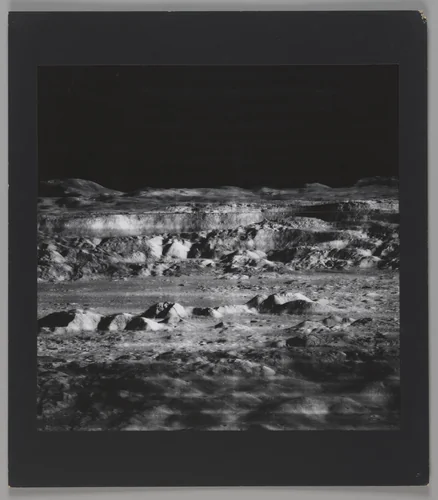
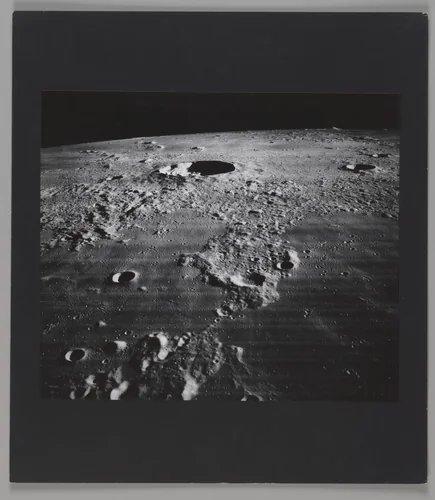
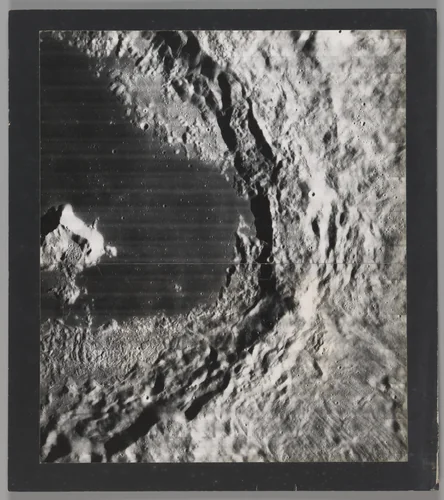
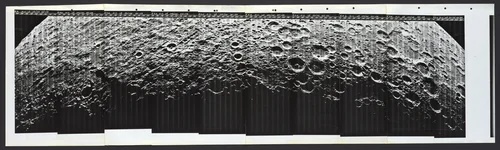
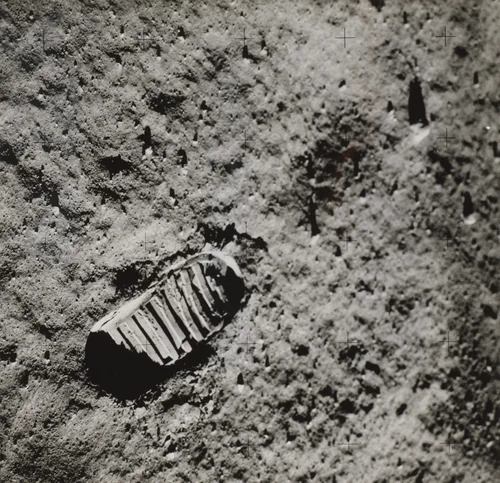
The agency’s visual language is dual-focused, encompassing both stark astronomical landscape and intimate historical narrative. Works like Close-Up of Crater Copernicus and Crater Aristarchus, Schroter's Valley, and Vicinity transform raw geological formations into abstract studies of light, texture, and cosmological time. Conversely, the documentation of the Apollo 11 mission offers an immediate historical record, ranging from the technical complexity shown in Apollo 11 Command and Service Modules Photographed from the Lunar Module in Orbit to the geopolitical significance captured in the photograph of [President Richard M. Nixon Welcomes the Apollo 11 Astronauts Aboard Recovery Ship USS Hornet].
These photographs constitute a unique historical and cultural inheritance. Because these works were created under the auspices of the US federal government, the majority have entered the public domain, ensuring unparalleled access to this unique visual history. This designation has allowed the images to circulate globally, frequently appearing as high-quality prints and downloadable artwork, solidifying their status as museum-quality pieces regardless of origin. It remains a peculiar, fascinating circumstance of the art world that some of the most technologically challenging photographs ever taken are now available royalty-free.
Source: Wikipedia · CC BY-SA 4.0
![[Astronauts in Lifeboat After Apollo 11 Splashdown] by National Aeronautics and Space Administration, photograph, 1964-1974](https://img.artbee.org/b627eb9c-d933-46a6-a64d-c80a02ebde95/small.webp)
![[President Richard M. Nixon Welcomes the Apollo 11 Astronauts Aboard Recovery Ship USS Hornet] by National Aeronautics and Space Administration, photograph, 1964-1974](https://img.artbee.org/8d645def-9cda-4e29-a3db-356c0c8f10a2/small.webp)

![[Lunar Surface Photographed by Surveyor V] by National Aeronautics and Space Administration, photograph, 1967](https://img.artbee.org/057fb43c-2a0d-47fe-9fbb-615ef48a3bc7/small.webp)
![[Panorama of Moon Surface, from Apollo 16 Mission] by National Aeronautics and Space Administration, photograph, 1972](https://img.artbee.org/5b2ba8bf-c153-4f27-8491-0d11f66679d2/small.webp)