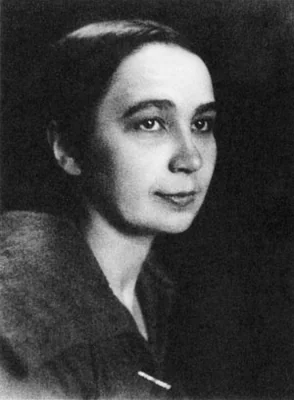
Natalia Goncharova
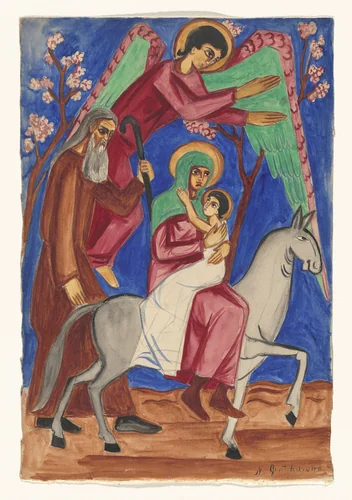
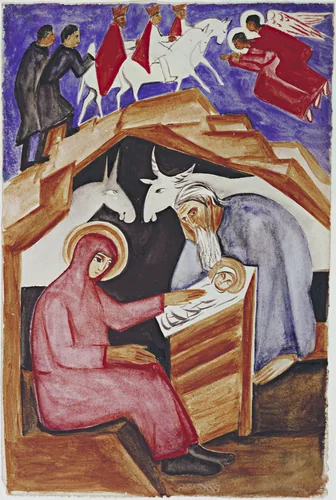
Natalia Sergeevna Goncharova (1881-1962) stands as a foundational figure in the Russian avant-garde, recognized internationally not only for her innovations in painting but also for her prolific and groundbreaking work as an illustrator, costume designer, and writer. A polymath of the early twentieth century, her contributions fundamentally shaped Russian modernism, merging traditional folk motifs with radical Western and Eastern aesthetic developments. Her early career was defined by her intensive collaboration with Mikhail Larionov, her lifelong partner and fellow artistic pioneer.
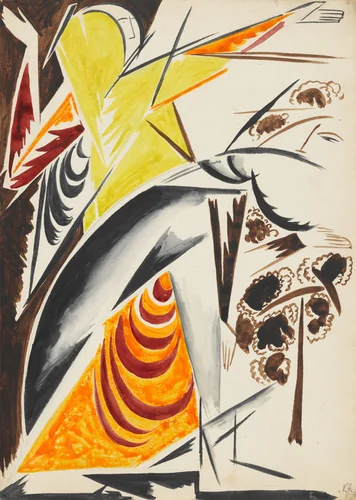
Goncharova was instrumental in the formation of Moscow’s most radical exhibiting groups. She was a founding member of the Jack of Diamonds (1909-1911), which galvanized independent modernism in Russia, and later the more aggressively experimental Donkey’s Tail (1912-1913). This period of intense artistic ferment culminated in the joint invention of Rayonism (1912-1914), an abstract style aiming to capture the energy of linear light rays reflecting across surfaces. This innovation cemented Goncharova’s place as a leader in global abstract development, a reputation reinforced by her association with the European movement Der Blaue Reiter.
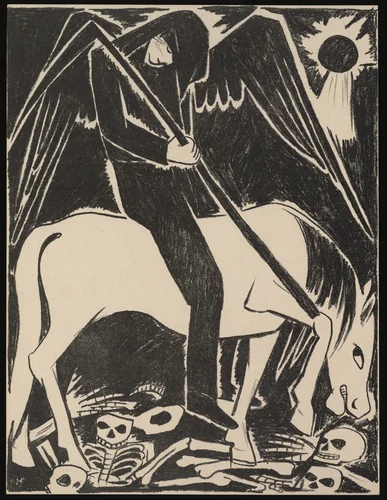
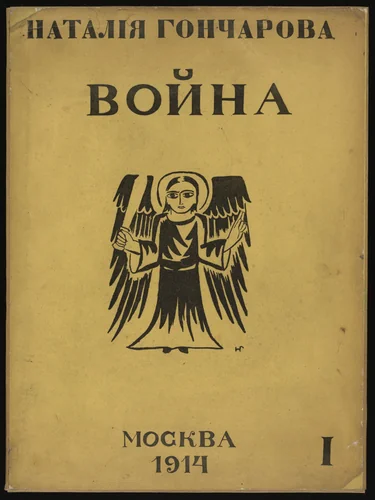
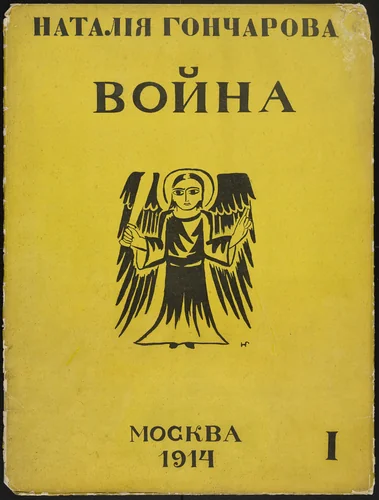
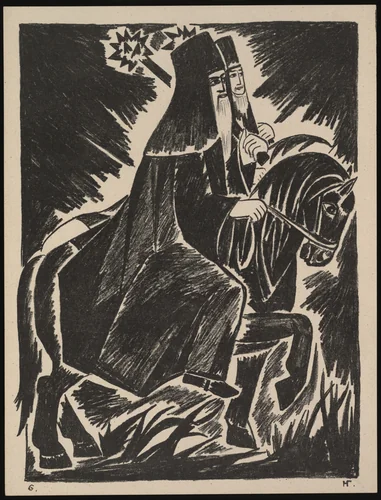
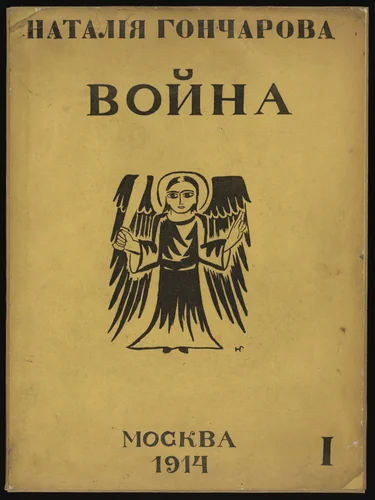
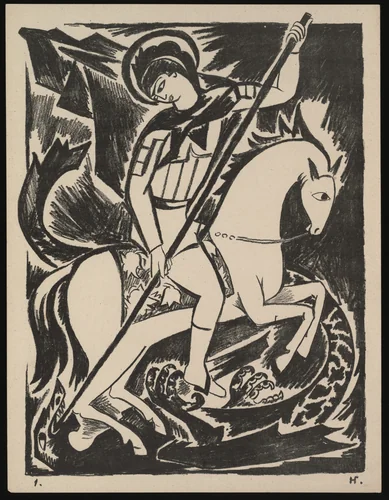
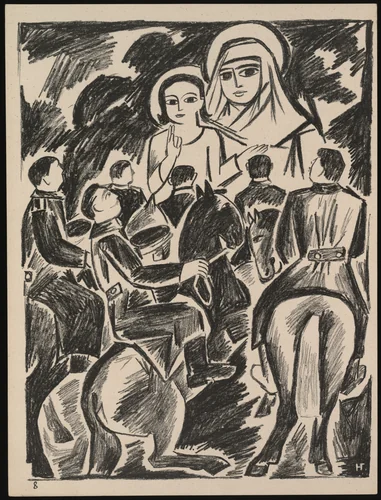
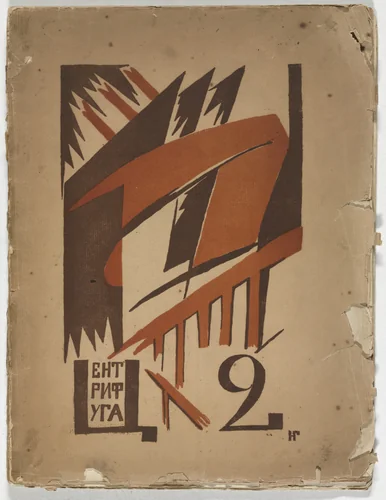
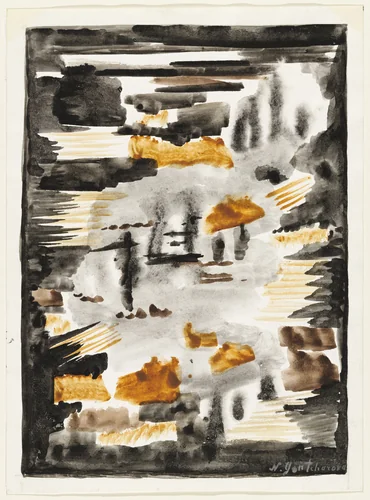
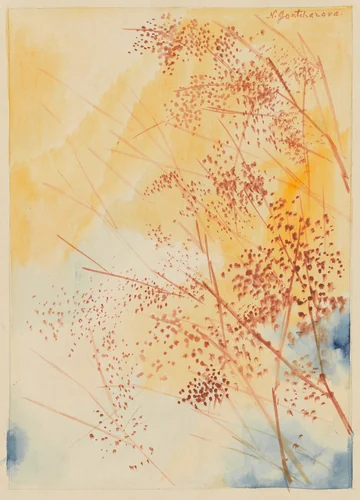
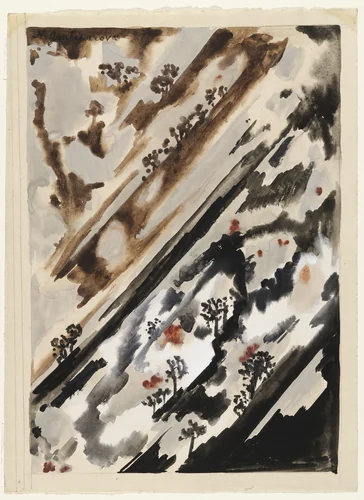
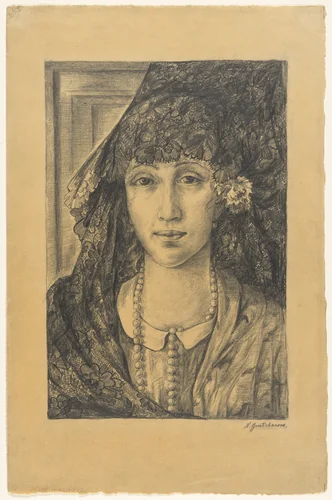
While widely celebrated for her large-scale canvases, Goncharova’s restless experimentation extended powerfully into book design. She produced at least fourteen illustrated books, contributing significantly to the Futurist aesthetic through seminal works like the covers and folios for Igra v adu (A Game in Hell) and Mirskontsa (Worldbackwards), active in this field as early as 1912. Her ability to synthesize indigenous styles with Cubist and Futurist structures made her illustrations exceptionally potent. The inclusion of pieces like the dynamic abstract work Electricity in major collections, such as the Museum of Modern Art, underscores her sustained engagement with industrial and visual modernism. Today, the continued global interest in her influential body of work ensures that Natalia Goncharova paintings and drawings, and high-quality prints derived from them, remain essential to the study of modern art history.
Leaving Russia for Paris in 1921, Goncharova remained active on the international stage until her death, focusing increasingly on stage and costume design for major figures, including Serge Diaghilev’s Ballets Russes. It is perhaps a subtle testament to her sheer artistic drive that, despite being a primary pioneer of revolutionary Russian abstraction, she worked ceaselessly on applied design projects for over four decades following the inception of Rayonism.
Source: Wikipedia · CC BY-SA 4.0