Nasca artist
The Nasca artist was a highly skilled textile creator active within the Nasca culture of ancient Peru between approximately 500 and 600 CE. As is characteristic of artists from this pre-Columbian period, the individual artist remains anonymous, their identity subsumed within the broader cultural tradition of complex fiber arts. The documented works attributed to this period are primarily intricate textiles, demonstrating the advanced embroidery and weaving techniques characteristic of the south coast region.
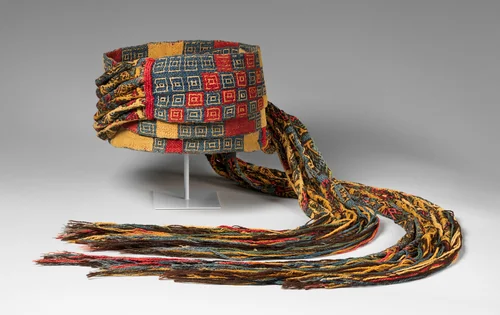
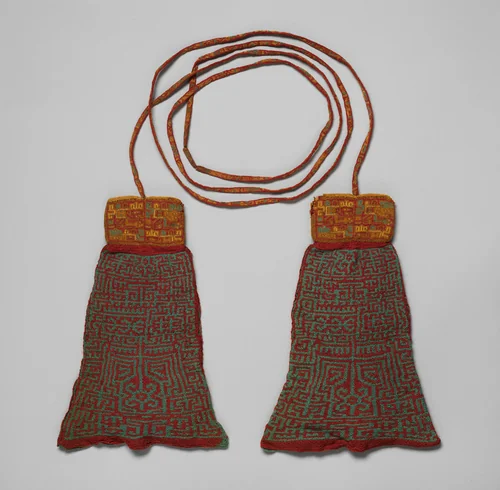
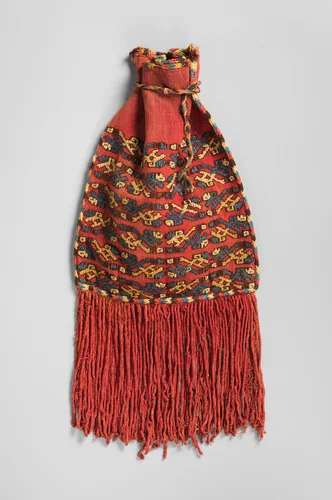
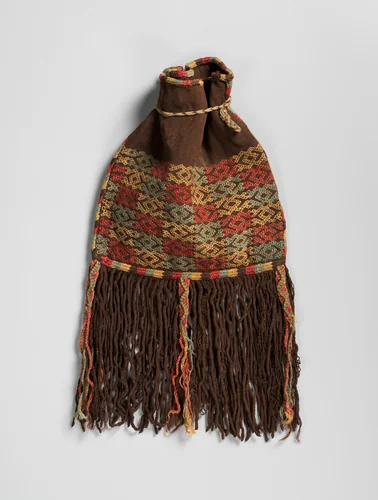
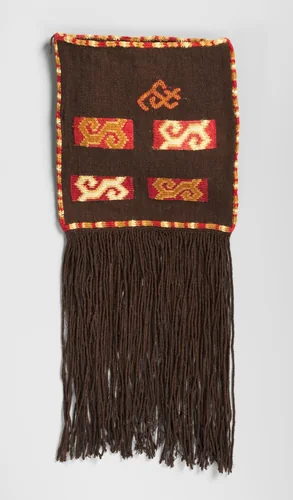
Five distinct objects attributed to this span of activity are represented in major international institutions, affirming the artistic quality and historical significance of the output. These surviving works are preserved in the collections of the Metropolitan Museum of Art. The documented pieces include a Headband, a highly detailed Headband with ornamental tassels, and three instances of the Embroidered bag with fringe. These objects underscore the importance of portable, ceremonial textiles in Nasca social and religious life, exhibiting the expert craftsmanship required for museum-quality presentation.
While the original textiles remain irreplaceable artifacts, the designs and iconography of the Nasca culture are widely studied. Many of the artist’s extant works are frequently digitized, making high-quality prints and downloadable artwork available to researchers and the public under public domain agreements. This accessibility ensures the continued study of the distinct iconographic language utilized by the Nasca artist prints and their contemporaries.