Mushfiq
Mushfiq stands as a highly significant figure in the Mughal school of painting, distinguished primarily by his substantial contributions to one of the most prominent sub-imperial ateliers of the late sixteenth and early seventeenth centuries. Active roughly between 1520 and 1603, his specialized career was anchored to the patronage of Abd-ur-Rahim Khan-i-Khanan, the influential commander-in-chief of the Mughal army. This patronage structure is pivotal: while Mushfiq’s production dates align perfectly with the artistic flowering under Akbar and Jahangir, his distinctive hand is conspicuously absent from the surviving inventories of the Imperial workshops themselves.
The commissions Mushfiq undertook for the Khan-i-Khanan were monumental in scale, demanding exceptional technical skill and narrative fluency. He contributed extensively to the illustrated manuscripts of the Ramayana and the Razmnama, the latter being the Persian translation of the vast epic Mahabharata. These complex, large-scale narrative cycles underscore the immense wealth and sophisticated artistic demands of the sub-imperial court, which, under the leadership of a powerful patron, often rivaled the output and quality of the central Imperial establishment.
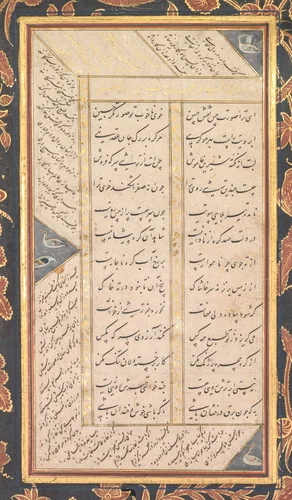
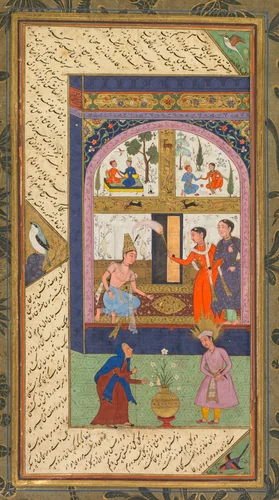
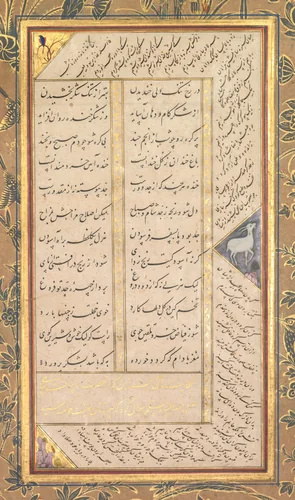
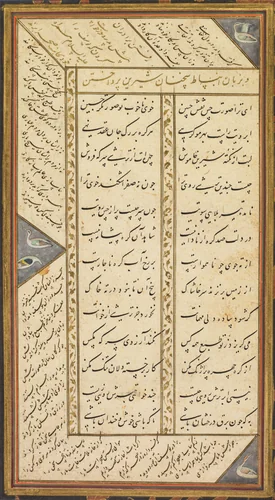
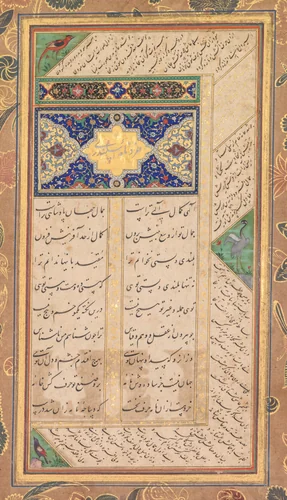
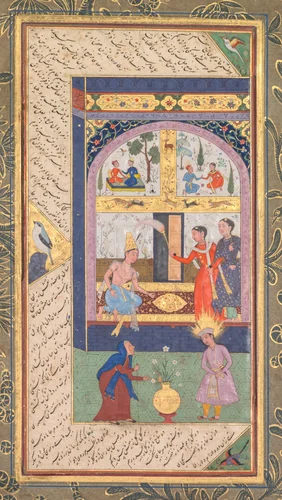
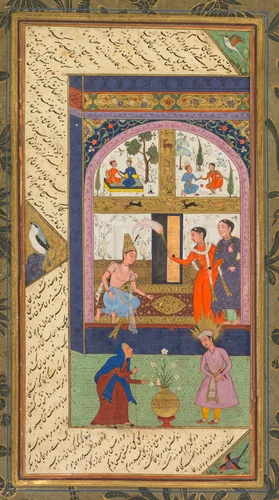
Beyond these colossal projects, several individual Mushfiq paintings are known, some bearing his signature, which affirms the recognition of his style. His specialization leaned heavily toward classical literary illustration. Works from Jami’s Panj Ganj (Five Treasures), including detailed folios illustrating the masnavis Yusuf va Zulaykha (Joseph and Zulaykha) and Khirad-nama-i Iskandari (Alexander’s Book of Wisdom), exemplify his mastery of both Persian poetic tradition and the meticulous Mughal miniature technique. It is perhaps one of the subtle historical observations of the era that some of the period’s most technically accomplished and museum-quality illustration, like the output of Mushfiq, flourished in these secondary, yet powerful, patronage centers.
Today, seven recorded works attributed to Mushfiq reside in collections such as the Cleveland Museum of Art. These pieces, providing rare insight into the artistic output outside the direct Imperial purview, are increasingly accessible to scholars; several of his key works are now in the public domain and available as high-quality prints for comprehensive study.