Mosè Bianchi
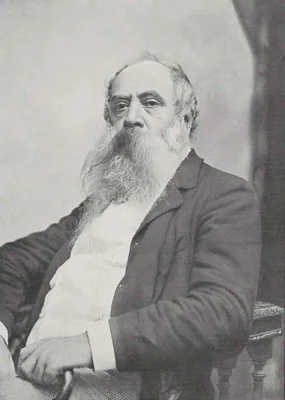
Mosè Bianchi (1840-1895) was an essential Italian painter and printmaker whose career spanned the critical decades of realism and early modernism in Lombardy. Active primarily between 1840 and 1895, Bianchi established a reputation for works that balanced dramatic architectural rendering with intimate, observational genre studies.
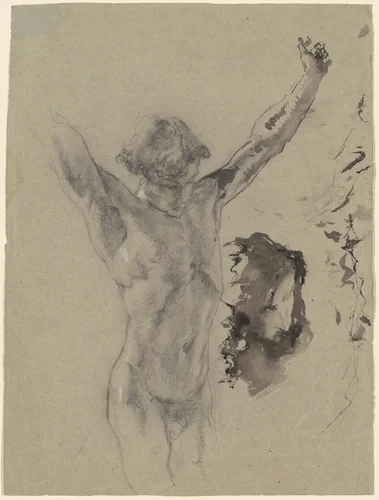
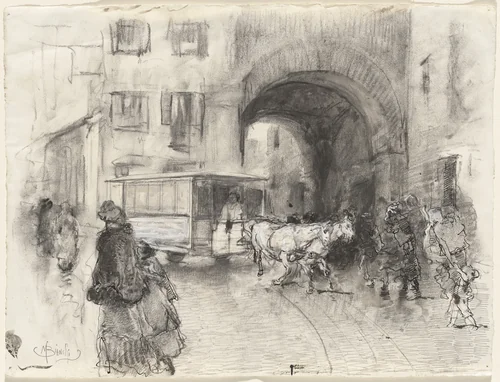
The surviving corpus of his graphic work, currently represented by eleven prints and two drawings housed in institutions such as the National Gallery of Art, confirms Bianchi’s expertise in translating complex visual information into refined etchings and studies. His output serves as a sophisticated document of daily life, devotional practices, and regional costume in post-unification Italy.
Bianchi mastered the depiction of interior space, leveraging light and shadow to establish mood and depth. His architectural studies, exemplified by Intérieur d'église à Milan [Interior of a Church in Milan], demonstrate a precise handling of vast scale and perspective, often framing an immense space around a tiny, focused figure, capturing the profound solitude found within monumental architecture. Interestingly, this dedication to grand, silent spaces is equally matched by his focused attention on private, domestic scenes. Works like La lezione di violincello [The Violin Lesson] showcase his ability to capture focused human interaction and quiet industry, hallmarks of the era’s academic realism.
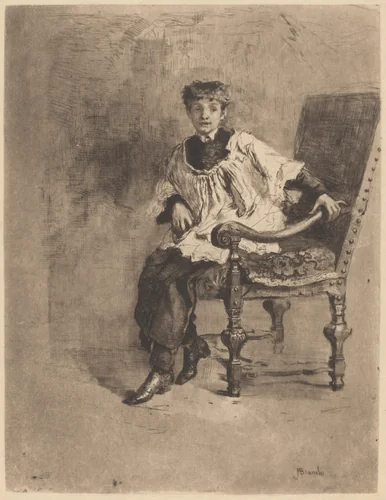
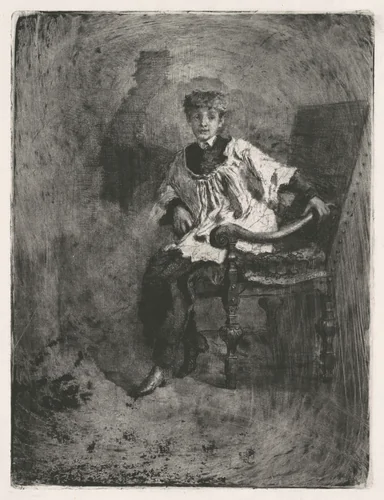
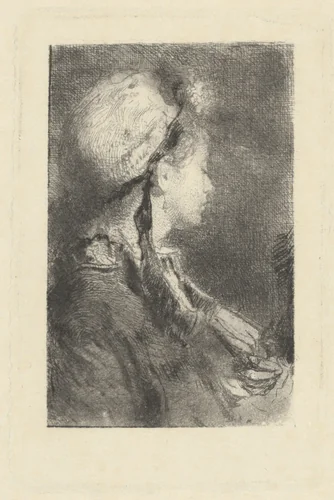
Bianchi’s sustained interest in devotional subjects is evident in the repeated presence of the Seated Acolyte among his works, suggesting an enduring fascination with moments of contemplation and preparation, rather than the spectacle of ritual itself. Furthermore, his graphic work often serves as ethnographic record; the print Ciociara [Peasant Woman of the Campagna] meticulously records the traditional dress and resilient character of a woman from the Lazio region, contributing valuable visual insight into Italy’s diverse cultural fabric during a period of rapid industrial and social evolution.
Though perhaps overshadowed by contemporaries who pushed the boundaries of Verismo, Bianchi provided a deeply felt, technically excellent foundation for Italian realist tradition. Today, many fine examples of Mosè Bianchi prints and drawings have entered the public domain, ensuring that this high-quality record of late nineteenth-century life remains accessible. These detailed works are increasingly valued as downloadable artwork for scholars and collectors worldwide.
Source: Wikipedia · CC BY-SA 4.0
![Intérieur d'église à Milan [Interior of a Church in Milan] by Mosè Bianchi, print, 1869-1879](https://img.artbee.org/e1640679-f46f-4689-be87-19acdd2ff435/small.webp)
![La lezione di violincello [The Violin Lesson] by Mosè Bianchi, print, 1869-1879](https://img.artbee.org/a37d9f66-8290-4ac7-8e9f-c2756be46421/small.webp)
![Ciociara [Peasant Woman of the Campagna] by Mosè Bianchi, print, 1870-1879](https://img.artbee.org/c89337b3-015e-4ca1-aacf-00a4e8359500/small.webp)
![I Fratelli sono al campo [The Men are in the Field] by Mosè Bianchi, print, 1870](https://img.artbee.org/4bd2e297-b822-4345-8bd5-ae998557f73d/small.webp)
![Un Miracle [A Miracle] by Mosè Bianchi, print, 1874](https://img.artbee.org/51d7f89d-07e0-4237-b096-12a2d1666362/small.webp)
![Un Miracle [A Miracle] by Mosè Bianchi, print, 1874](https://img.artbee.org/ca40bf60-3b38-4373-a78e-293fa3c2dee1/small.webp)
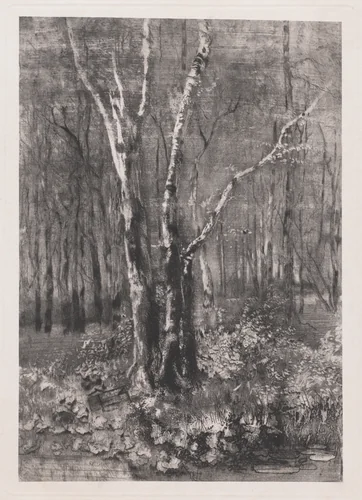
![Bosco [Woods] by Mosè Bianchi, print, 1890-1900](https://img.artbee.org/afb2b494-8bcb-4666-8b46-c12ab8275f23/small.webp)