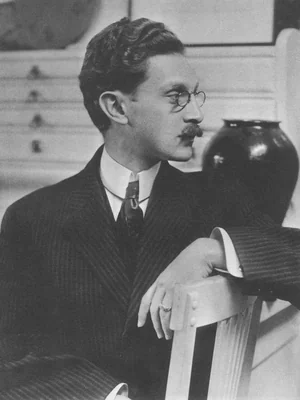
Morton Schamberg
Morton Livingston Schamberg (1881-1918) holds a crucial, if tragically abbreviated, position in the history of early American Modernism, particularly for his pioneering explorations across both painting and photography. He was among the first American artists to fully internalize the visual revolution initiated in Europe and translate its radical formal elements into a distinctly American idiom. Trained initially as an architect, Schamberg quickly transitioned to painting, studying in Philadelphia and later relocating to Paris, where he was exposed directly to the emerging avant-garde movements.
Schamberg stands as one of the earliest American adopters of the Cubist style. While many of his peers struggled to move past mere imitation, Schamberg synthesized the fractured planes and geometric structure of the movement with a unique focus on industrial and mechanical subjects. This aesthetic pursuit, which celebrated the clean lines, sharp edges, and functional elegance of the machine, established him as a key figure in the formation of Precisionism. Alongside colleagues like Charles Sheeler, Schamberg established a formal vocabulary based on clarity, compositional rigor, and a near-photographic sharpness, treating factories, gears, and mundane domestic apparatus with the graphic reverence typically reserved for classical portraiture. This cool, meticulous elevation of the functional to the sublime was perhaps his most lasting theoretical contribution.
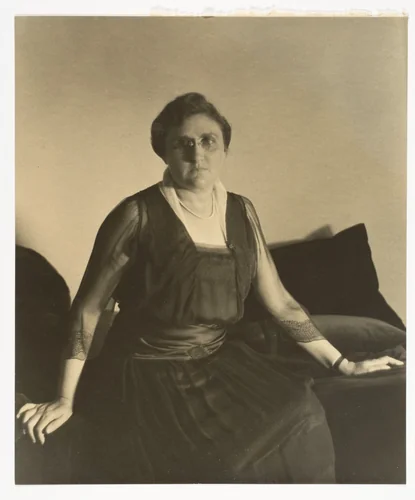
Although celebrated today primarily for his Morton Schamberg paintings, he produced a compelling, albeit small, body of photographic work between 1910 and 1915, of which roughly fifteen distinct images are known to survive. These photographs, including formal portraits like Etellea and studies of architecture, demonstrate the same rigorous concern for form and plane that defined his canvases.
Tragically, Schamberg’s career was curtailed just as his vision reached full maturity; he died prematurely in the devastating influenza pandemic of 1918, aged 37. His complete artistic output, though limited by his early death, is now considered essential for understanding the transition from Ashcan Realism to streamlined American Modernism. Major institutions, including the Metropolitan Museum of Art, hold his key works in their collections. Thankfully, much of his visual legacy, encompassing both canvases and high-quality prints derived from his estate, is now accessible through the public domain, allowing broader study of this influential pioneer.
Source: Wikipedia · CC BY-SA 4.0
![[View of Rooftops] by Morton Schamberg, photograph, 1917](https://img.artbee.org/294da854-604c-47a5-bb2a-efaf1697df1b/small.webp)