Mortimer Menpes
Mortimer Luddington Menpes (1855–1916) was a pivotal Australian-born artist whose career spanned the disciplines of painting, illustration, authorship, and advanced printmaking. His technical expertise, particularly in drypoint and color etching, secured his position as a central figure in the late Victorian and early modern aesthetic movements. Menpes’s influence was cemented early in his career through a prolonged, complicated professional relationship with James McNeill Whistler, whose methods and subjects Menpes initially absorbed and then aggressively adapted.
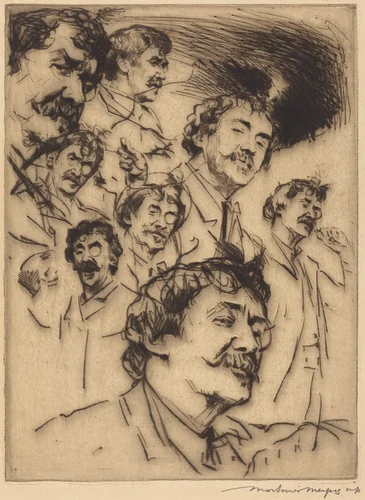
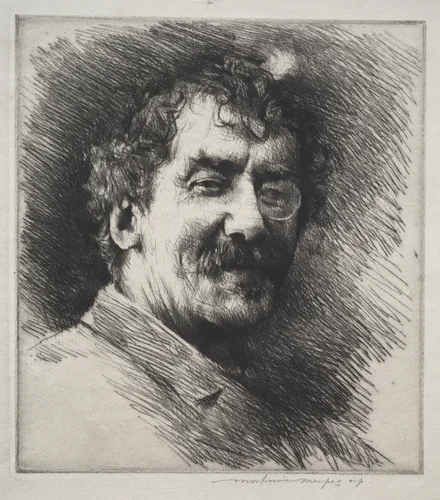
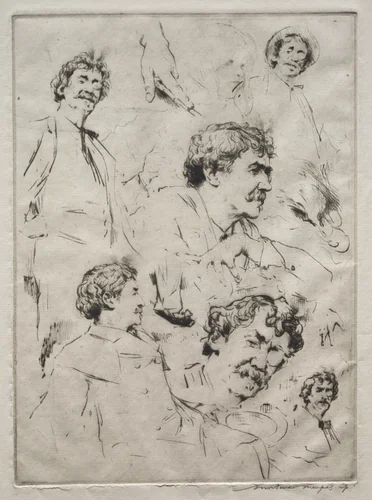
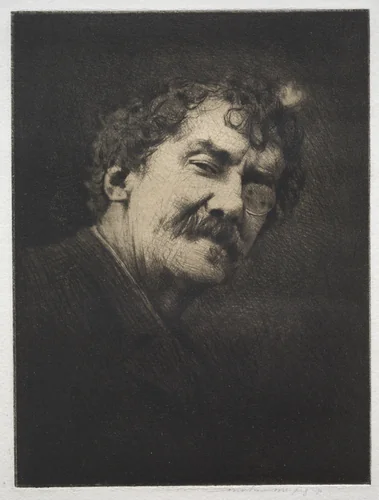
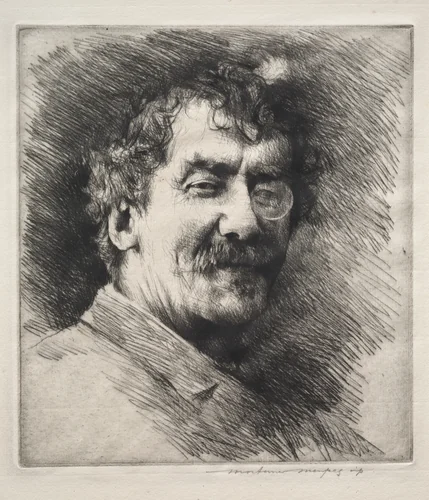
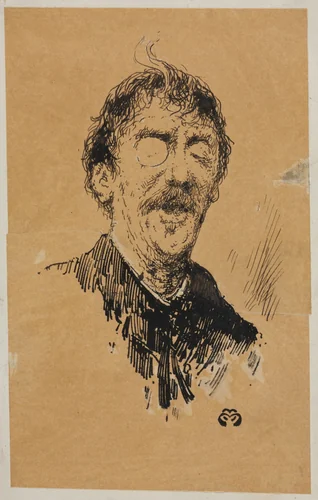
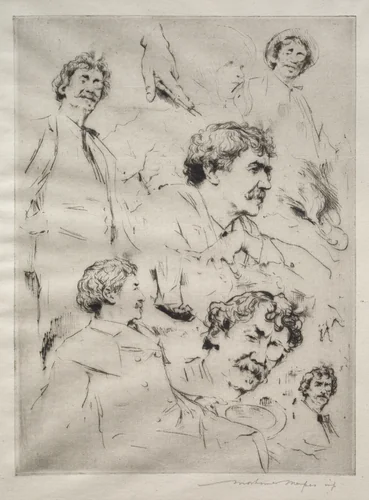
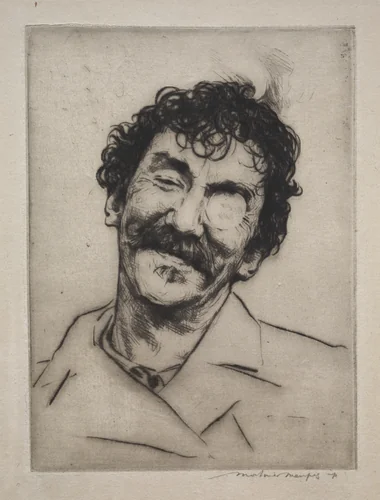
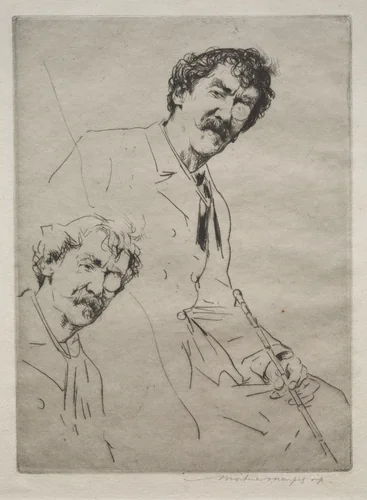
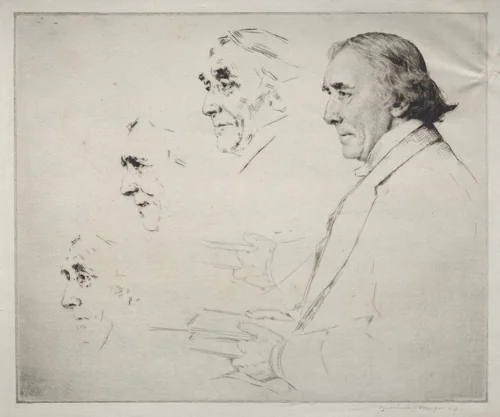
Trained at the South Kensington Schools, Menpes quickly established a reputation not only for his technical skill but for his innovative approach to material science. He experimented tirelessly with inks, papers, and printing techniques, pursuing a clarity of color and line that pushed the limits of mechanical reproduction. This dedication is evident in his masterful etched portraits of his mentor, including the compelling studies Portrait of Whistler with the White Lock and Six Faces of Whistler. Many of these observational studies of the era’s key personalities are now available as downloadable artwork through public collections.
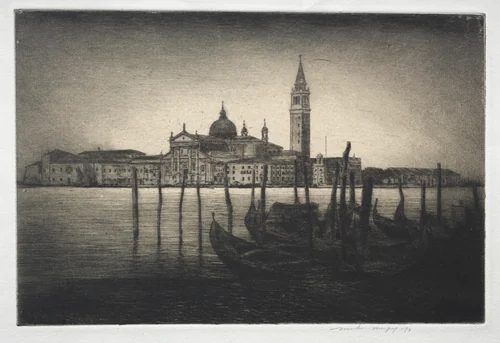
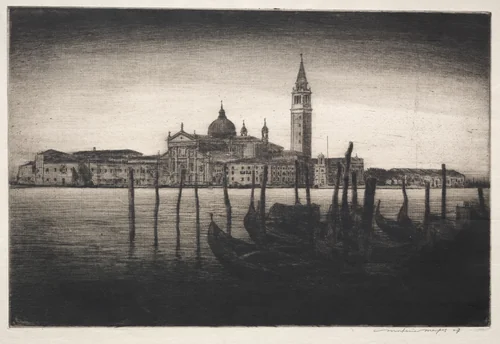
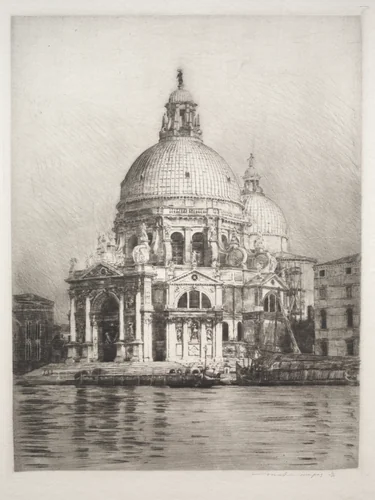
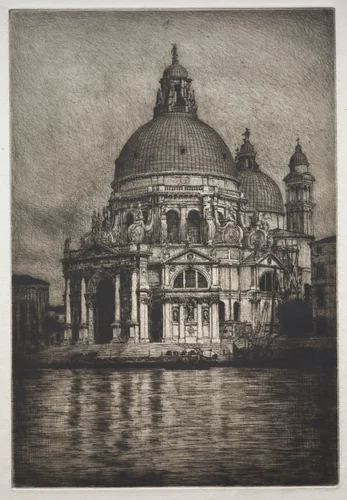
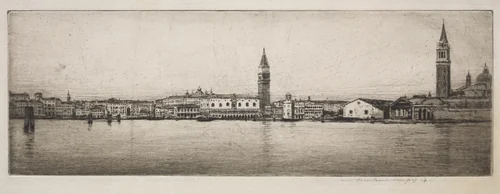
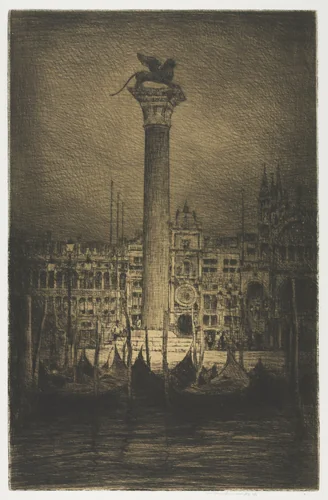
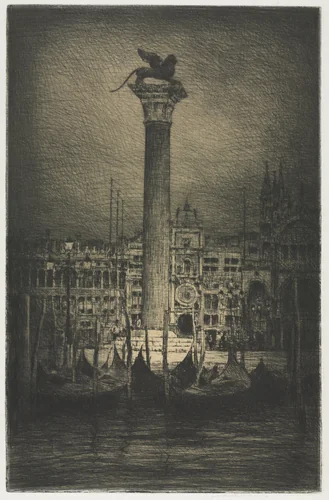
Menpes utilized his printmaking innovations to document extensive international travels, publishing illustrated volumes on his journeys through Venice, Japan, India, and other global centers. Scenes like the atmospheric San Giorgio Maggiore reveal his capacity to capture exotic light and cultural nuances with rapid precision, often working directly on the plate or block while abroad. It is worth noting that Menpes, dedicated to consistency, often traveled with his own custom-built, portable printing presses to ensure the quality of the proofs—a commitment that speaks volumes about his organizational drive and meticulous control over the final product.
Though his output included numerous Mortimer Menpes paintings, his legacy rests primarily upon his prolific body of graphic work. This sophisticated approach to mechanical reproduction ensured that his high-quality prints circulated widely, democratizing access to art during the fin-de-siècle. Today, his work is conserved in prestigious institutions, including the National Gallery of Art and the Cleveland Museum of Art, ensuring the preservation of this unique contribution to late nineteenth-century printmaking.
Source: Wikipedia · CC BY-SA 4.0