Morris Hirshfield
Morris Hirshfield (1872–1946) secured his unexpected place in American Modernism through a brief but immensely impactful painting career beginning late in life. The Polish-American artist, who started painting seriously only in 1937, achieved immediate institutional recognition, with his works entering the collection of the Museum of Modern Art, New York, a testament to the sophistication underlying his seemingly simple technique. Hirshfield’s career spans just under a decade, yet his concise body of work remains a critical intersection between self-taught artistry and the sophisticated tastes of the mid-twentieth-century avant-garde.
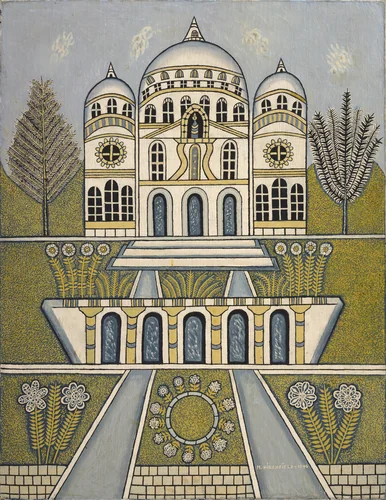
Hirshfield's distinctive approach is often classified as naïve art, though the formal complexity of his compositions belies any casual designation. His canvases are defined by an obsessive attention to surface texture and repeating ornamentation, a characteristic believed to be influenced by his decades spent manufacturing slippers and ladies' garments before retiring to paint. Like a master tailor fitting fabric, Hirshfield used meticulous, interlocking patterns to delineate the forms of his subjects, creating a flat, highly textured visual experience.
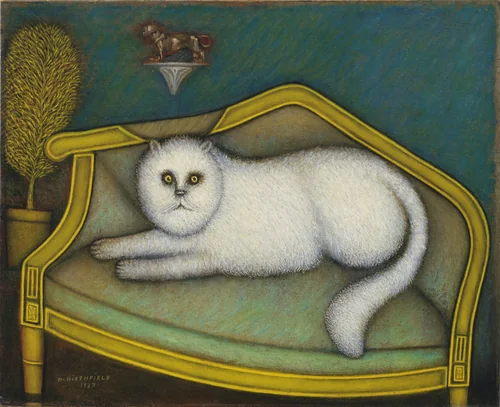
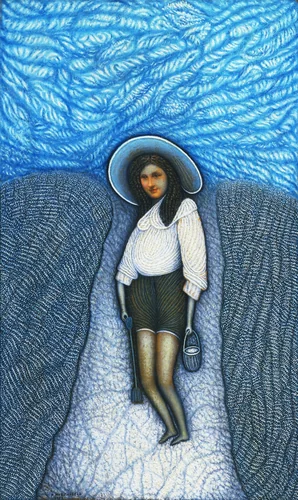
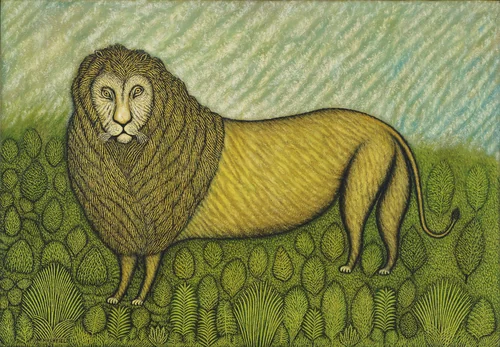
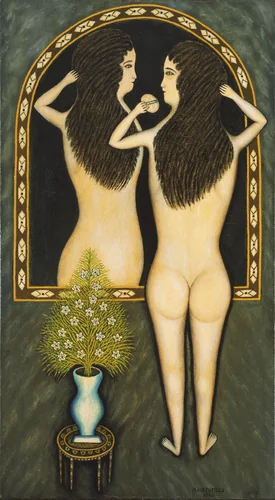
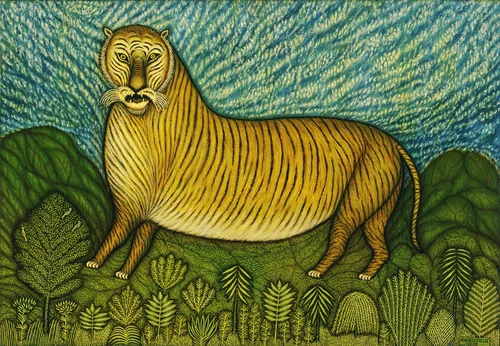
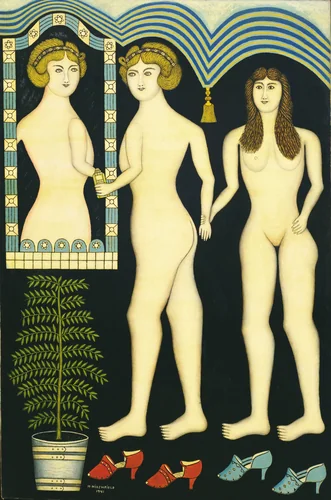
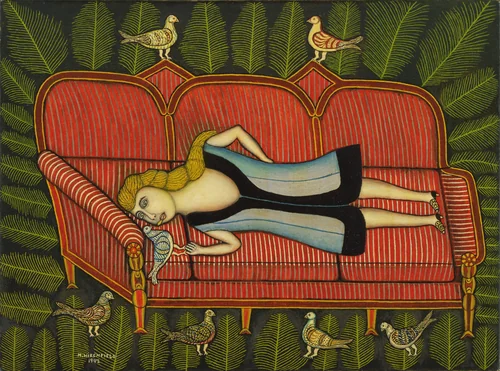
His most recognizable Morris Hirshfield paintings focus predominantly on domestic scenes, exotic animals, and the female figure, rendering them with an appealing and unsettling visual innocence. Works such as Angora Cat and Tiger exemplify this mastery of pattern; the dense repetition of linear strokes flattens the picture plane while simultaneously giving the animals an almost sculptural presence. Similarly, Beach Girl and Girl in a Mirror merge precise detail with fundamental two-dimensionality, creating portraits that are both tender and formally rigorous.
Though his active period was short, the lasting power of his imagery ensures ongoing study and appreciation for his unique contribution to modern art. Because of their enduring appeal and artistic significance, many of the most famous Hirshfield works are today accessible through public domain archives, allowing collectors worldwide to obtain high-quality prints and appreciate the delicate, patterned universe he created.
Source: Wikipedia · CC BY-SA 4.0