Moritz Calisch
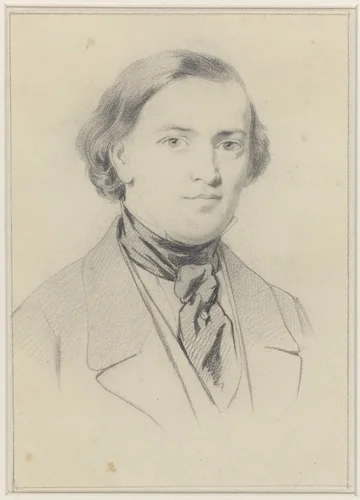
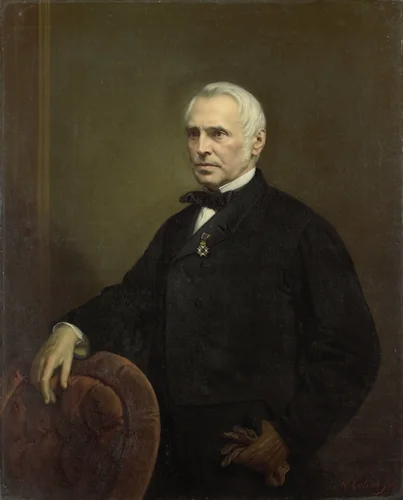
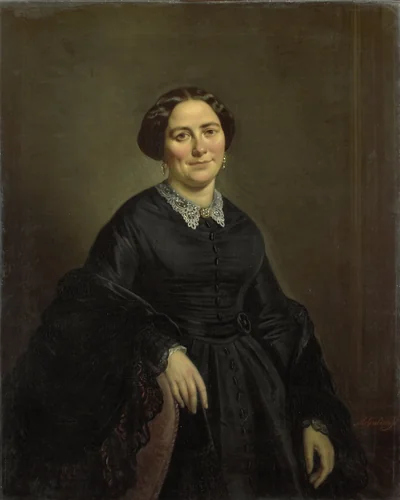
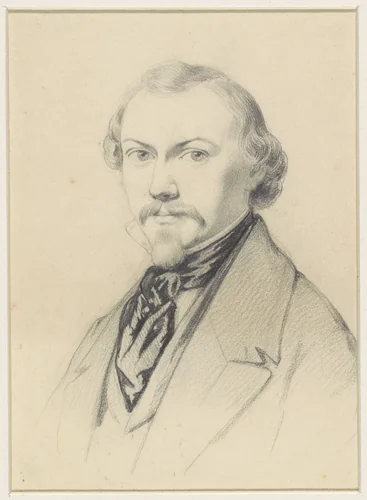
Moritz Calisch (active 1839-1853) established himself as a proficient 19th-century painter and draughtsman in the Northern Netherlands. While his known surviving output is modest-currently registered at six works spanning both painting and drawing-these pieces provide crucial insight into the demands of high-level academic portraiture during the mid-Victorian era in Amsterdam. His work is characterized by a precise realism and an ability to capture the specific professional bearing of his sitters.
Calisch operated during a period preceding the stylistic upheavals of the later 19th century, focusing instead on the established conventions of detailed representation and tonal accuracy. His limited, yet concentrated, body of work demonstrates a consistent skill in rendering texture and psychological presence, whether executed in oil paint or graphite. A significant portion of his oeuvre is preserved in the Rijksmuseum, underscoring its historical and aesthetic value.
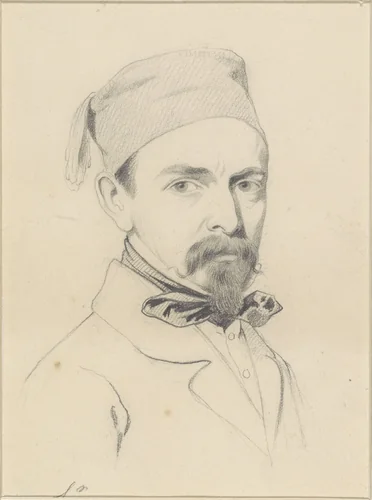
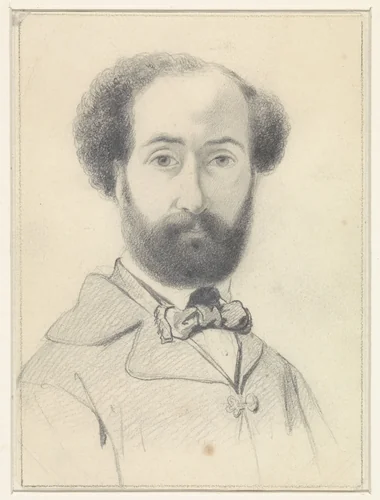
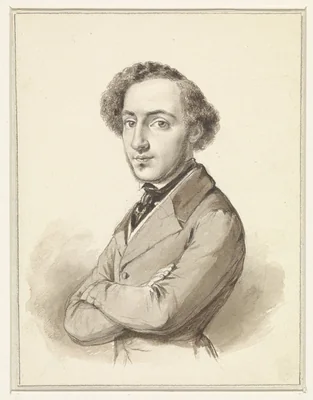
Among his defining commissions are the formal likenesses of figures central to the era's emerging infrastructure, such as the portrait of Cornelis Outshoorn, the notable engineer and architect, and a corresponding depiction of his wife, Johanna Christina Beelenkamp. It is perhaps telling that Calisch’s artistic services were sought by individuals responsible for shaping the physical and civic landscape of the Netherlands; his subjects were often the pillars of the burgeoning professional class. Other figures, including Johannes Hilverdink and Hendrik Hollander Cz., are rendered with the serious composure expected of influential citizens of the time.
The enduring nature of Moritz Calisch paintings and drawings ensures their continued study. As historically significant works, many of his pieces have transitioned into the public domain, allowing institutions and researchers worldwide access to downloadable artwork for scholarly review. This accessibility, coupled with the ability to source high-quality prints, ensures that the quiet precision of 19th-century Dutch academic realism remains appreciated well beyond the museum wall.
Source: Wikipedia · CC BY-SA 4.0