Mori Sosen
Mori Sosen (1747-1821) stands as a distinct and highly specialized master within the lineage of the Shijō school, a movement that flourished in Kyoto during the late Edo period. Active from the mid-eighteenth century until his death, Sosen synthesized the fluid, naturalistic brushwork advocated by his contemporaries with an unparalleled commitment to realism, particularly in zoological subjects. While proficient in various genres, his lasting historical legacy rests almost entirely on his unique specialization in the depiction of Japanese macaques.
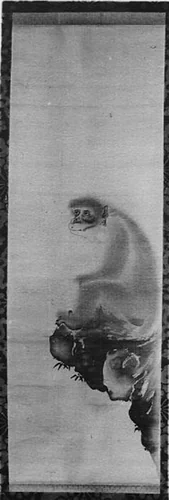
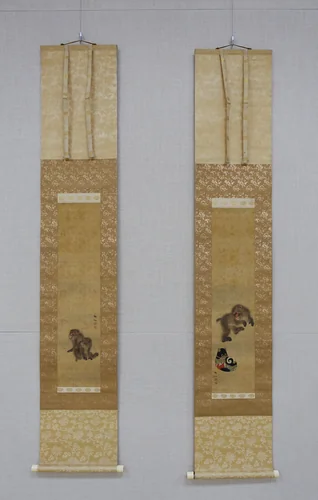
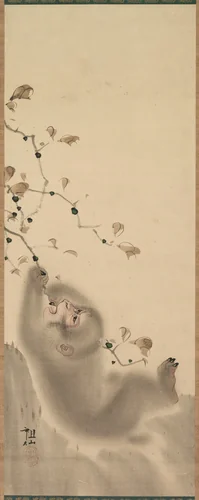
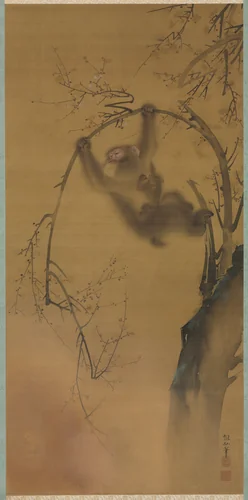
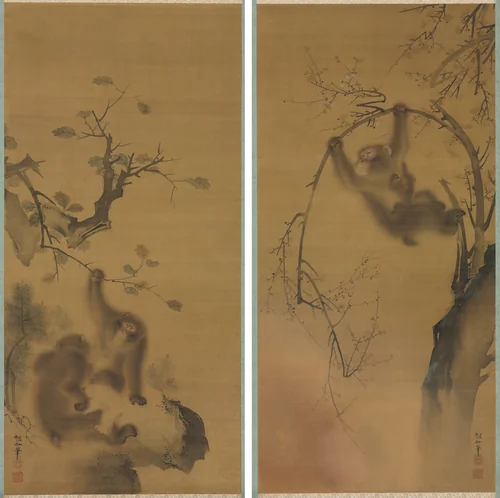
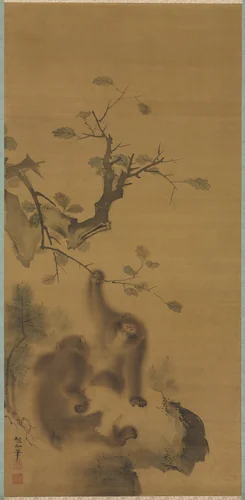
Sosen’s art redefined the image of the monkey in Japanese painting, moving beyond traditional caricature or narrative allegory to achieve a profound psychological depth. He did not simply paint generic forms; he cataloged their existence, creating intimate portraits of behavior and emotion. Works such as Monkey Hanging on to a Branch and Monkeys at Play display a remarkable level of anatomical precision, meticulously detailing individual strands of hair and rendering muscular tension with striking accuracy. This focus on tactile texture, combined with the Shijō school’s delicate color washes, established a new benchmark for natural observation in eighteenth-century painting.
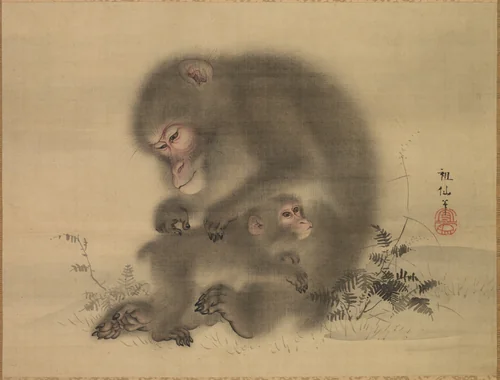
This rigorous specialization secured Sosen’s unique position within the art historical record. His singular dedication to his primary subject was so extreme that historical accounts often suggest he lived in the wild to observe his subjects firsthand, achieving an intimacy that borders on the obsessive. This observational rigor resulted in a body of work that remains foundational to the study of Japanese animal painting. The enduring fascination with Sosen’s work stems from his ability to imbue complex, relatable emotion into highly realistic forms, whether portraying the affectionate huddle of a family unit or the mischievous energy captured in Monkeys in a Cherry Tree.
His output defined a genre, making Mori Sosen paintings instantly recognizable today. Recognized globally as defining examples of museum-quality Edo art, his works are held in prestigious international collections, including the Metropolitan Museum of Art and the Cleveland Museum of Art. His technical skill, which balanced academic rigor with lively spontaneity, ensures his continued relevance. Thanks to the accessibility provided by major institutions, high-quality prints and downloadable artwork derived from his most celebrated compositions, such as the widely recognized Monkey series, ensure that the public can appreciate his subtle genius.
Source: Wikipedia · CC BY-SA 4.0