Mongolia
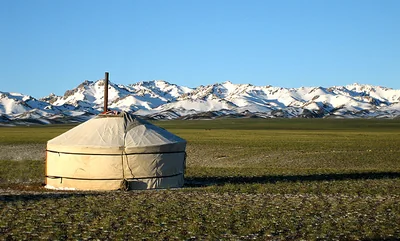
Mongolia, the sovereign state encompassing a significant portion of the Central Asian steppe and the Gobi Desert, fostered a distinct tradition of Buddhist visual culture that flourished particularly between the seventeenth and mid-nineteenth centuries (1599–1850). Defined by a vast and geographically isolated character—it is the world’s most sparsely populated nation—the resulting artistic output reflects both the rigorous demands of nomadic life and the profound influence of Tibetan Vajrayana Buddhism.
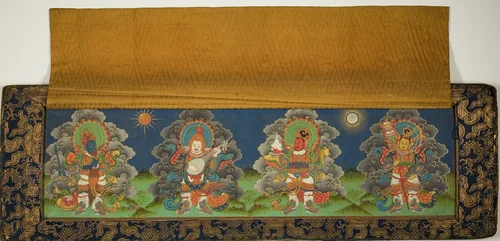
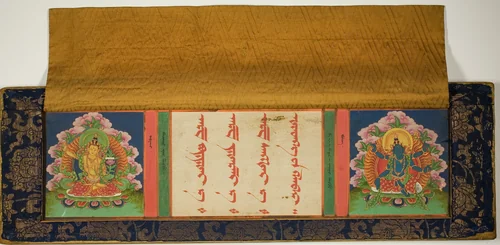
The core surviving works from this period are primarily focused on the creation of liturgical and instructional aids: detailed ink drawings for illuminated manuscripts and sets of ritual cards known as Tsakalis. The functional necessity of these works mandated adherence to strict iconographic standards. Manuscripts often required elaborate visual codification to ensure ritual efficacy, seen clearly in pieces like the Title Page and Front Cover of a Buddhist Manuscript with Manjusri (left) and Mantramanudharani, a Pancharaksha Goddess (right), which introduces divine protection for the text, and its corresponding Final Page and Back Cover of Buddhist Manuscript With Four Guardian Kings. These drawings, often executed with masterful calligraphic line work, served as templates or standalone pieces, providing critical documentation of devotional practices throughout the Mongolian Plateau.
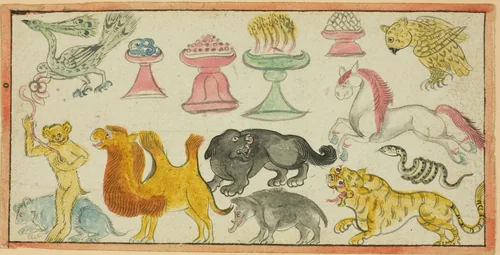
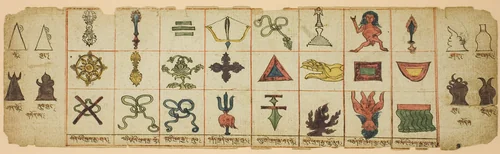
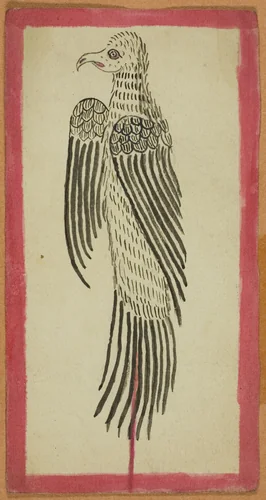
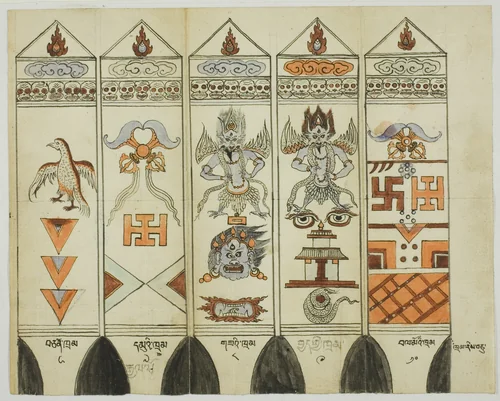
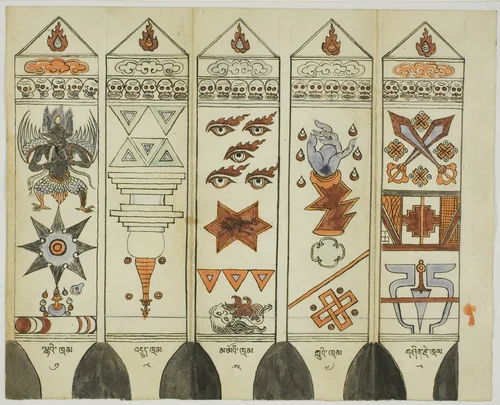
Despite the immense geographic scale of the country, spanning over 1.5 million square kilometers, the primary artistic focus during this era remained remarkably intimate, relying on the portable formats necessitated by monastic and lay mobility. Works such as Page from a Notebook with Ritual Symbols highlight the preparatory, almost pedagogical function of these drawings, acting as visual shorthand for complex Tantric concepts. Even the depictions of required ritual objects, like Sacrificed Animal from a Set of Four Ritual Cards (Tsakalis), prioritize meticulous detail over dramatic effect.
The legacy of these devotional drawings and early Mongolia paintings offers essential insight into the historical interplay between local culture and pan-Asian Buddhist traditions. Today, seven such drawings are held in major Western collections, documenting a period of intense religious expression. Much of this historical material is now in the public domain, ensuring global access to museum-quality records of this visual tradition. High-quality prints and downloadable artwork derived from these intricate originals allow continued study beyond their original liturgical use.
Source: Wikipedia · CC BY-SA 4.0