Miyagawa Chōshun (宮川長春)
Miyagawa Chōshun (宮川長春) was a Japanese painter documented as active from 1615 through 1745. His lengthy period of activity suggests he was a significant figure in early 18th-century painting, a period pivotal to the development of genre scenes and ukiyo-e precursors.
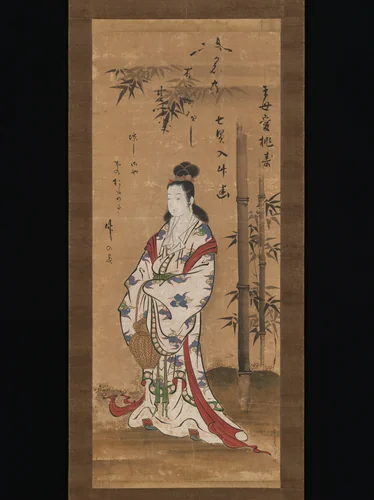
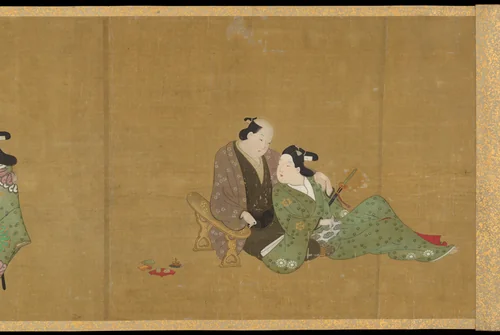
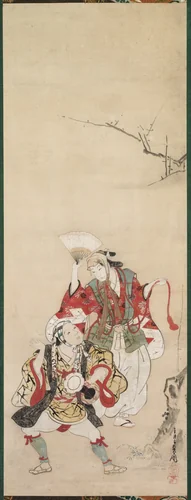
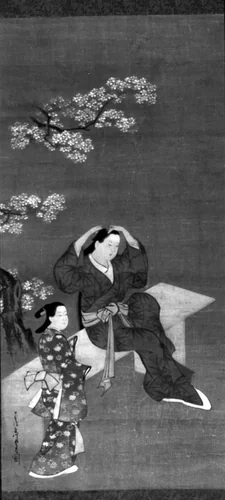
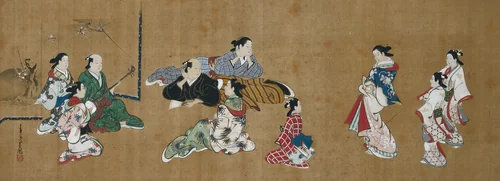
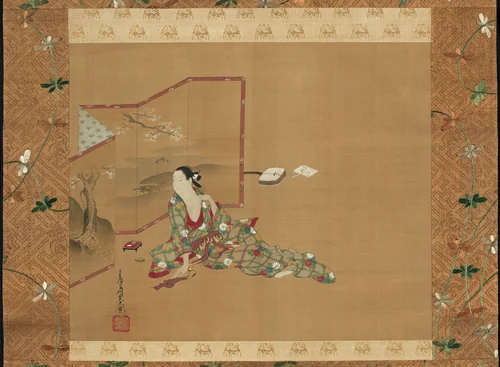
The artist’s documented output consists of five paintings and one scroll or handscroll held in major public collections. These works reflect a diverse range of subject matter, including the religious figure Gyoran Kannon alongside extensive genre scenes. Notable Miyagawa Chōshun (宮川長春) paintings include the narrative works Spring Dancers (Manzai), Woman Binding Her Hair and Attendant under Flowering Cherry Tree, and an Entertainment Scene. He is also known for the historical or erotic subject matter found in the Handscroll of Ten Homoerotic (Nanshoku) Scenes.
Miyagawa Chōshun’s importance is underscored by the presence of his work in leading North American institutions. Works attributed to him are preserved in the collections of the Metropolitan Museum of Art, the Art Institute of Chicago, and the Cleveland Museum of Art. Due to the age of these historical originals, digitized versions are frequently available in the public domain, enabling the creation of high-quality prints for study and appreciation.