Mihály Munkácsy
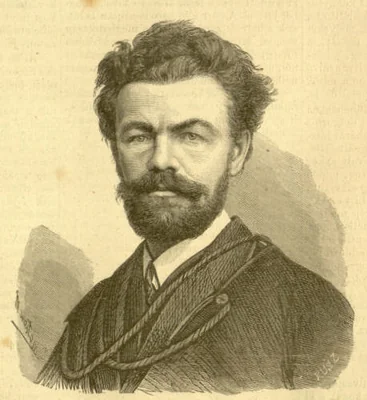
Mihály Munkácsy (1844-1900) remains Hungary’s most internationally recognized painter of the late 19th century. His powerful reputation stemmed from his mastery of two distinct, yet equally commanding, approaches: intimate, character-driven genre pictures and ambitious, theatrically staged biblical narratives. The core of his highly productive period, spanning the years 1875 through 1886, saw him move fluently between detailed preparatory drawings and monumental canvases.
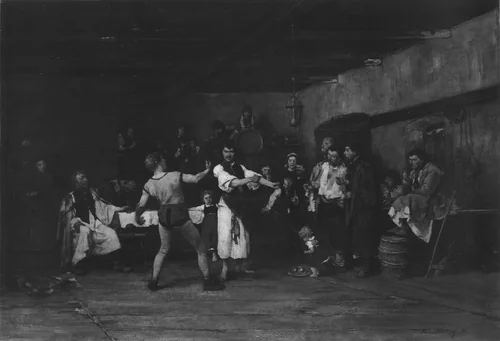
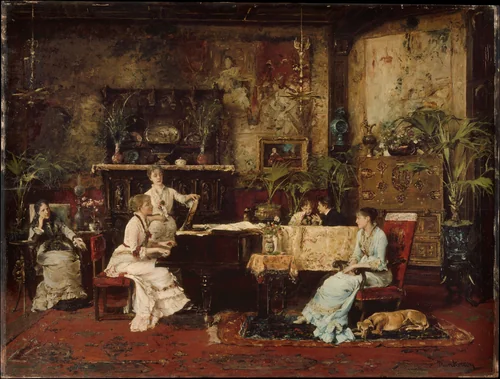
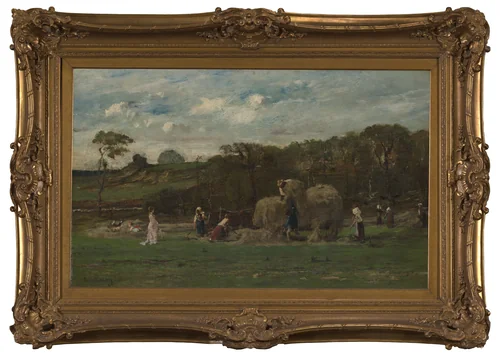
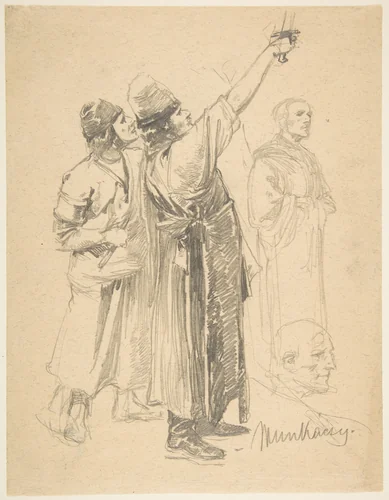
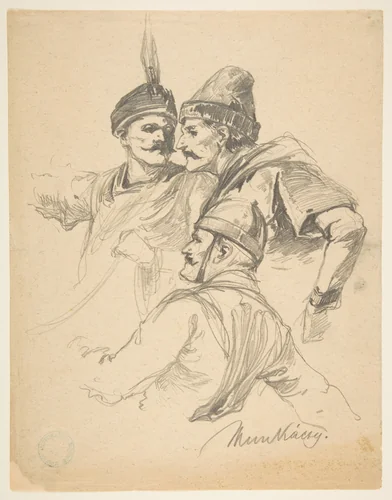
Munkácsy’s genre scenes, which secured his early critical success, are distinguished by a rich, deeply atmospheric palette and a focus on psychological realism. Unlike some contemporaries who chased the effects of open-air light, Munkácsy emphasized the human condition and the gravity of ordinary existence. Works such as The Music Room and Loading Hay capture complex human interactions rendered with careful attention to texture and detail. His technical rigor is further evidenced in his preparatory pieces, where preparatory exercises, like the focused Studies of Standing Men and Study of Three Men, Bust Length, reveal his commitment to capturing authentic human presence before scaling figures to major compositions.
While his nuanced genre scenes established his artistic standing, it was Munkácsy’s capacity for large-scale, high-stakes religious compositions that cemented his wider public fame and fortune. These works toured internationally, creating immense enthusiasm and ensuring his acquisition by major global repositories. Munkácsy, keenly aware of the mechanisms of fame, had a singular skill for marketing his own work, ensuring his public profile matched his technical ambition. Today, his Mihály Munkácsy paintings are considered museum-quality examples of late academic realism and are held in prestigious collections, including the Art Institute of Chicago and the Metropolitan Museum of Art.
Munkácsy’s style, effectively bridging realism and dramatic historical painting, secured his lasting place in art history. His enduring appeal ensures that the public continues to seek out his work; many of his preparatory sketches and certain finished pieces are in the public domain, allowing institutions to provide downloadable artwork and high-quality prints that document his prolific and influential career.
Source: Wikipedia · CC BY-SA 4.0