Miguel Gamborino
Miguel Gamborino was a printmaker documented as active in 1809. His known output focuses exclusively on genre scenes documenting the daily commerce of early 19th-century urban Spain. Fifteen of his prints are preserved in museum collections, notably at the Metropolitan Museum of Art, establishing his historical significance in documenting social customs of the period.
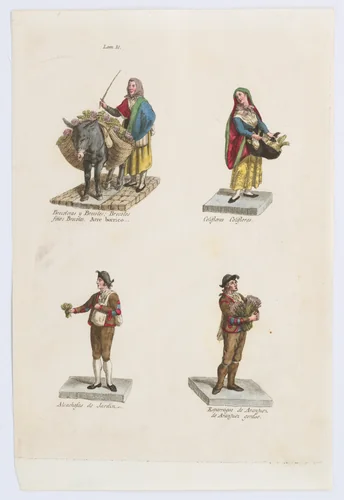
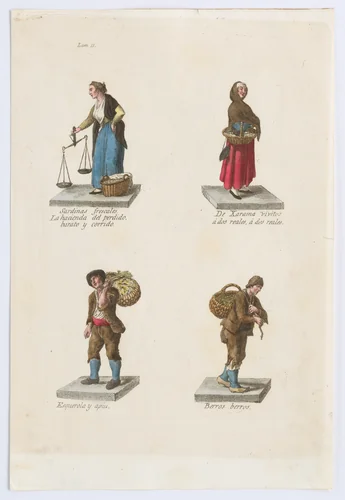
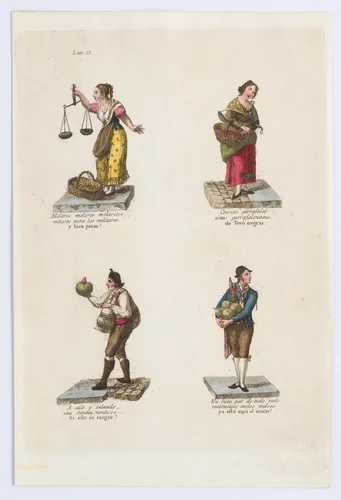
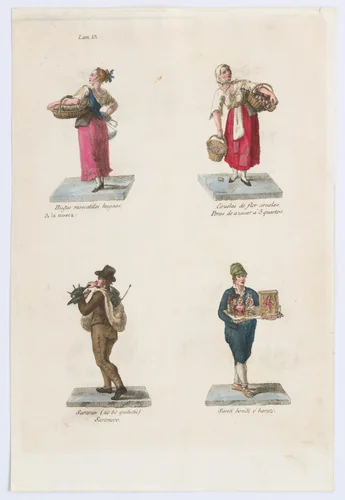
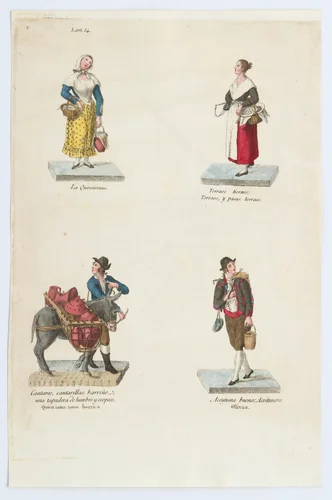
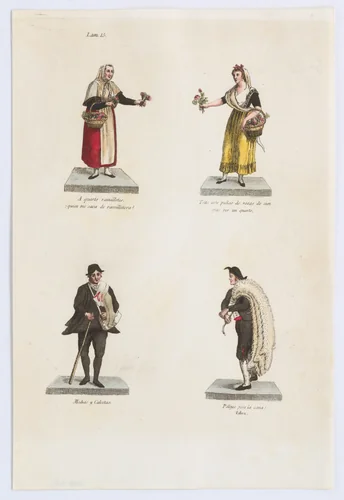
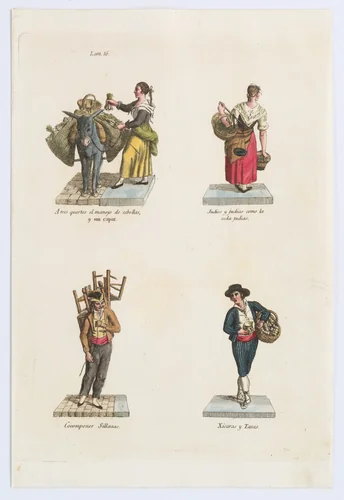
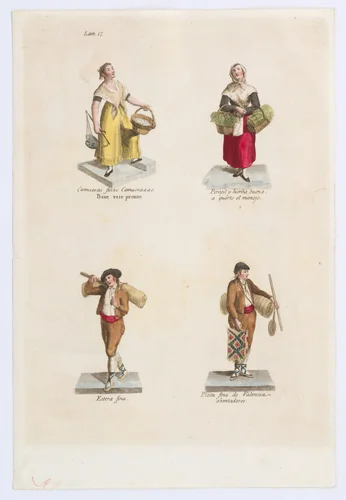
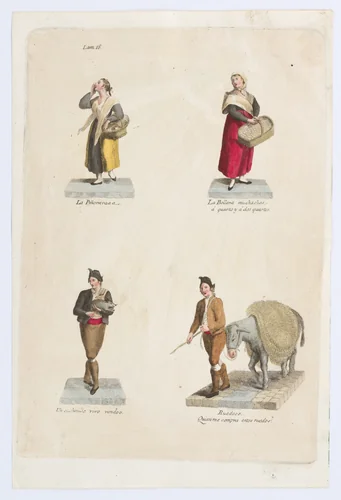
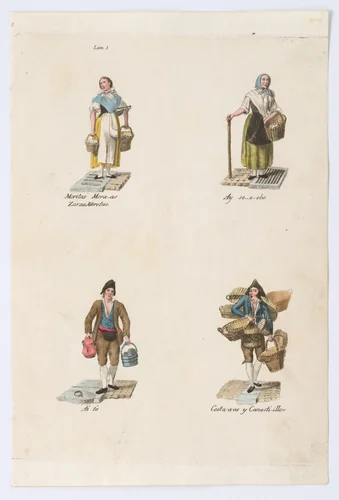
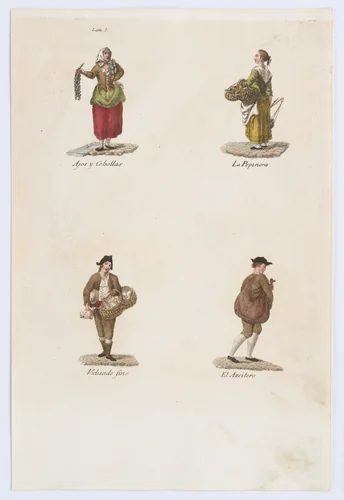
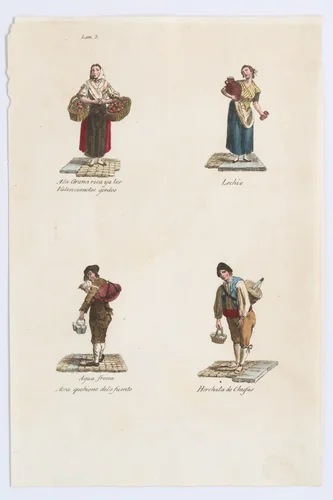
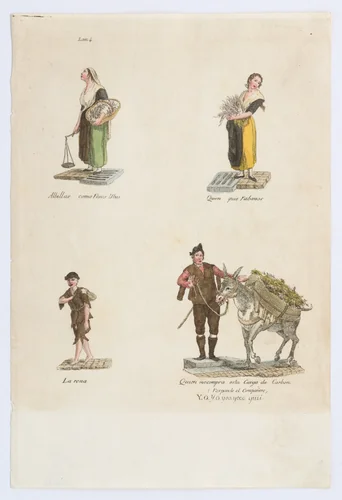
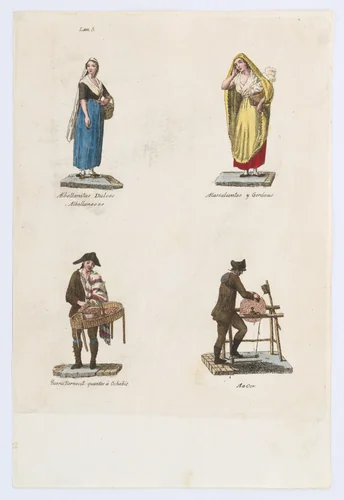
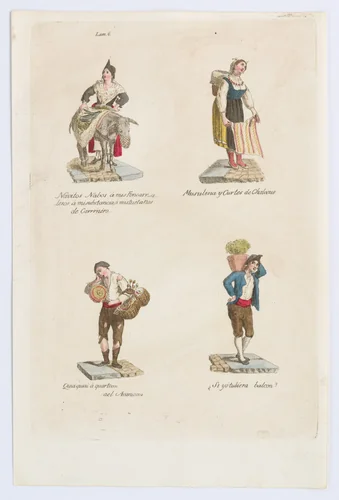
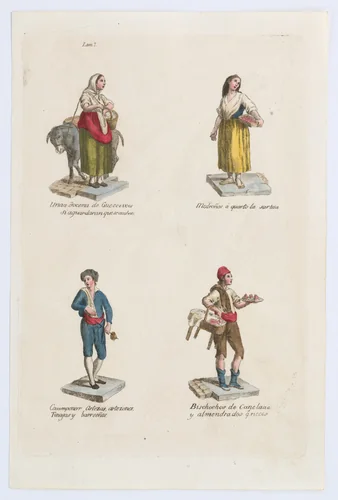
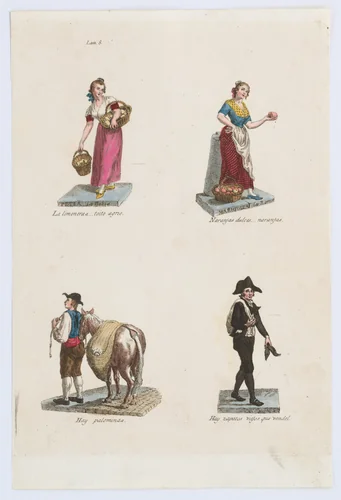
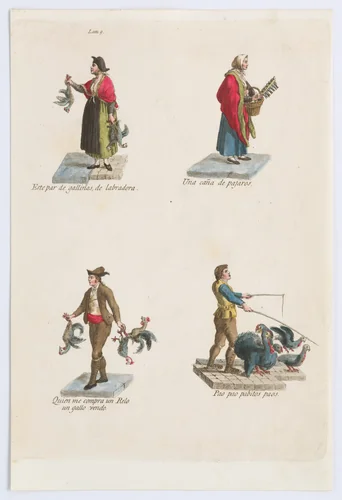
Gamborino is recognized primarily for the extensive series, Los Gritos de Madrid (The Cries of Madrid). These plates function as a visual catalog of the diverse street vendors and their specialized wares, creating a detailed record of the city’s market economy. Each print typically focuses on four distinct vendors, showcasing the variety of goods available, from fresh produce to manufactured household items.
Specific subjects represented include Plate 10, which depicts street vendors selling vegetables such as broccoli, cauliflower, artichokes, and asparagus. Other plates detail the sale of diverse commodities including various kinds of fish, dried fruit, muscat grapes, plums, and kitchen goods like pots and pans. This meticulous focus on the transient elements of daily life makes Gamborino’s prints valuable sources for cultural historians. These high-quality prints, having entered the public domain, are today often available as downloadable artwork, ensuring broad access to these important visual documents of Spanish street life.