Michael Burghers
Michael Burghers (active 1640-1693) stands as a pivotal graphic artist of the seventeenth century, a Dutch illustrator whose professional life was spent almost entirely within England. His exceptionally long career, spanning more than five decades, coincides with periods of significant political and architectural transformation in Britain. Burghers specialized in the precise and demanding medium of etching and engraving, supplying the burgeoning market for illustrated publications and aristocratic commissions.
Moving beyond standard book illustrations, Burghers became renowned for his detailed technical work. He was frequently commissioned by the English aristocracy to produce comprehensive maps, elaborate estate plans, and meticulous illustrations of stately houses. This practice positioned him not merely as an artist, but as a key visual chronicler of elite English property and its institutional memory. His ability to render complex architectural and geographical details with technical clarity ensured the enduring historical value of his Michael Burghers prints.
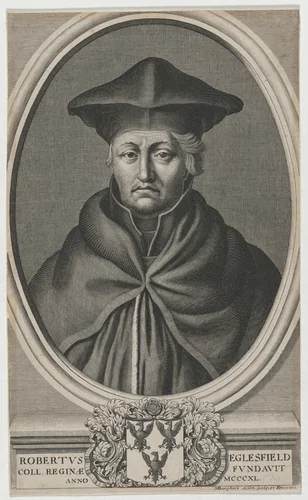
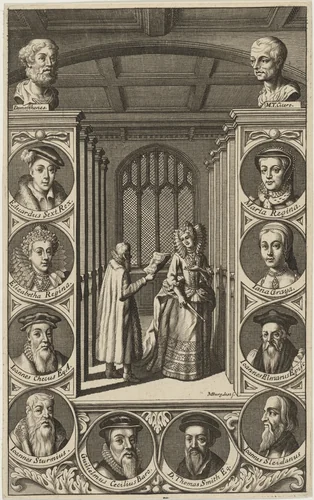
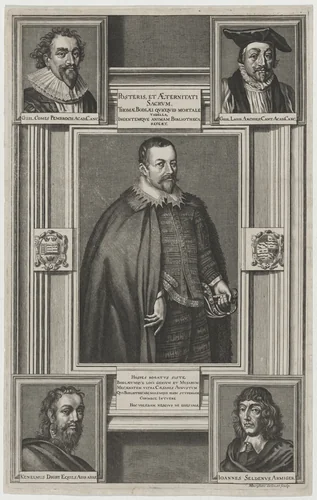
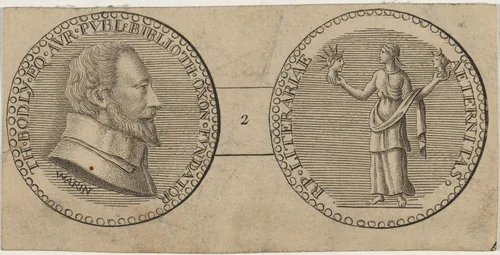
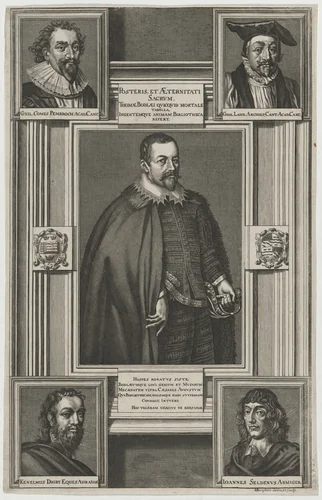
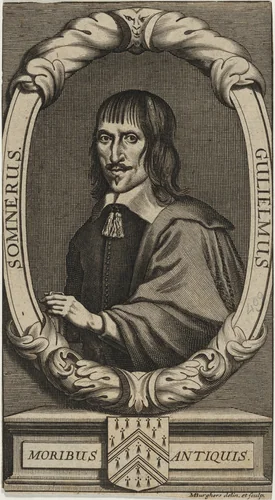
A significant portion of his documented output focused intently on academic figures and founders, demonstrating his deep connection to scholarly centers, particularly Oxford. Works such as his portrait of Robert Eglesfield, Founder of Queen's College, Oxford and the iconic multiple renderings of Sir Thomas Bodley, Founder of the Bodleian Library exemplify his skill in creating authoritative, official likenesses designed explicitly to cement legacy. While many of his continental contemporaries explored dramatic narrative and allegory, Burghers’ particular strength lay in reliable documentary precision. He perfected the institutional portrait, providing the crucial visual references that shaped England’s collective memory of its educational and landed power structure.
His extensive output, marked by consistency and technical mastery, is now recognized in major collections, including the National Gallery of Art. The seven known prints by the artist listed in institutional databases represent only a fraction of his total production, illustrating the enormous demand for skilled illustrators who could accurately convey architectural and biographical detail. Fortunately for modern study, much of his original catalog falls into the public domain, allowing institutions and collectors access to high-quality prints and downloadable artwork that faithfully preserve the sharpness of his original hand.
Source: Wikipedia · CC BY-SA 4.0