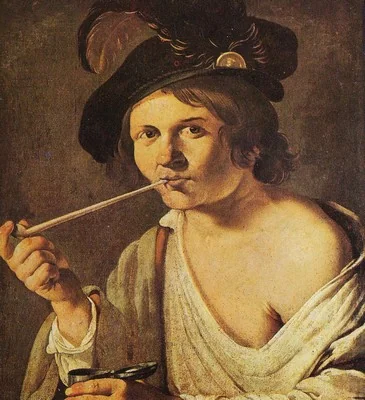
Micco Spadaro
Domenico Gargiulo, better known by his nickname Micco Spadaro, was a defining practitioner of the Neapolitan Baroque movement during the early to mid-seventeenth century. Primarily based in Naples, Spadaro achieved distinction through a versatile output that traversed history paintings, evocative genre scenes, and extensive, detailed landscapes. His active career, noted as early as 1609 and extending through 1612 in the graphic arts, places him at a critical juncture when Neapolitan art was balancing the dramatic naturalism of Caravaggio with established classical traditions.
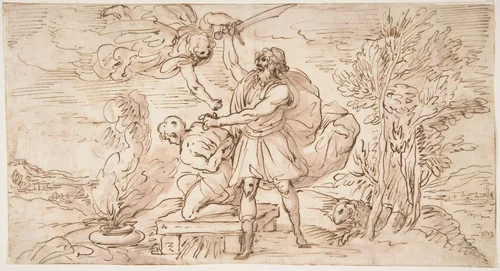
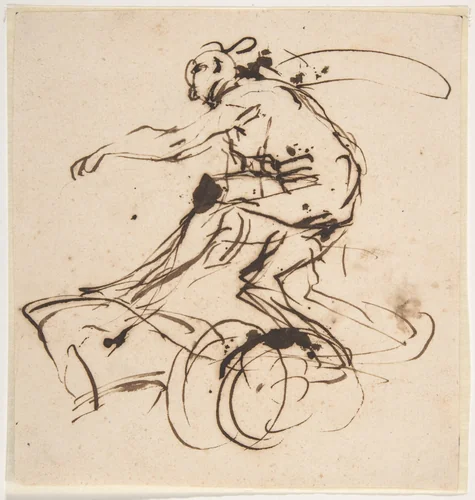
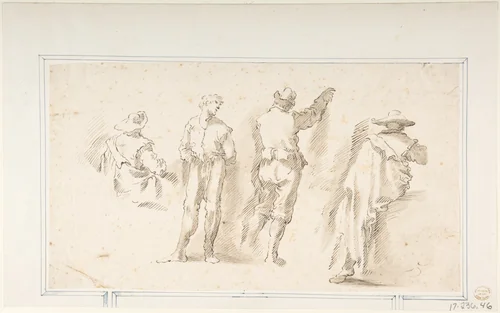
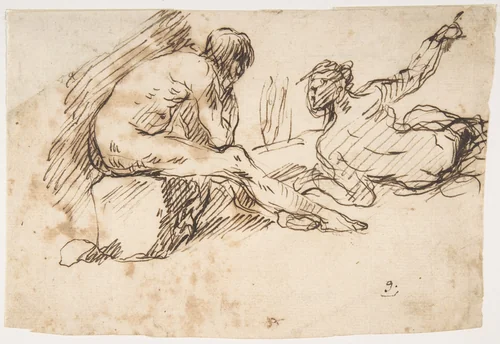
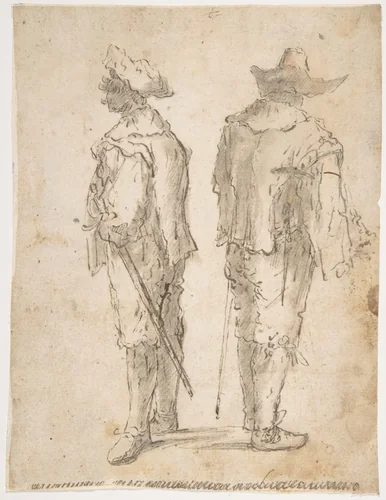
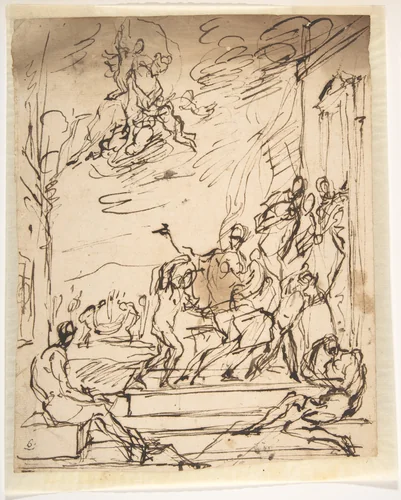
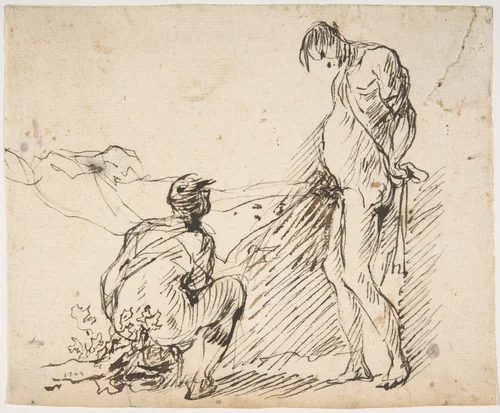
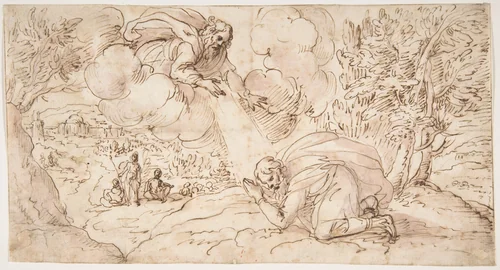
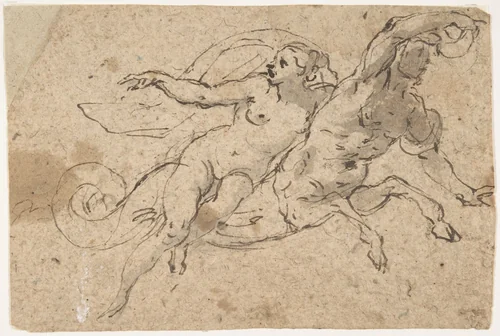
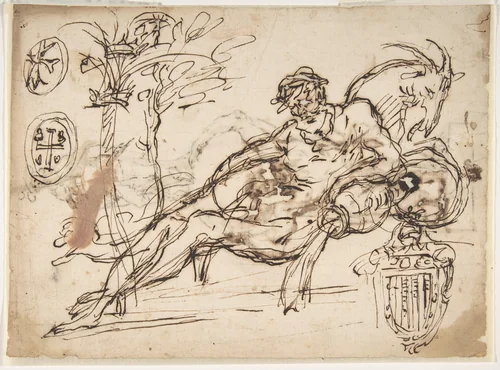
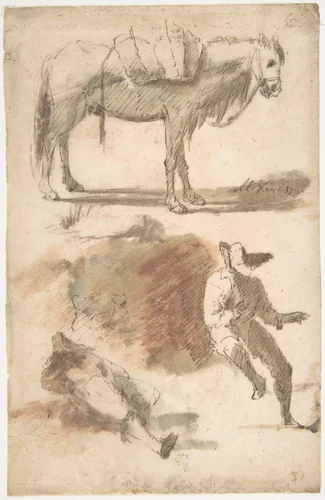
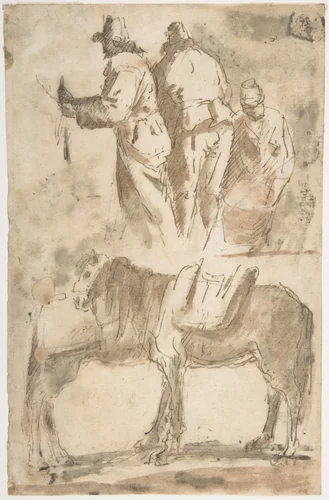
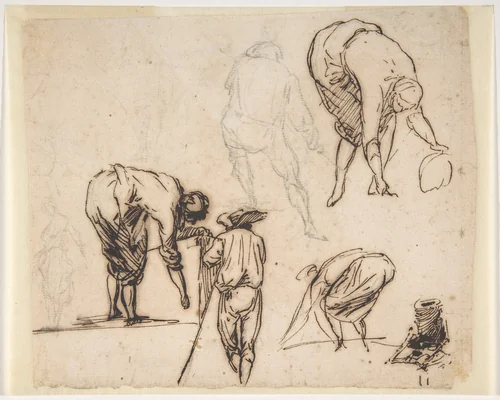
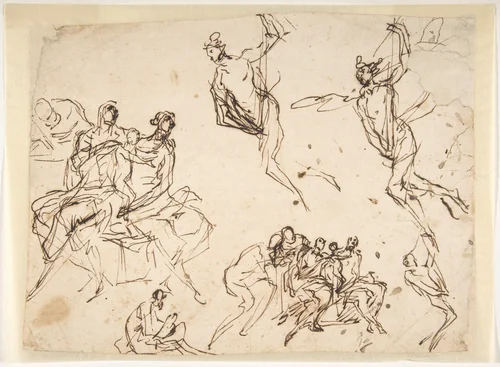
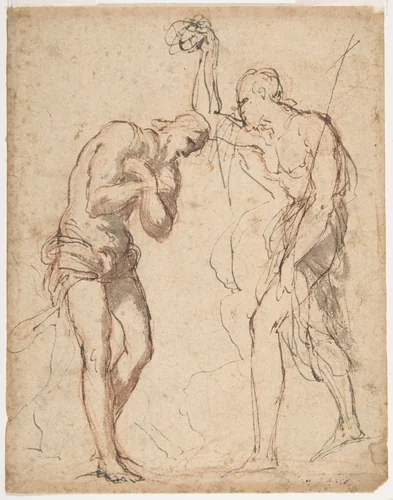
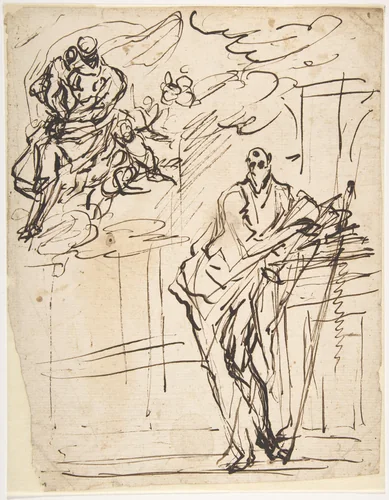
Spadaro’s enduring significance lies in his masterful facility across these disparate visual genres. His ability to move seamlessly from the grand religious narrative depicted in studies such as Abraham about to Sacrifice Isaac to the kinetic energy captured in Charioteer speaks to an artist fully engaged with the human figure in motion and repose. Unlike many of his specialized contemporaries, Spadaro embraced the full, rich spectrum of Neapolitan visual culture, demonstrating equal command over classical form and contemporary observation. His detailed figurative studies, including Figure Studies: Two Standing and Two Seated Men, confirm a rigorous academic foundation blended with an exceptional, personalized approach to composition.
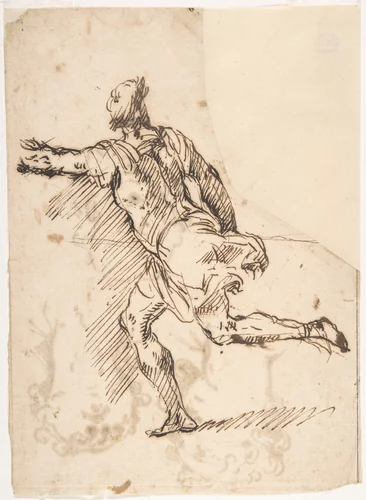
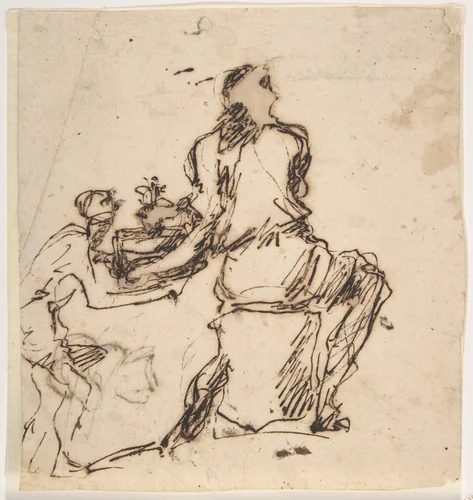
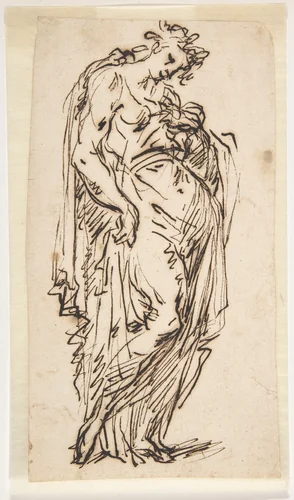
The artist’s draftsmanship, frequently executed in vigorous pen-and-ink or wash, provides invaluable insight into his working process. Works like Male Figure Running (recto); Three Pen Studies of Male Heads (verso) reveal an efficiency and economy of line designed to capture fleeting moments and expressions, essential skills for a painter who excelled in narrative history. The slight, almost humorous discrepancy between the scale of figures in works like Seated Figure Receiving an Object Presented by a Smaller Figure demonstrates Spadaro’s capacity for charming, intimate observation even within formally complex settings.
Today, Spadaro’s legacy is preserved in major institutions, including the Metropolitan Museum of Art, which holds a substantial collection of his preparatory drawings. While his fame rests upon his notable Micco Spadaro paintings, these graphic works provide an essential counterpoint, confirming his sophisticated visual grammar. For curators and enthusiasts studying the period, the detail and clarity of these Baroque masterpieces translate into high-quality prints and downloadable artwork, ensuring that the subtlety and vigor of this Neapolitan master remain accessible through museum-quality reproductions long after the original sheets were first cataloged.
Source: Wikipedia · CC BY-SA 4.0