.svg)
Mexico
Mexico, officially the United Mexican States, occupies a pivotal cultural and geographic position in North America. Spanning 1,972,550 square kilometers, it is one of the world's largest nations, bordering the United States to the north and extending south to Guatemala and Belize. This vast expanse, combined with an immense population and maritime boundaries encompassing the Pacific Ocean, the Gulf of Mexico, and the Caribbean Sea, has historically fostered a deeply diverse and productive material culture. Mexico City, the capital, serves as a central metropolis, linking artistic practices from diverse regions across the country.
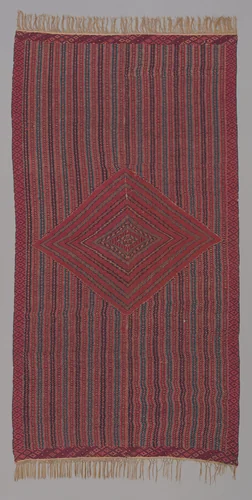
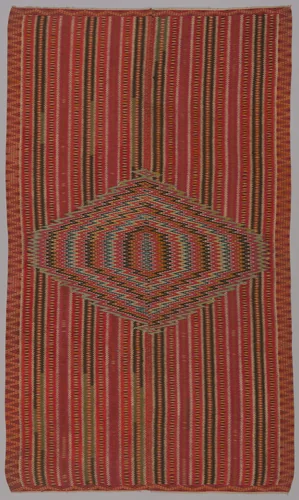
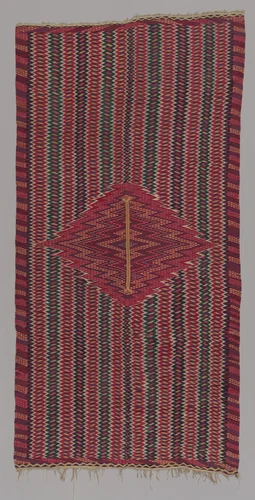
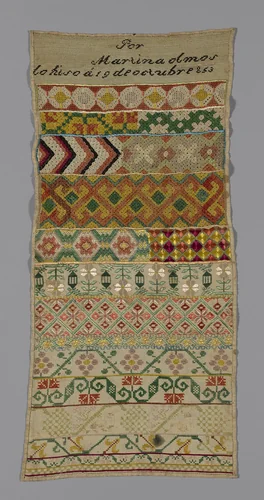
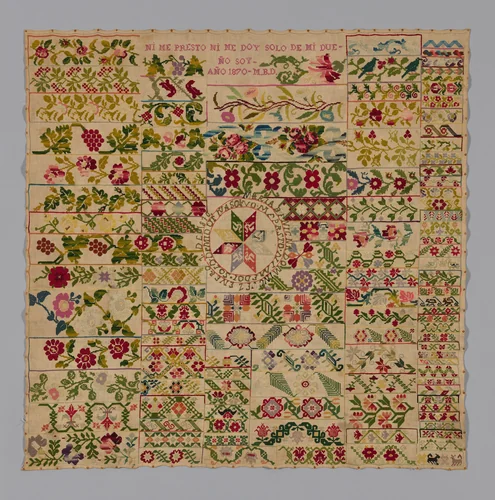
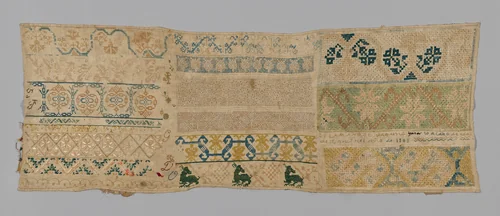
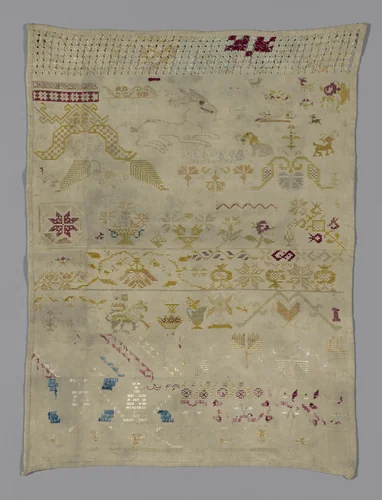
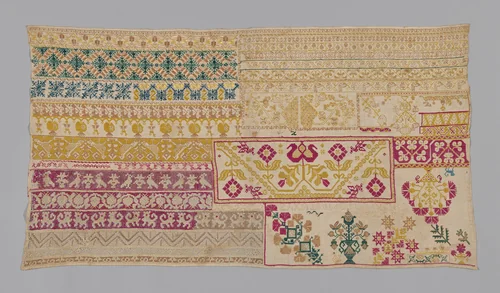
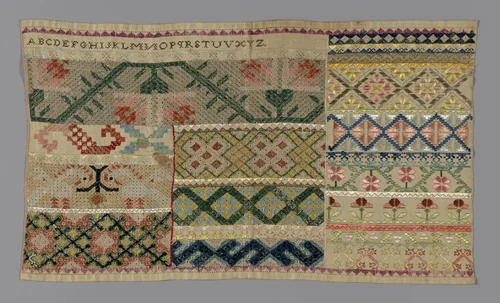
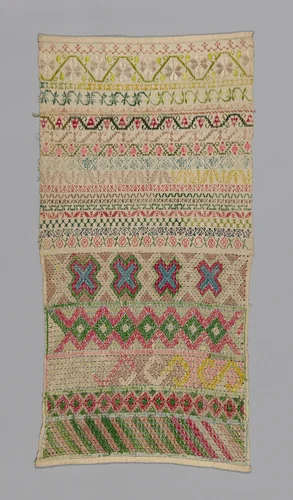
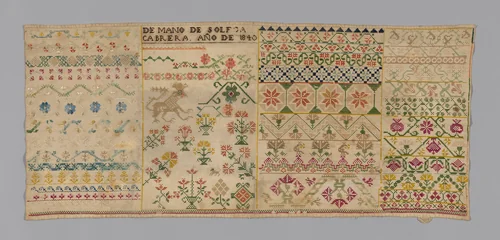
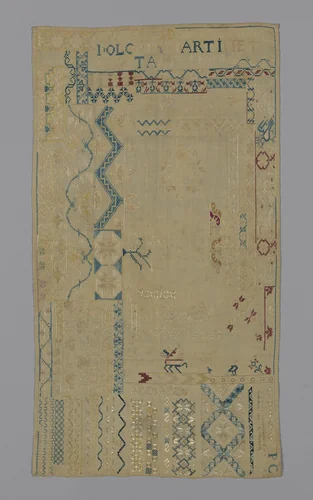
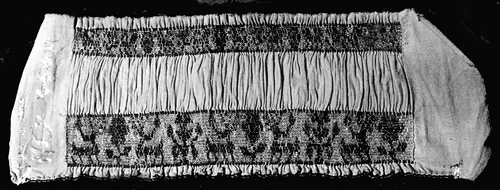
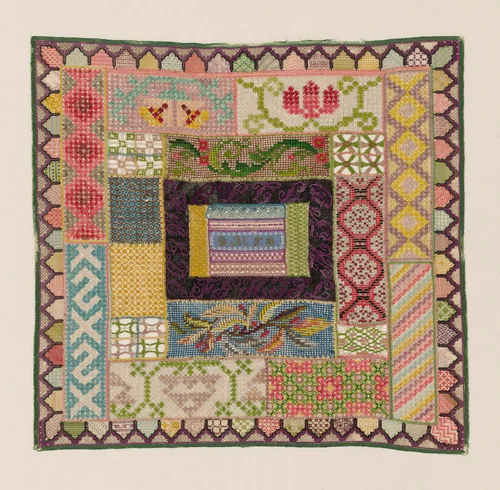
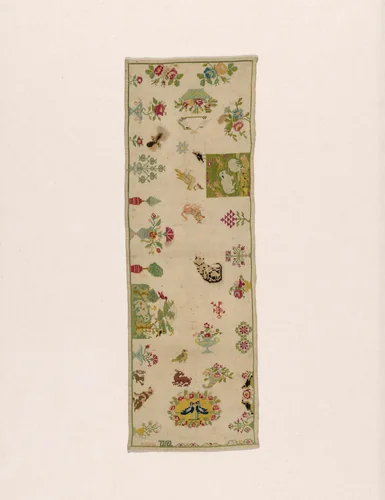
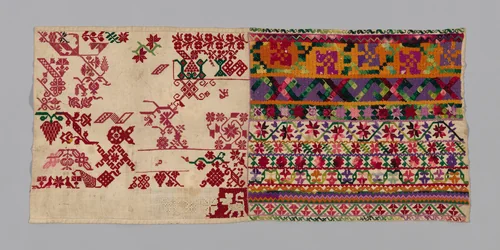
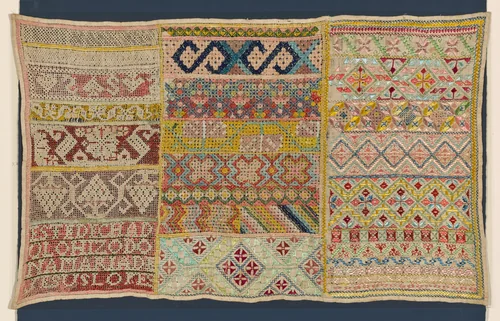
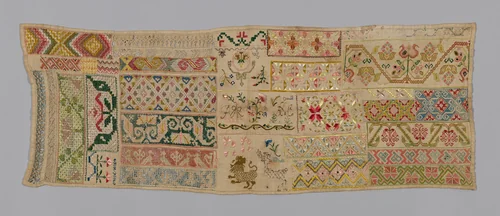
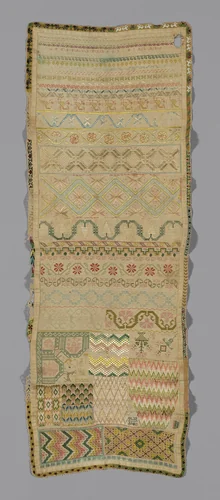
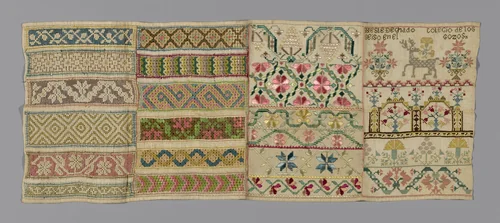
During the crucial late-Viceroyalty and early Republican transition (c. 1750-1825), the region developed distinct artistic forms that synthesized sophisticated indigenous weaving traditions with European colonial pattern influences. The artistic production from this era is perhaps most evident in its textile works, particularly the fifteen recorded textiles attributed to this period, featuring intricate examples of the Sarape and finely executed Sampler pieces. These objects are not merely domestic items but complex documents of social status, regional identity, and technical skill in dye preparation.
Major institutions, such as the Art Institute of Chicago, recognize their significance and hold several key works, including examples of the classic striped Sarape design and transitional educational Sampler forms. The Sarape became synonymous with Mexican textile artistry, characterized by dramatic color saturation and complex geometric patterning often anchored by a central diamond, or diamante, motif. Active across the turbulent transition toward independence, these woven works demonstrate a mastery of natural dyes and sophisticated loom techniques. It is fascinating to observe how quickly regional textile styles developed and were adapted, sometimes achieving a level of complexity that allowed them to be reproduced as high-quality prints and patterns across neighboring territories.
The materials themselves are inherently fragile, making the surviving examples of this period invaluable. These textiles offer museum-quality insight into colonial and early independence daily life and specialized craft traditions. Today, much of this foundational material culture, when properly cataloged, falls into the public domain, allowing researchers and historians free access to these detailed documents of Mexico’s enduring artistic legacy.
Source: Wikipedia · CC BY-SA 4.0