Meno Haas
Meno Haas, professionally known in many instances as Johann Meno Haas, was a German-born copperplate engraver, illustrator, miniaturist, and painter active during the late 18th century, specifically charting a professional course between 1762 and 1791. Trained extensively in the rigorous precision required for court portraiture, Haas established himself as a key figure in the visual documentation of Northern European aristocracy and military leadership. His works, held in major institutions including the Rijksmuseum, serve as critical records of the period's political topography.
His artistic foundation was profoundly dynastic. Haas was the son and initial student of the esteemed engraver Jonas Haas. This family connection fostered an environment of perpetual technical instruction, extending to his brothers, George and Peter Haas, who also pursued careers in the visual arts, and later influencing his own son, Jean Meno Haas. Beyond this familial instruction, Meno Haas further polished his abilities under the guidance of Johann Georg Preisler at the prestigious Academy of Copenhagen, lending him institutional authority and expanding his technical repertoire across diverse media, including painting and illustration.
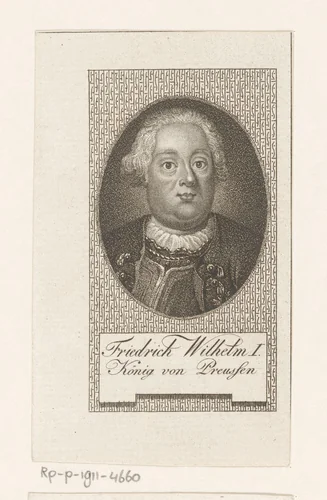
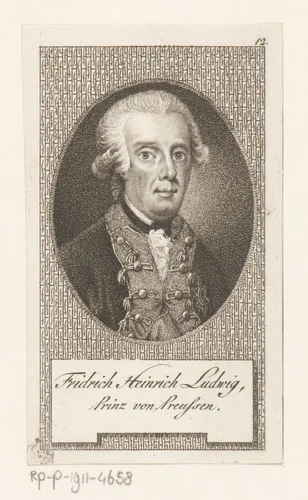
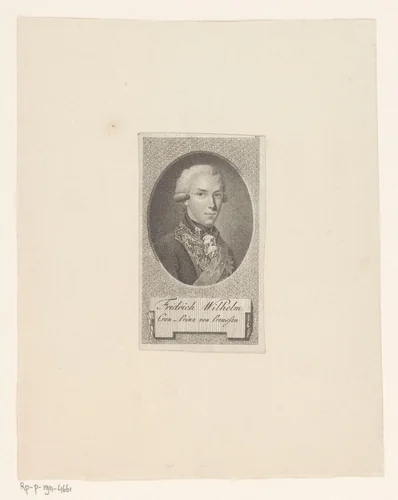
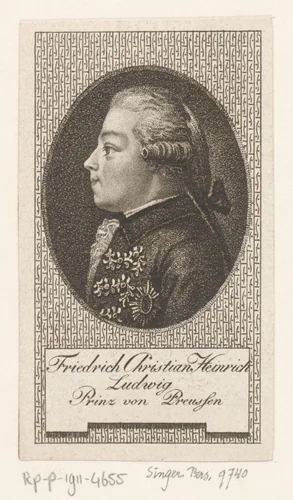
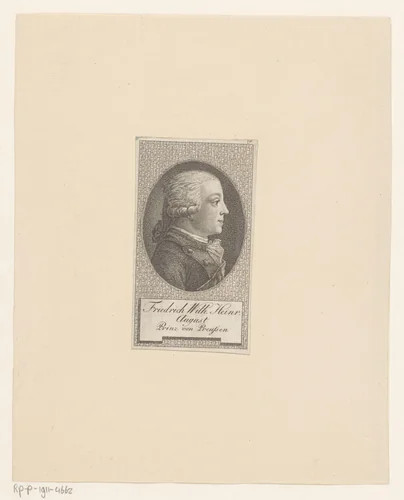
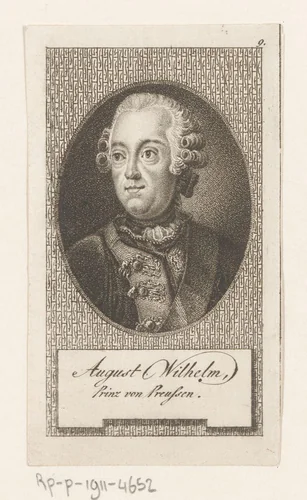
Haas’s primary surviving output comprises high-quality prints of prominent Prussian royalty. His copperplate work frequently immortalized members of the ruling houses, including finely detailed portrayals such as the Portret van Frederik Willem I, Portret van Friedrich Heinrich Ludwig van Pruisen, and Portret van Ludwig Ferdinand van Pruisen. These subjects reflect a consistent demand for dignified, authoritative likenesses necessary for political circulation and historical record keeping. The precision inherent in his copperplate technique allowed for a striking fidelity that remains a measure of museum-quality craftsmanship. While he was versatile enough to work as a miniaturist and general painter, it is through his extensive run of prints that his skill is most clearly judged. He possessed the rare ability to translate the nuanced textures and psychological depth often found in painting into the exacting linear language of engraving.
The Haas family effectively functioned as an artistic dynasty, providing generations of highly trained visual chroniclers for the Northern courts. It is a rare and useful instance where professional artistic skill seems almost inheritable, ensuring a continuous supply of skilled engravers through a crucial period of European transformation. Today, the detailed Meno Haas prints, now in the public domain, are often available as downloadable artwork, providing scholars and enthusiasts with royalty-free access to these detailed historical documents of 18th-century power.
Source: Wikipedia · CC BY-SA 4.0