Melchior Tavernier
Melchior Tavernier (active circa 1629) was a central figure in early seventeenth-century Parisian visual culture, established professionally as a prolific French engraver, accomplished printmaker, and commercial print publisher. His significance lies not only in the creation of powerful imagery but crucially, in its rapid and widespread distribution, ensuring that the elaborate spectacles of the Bourbon monarchy survived their fleeting, ephemeral existence.
Tavernier’s recorded output, though numerically limited to approximately thirteen identifiable prints held in major collections such as the Metropolitan Museum of Art, focused heavily on documentation, monumental design, and official commemorative works. He was instrumental in providing the visual record for state publications designed to cement the narrative of royal authority.
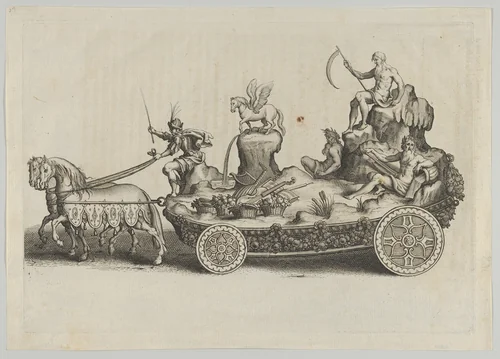
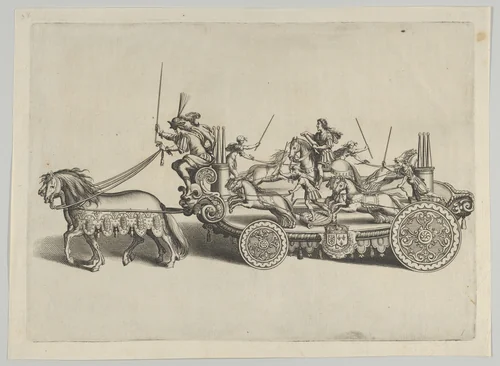
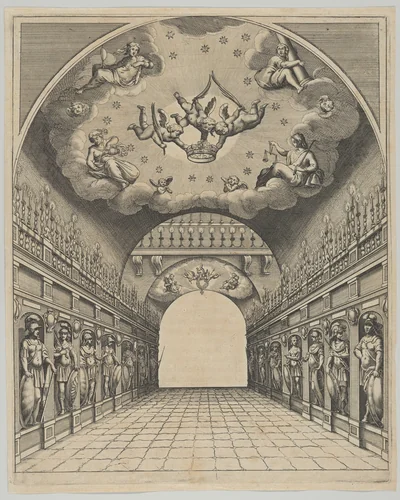
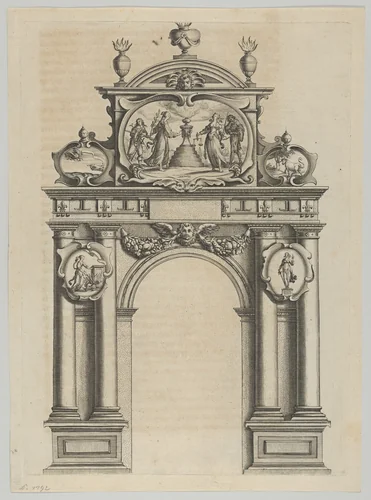
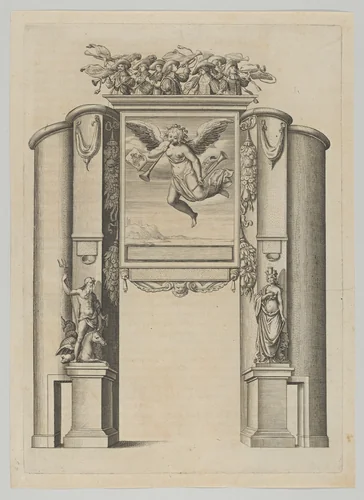
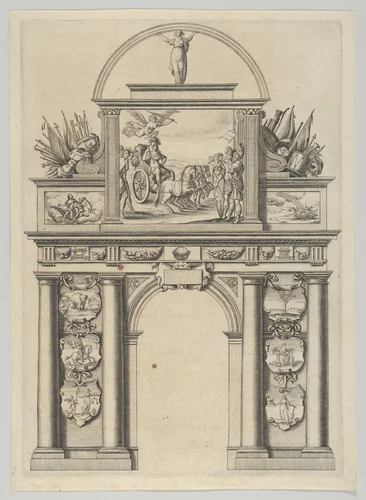
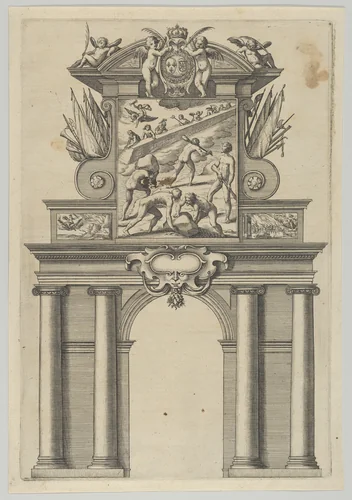
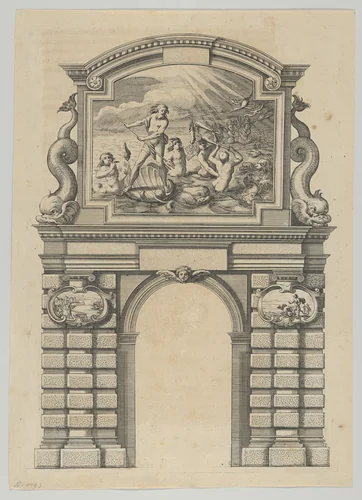
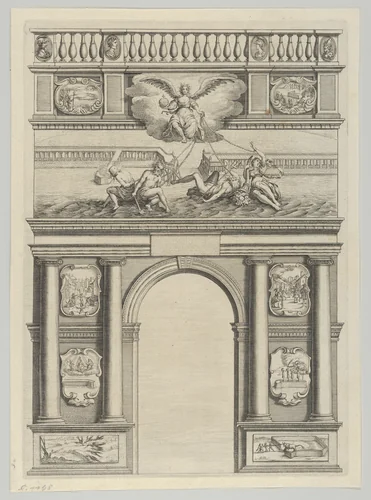
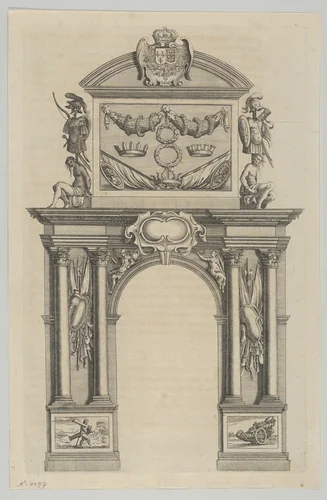
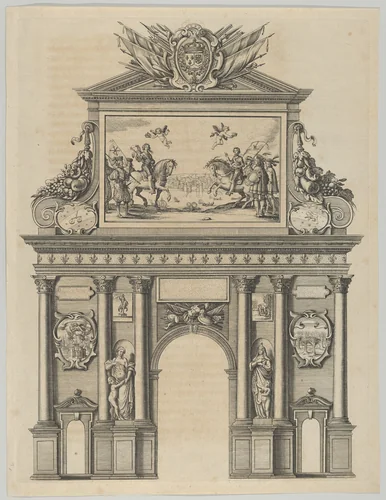
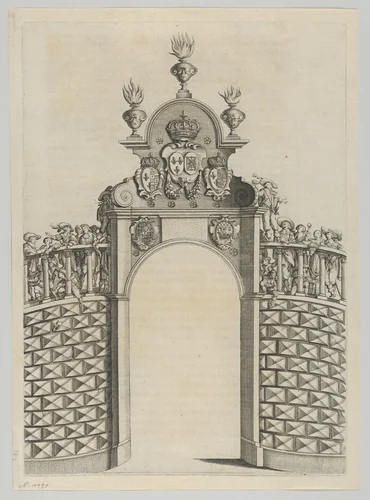
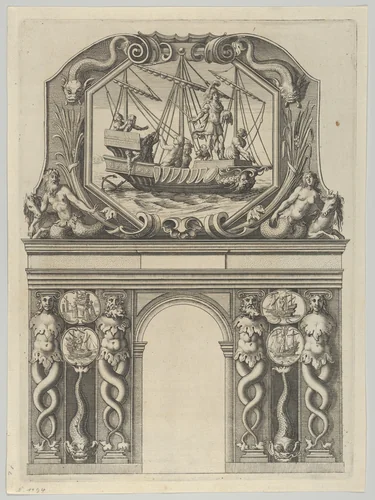
Chief among these commissions are the complex illustrations created for Jean-Baptiste de Machault’s volume, Éloges et discours sur la triomphante réception du Roy en sa ville de Paris... The publication documented the celebrated 1629 entry of the King into Paris following successful military campaigns. This work required accurate and highly flattering representations of the ceremonial structures temporarily erected for the occasion. Tavernier translated the temporary architecture, including meticulously rendered Designs for a float, the immense interior of the Great hall, and various decorated Triumphal arch structures, into permanent, reproducible documents.
These Melchior Tavernier prints are indispensable resources for understanding the performative aspects of French court power. Tavernier excelled at capturing both scale and theatrical perspective, managing to make temporary plaster and wood constructions appear as robust, classical marble structures. It is a remarkable feat of visual persuasion, successfully immortalizing that which was intended to vanish. Because the primary function of these museum-quality images was documentation and celebration, they provide crucial evidence of early Baroque design and ceremonial practices.
As a publisher, Tavernier ensured these works reached a wide audience, cementing their historical importance. Due to their age and historical status, many of these influential designs are now in the public domain, making high-quality prints and downloadable artwork available for detailed study, sustaining the artist's legacy far beyond the boundaries of the seventeenth century.
Source: Wikipedia · CC BY-SA 4.0