Melchior d' Hondecoeter
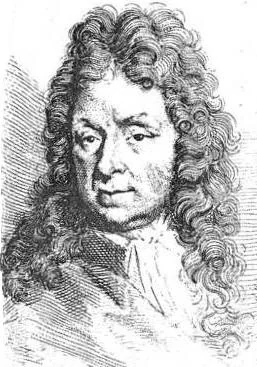
Melchior d'Hondecoeter (1636-1695) holds a definitive position as the preeminent Dutch animalier painter of the second half of the seventeenth century. Trained in his native Utrecht and later establishing his commercially successful practice in Amsterdam, Hondecoeter devoted himself almost exclusively to ornithological subjects, earning renown among aristocratic collectors for his mastery of texture and composition. Active between 1646 and 1683, his specialized output quickly positioned him as the foremost painter of fowl in the Dutch Golden Age.
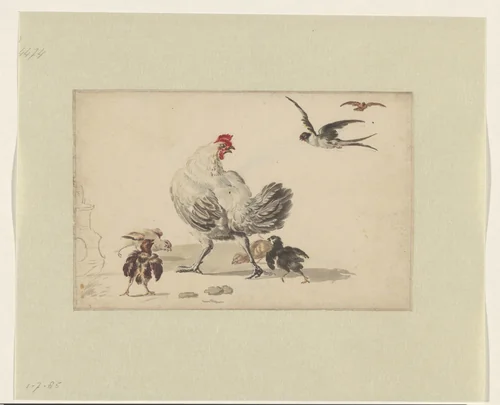
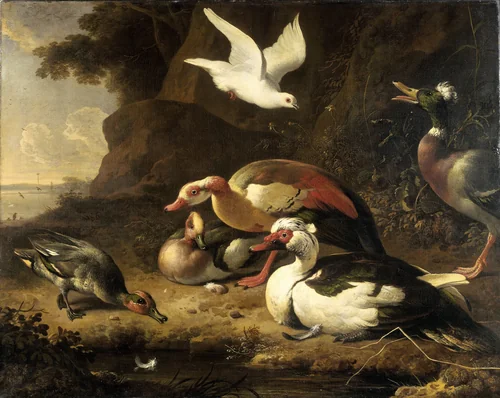
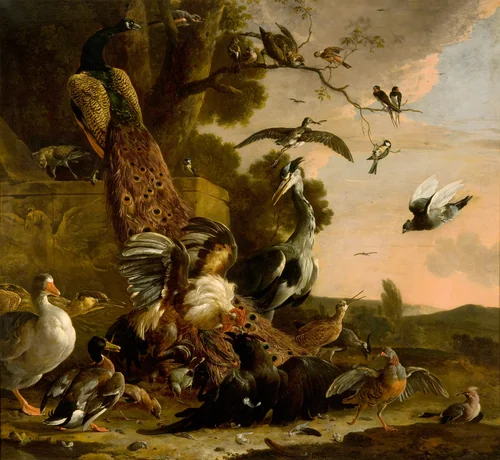
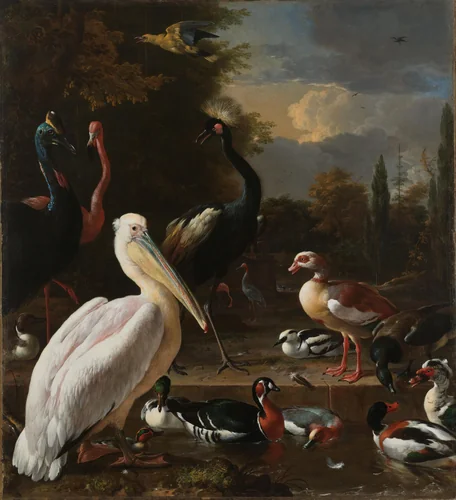
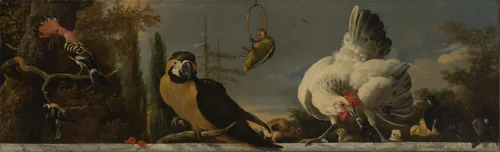
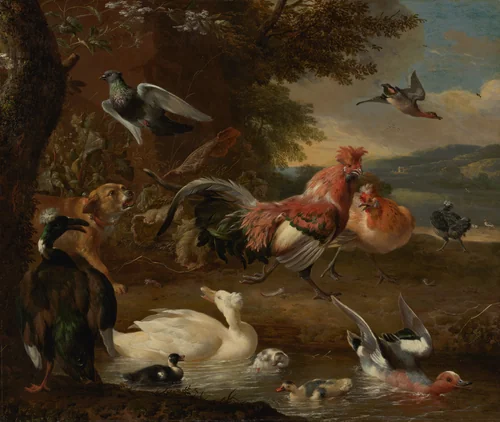
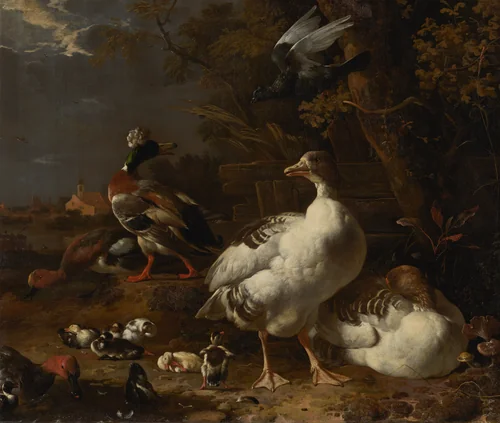
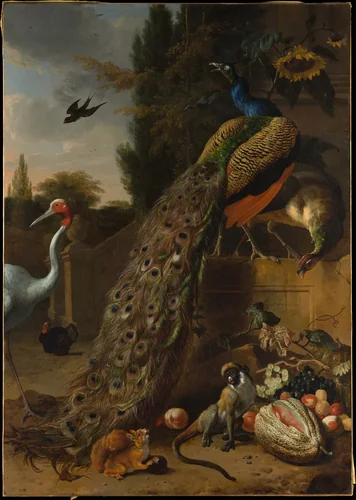
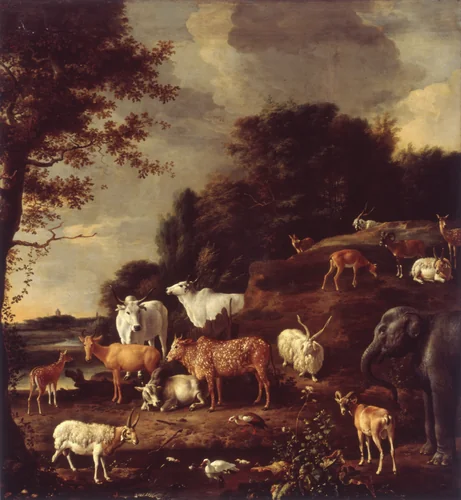
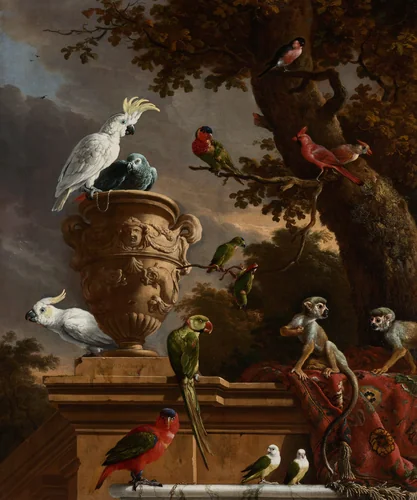
After the initial phase of his career, Hondecoeter concentrated on depicting birds, both exotic specimens and game, often situated in the context of stylized parkland or estate settings. This subtle staging contrasted the untamed vitality of the animals against the ordered, civilized environments favored by his affluent clientele. His extensive portfolio documents native species like geese, partridges, and majestic peacocks, but more intriguingly, showcases a range of impressive imported species. The global reach of Dutch trade during this era is evidenced by the appearance of African grey crowned cranes, Asian sarus cranes, Indonesian yellow-crested cockatoos, and the vibrant purple-naped lory.
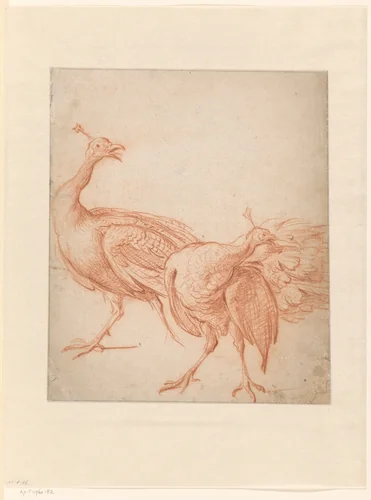
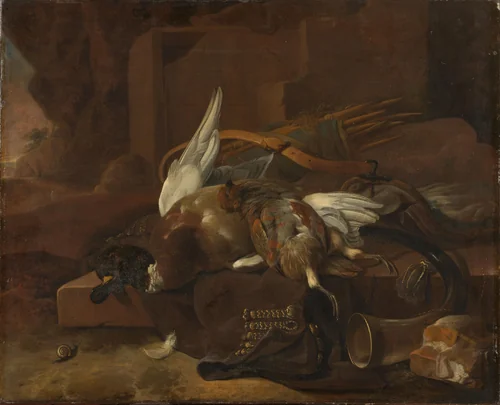
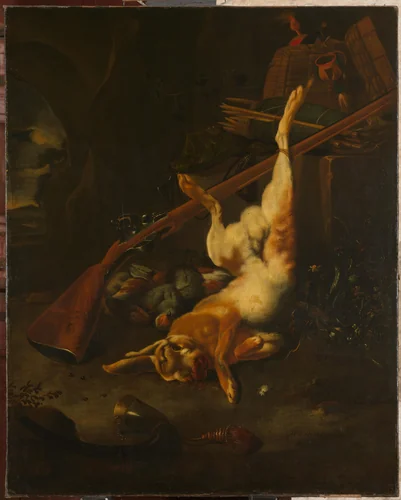
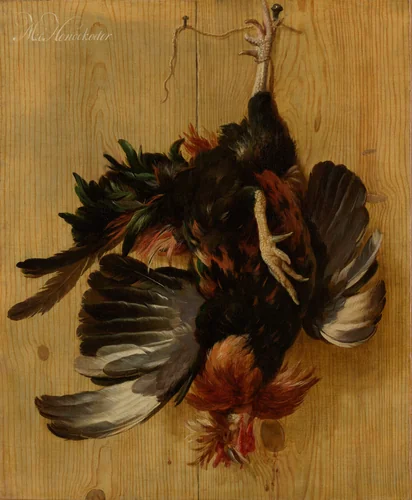
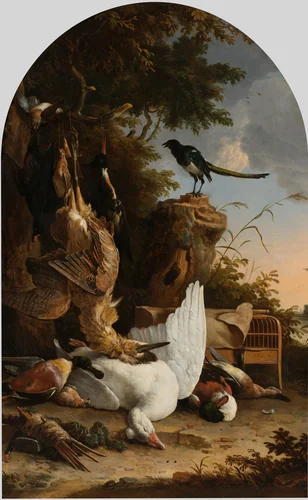
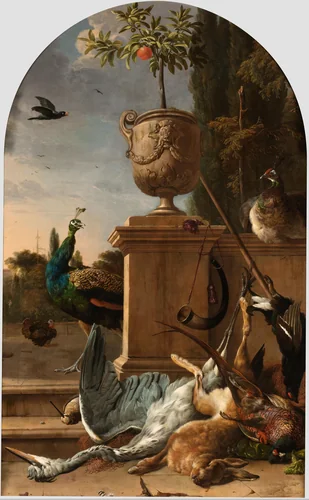
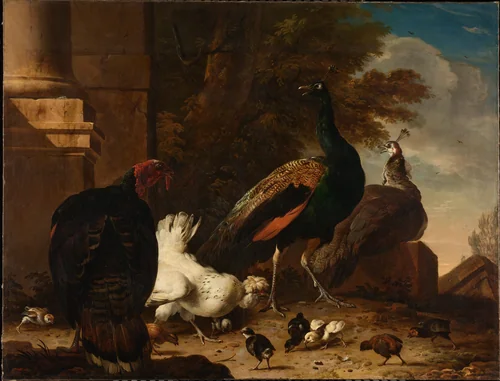
Hondecoeter’s ability to imbue feathers with palpable weight and sheen allowed him to execute two distinct genres with equal authority. His works included both lively, almost theatrical assemblies of living birds, such as Twee pauwen, and meticulously constructed still lifes that addressed the theme of the hunt and mortality. Works like A Hunter's Bag and Dead Cock Hanging from a Nail offer sophisticated examples of vanitas painting disguised as trophies, demonstrating the artist’s capacity to render both soft down and taut skin with striking realism.
The execution is consistently characterized by high technical assurance; his Melchior d' Hondecoeter paintings appear almost effortlessly rendered, a deceptive quality that masks the complexity required to manage such detailed compositions. Today, his works are central features in international collections, including the Mauritshuis, the Rijksmuseum, and the Metropolitan Museum of Art. Given their enduring appeal and artistic quality, many of his images are now in the public domain, making downloadable artwork widely available as high-quality prints for contemporary audiences.
Source: Wikipedia · CC BY-SA 4.0