Meindert Hobbema
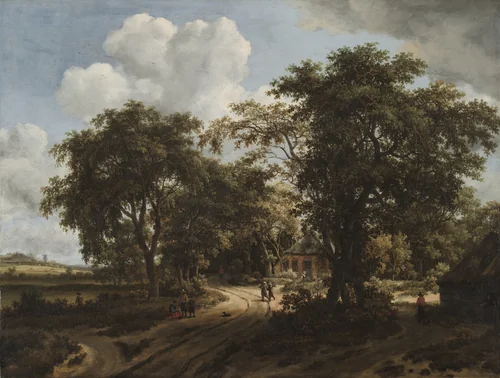
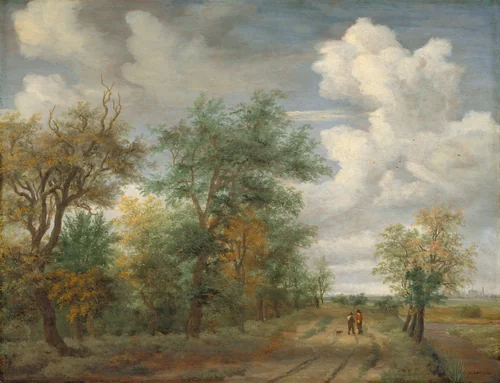
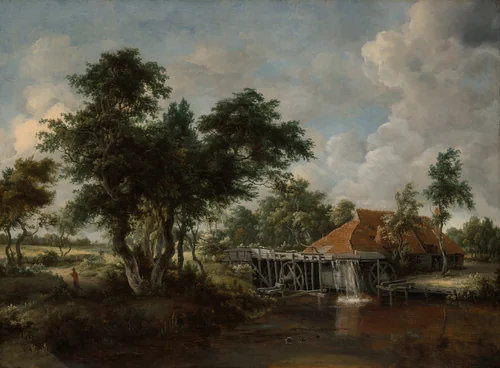
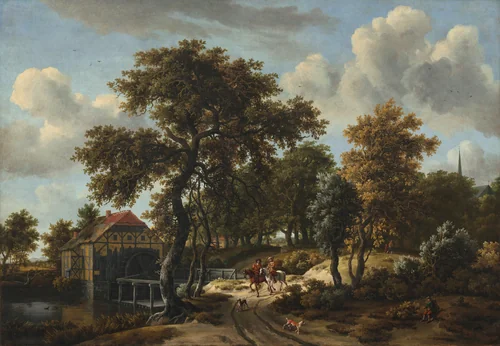
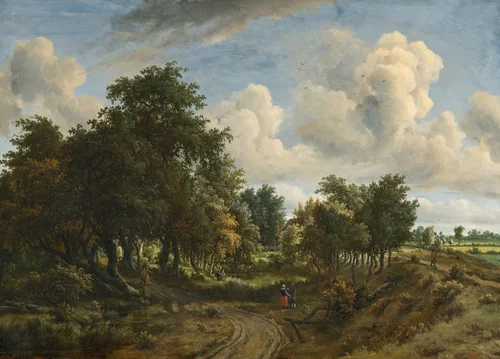
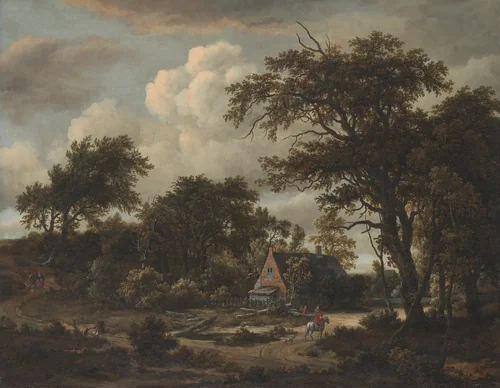
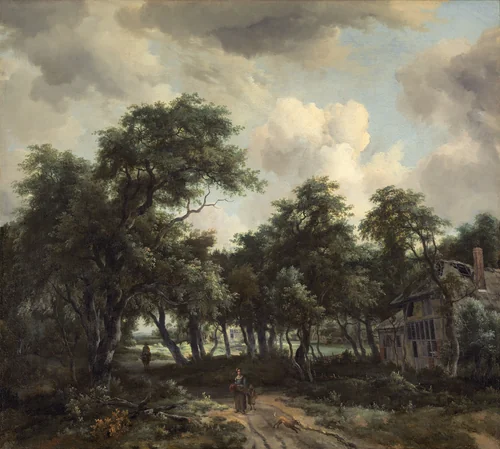
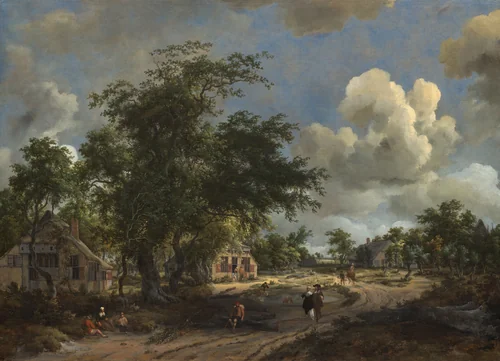
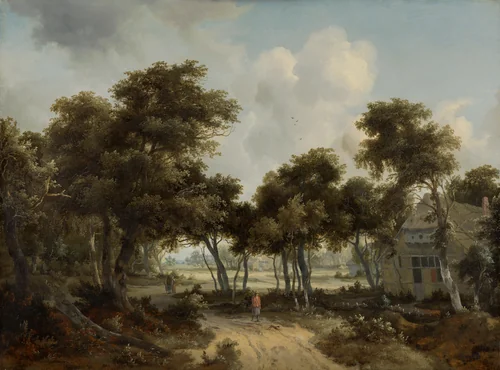
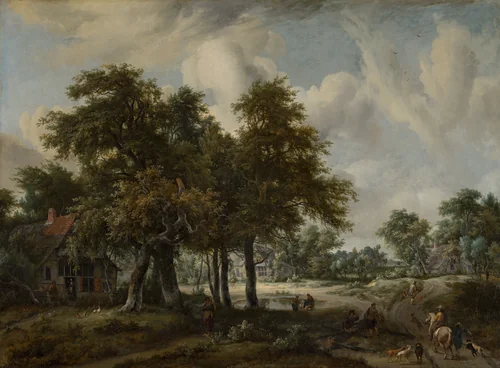
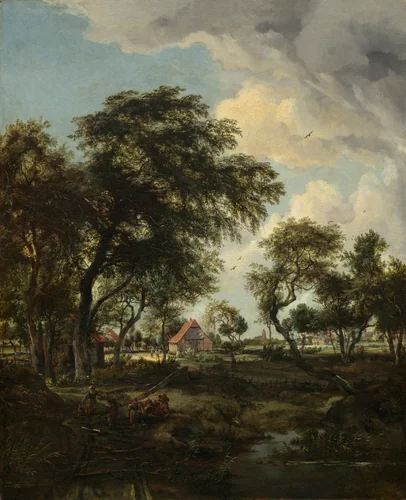
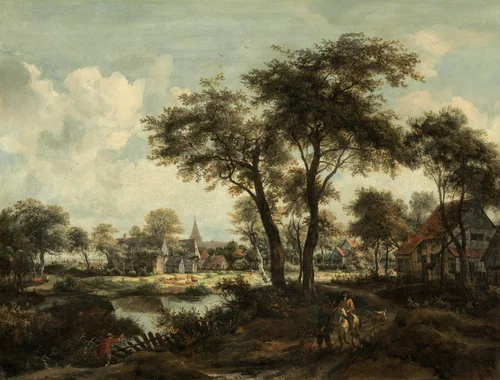
Meindert Lubbertszoon Hobbema (active 1657-1670) remains one of the preeminent landscape specialists of the Dutch Golden Age. Operating during a highly productive period for Dutch art, Hobbema concentrated primarily on views of woodland, moving beyond the idealized structures often favored by his peers to capture the dense, detailed intimacy of the native Dutch countryside. Works such as A Cottage in the Woods and Wooded Landscape with Figures display an exacting observation of nature, focusing intently on the quality of light filtering through heavy foliage, the texture of rough bark, and the depiction of everyday rural life. His compositions often anchor the viewer in the immediate scene, whether watching travelers pause by a stream or observing the churning mechanics of a watermill, as seen in The Travelers and The Watermill with the Great Red Roof.
Although his career was defined by the complex geometry of forest scenes, Hobbema is paradoxically most celebrated for a painting that stands apart from this core subject. The Avenue at Middelharnis eschews the close-cropped claustrophobia of the forest for a radically open, symmetrical vista of saplings receding into the distance. It is a quiet masterpiece of linear perspective and atmosphere, demonstrating that even a committed specialist could execute an iconic, entirely different type of scene when the subject demanded it.
The painter’s production appears to have been relatively focused, with a concentrated output during his peak years. Despite the comparatively small number of authenticated Meindert Hobbema paintings known to survive from this active decade, they profoundly influenced subsequent generations of European landscapists, particularly in Britain. Hobbema achieved his effects through masterful atmospheric perspective and a characteristic palette of rich, deep earth tones contrasted with dramatic, luminous skies. These enduring characteristics ensure their status as museum-quality examples of Dutch realism.
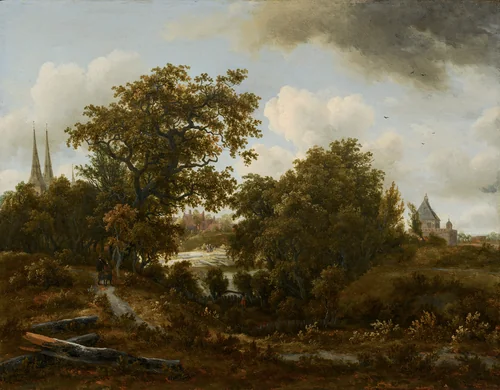
Today, these revered works are housed in major international venues, including the Mauritshuis, the Art Institute of Chicago, and the National Gallery of Art. The lasting appeal and detailed composition of works like Landscape near Deventer mean they frequently serve as source material for high-quality prints and accessible digital formats, safeguarding Hobbema’s distinct visual legacy for continuing study worldwide.
Source: Wikipedia · CC BY-SA 4.0