McPherson & Oliver
McPherson & Oliver were a highly active photographic partnership operating between 1858 and 1864, specializing in documenting the American Civil War, the most extensively photographed conflict of the nineteenth century. Their importance stems not only from their prolific output but also from their mastery of contemporary imaging technologies and the subsequent widespread dissemination of their visual testimony.
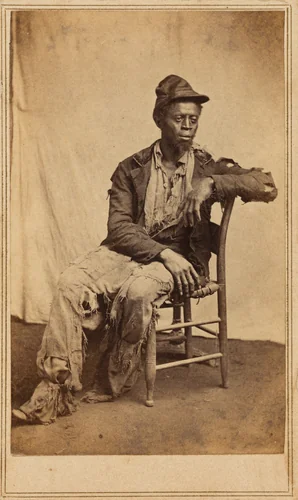
Documentary photography during this era, particularly the work of firms such as McPherson & Oliver, relied heavily on the stereo camera. Roughly 70 percent of the war’s images were captured using this dual-lens apparatus, which produced three-dimensional stereoscopic views intended for private viewing on a stereoscope. This innovation allowed the public a highly immediate and immersive experience of the conflict, far removed from earlier, idealized battlefield depictions. These images were widely copied and mass-produced, circulated to the public via inexpensive prints, newspapers, and the popular carte de visite format, allowing for unprecedented public dissemination. Today, much of the output from this period has since entered the public domain, guaranteeing perpetual access to these critical visual records as downloadable artwork.
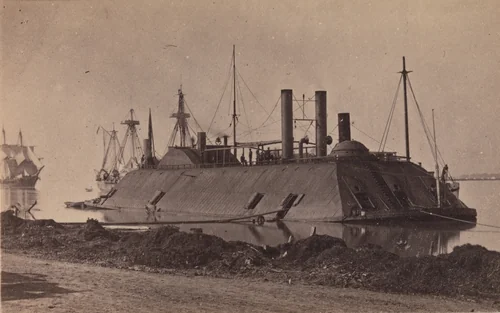
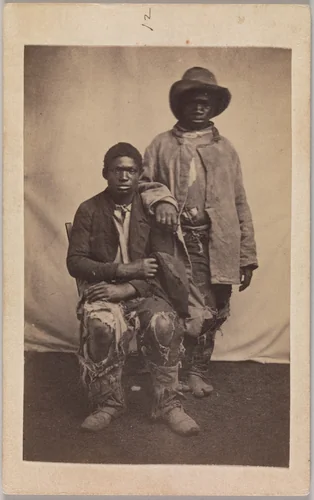
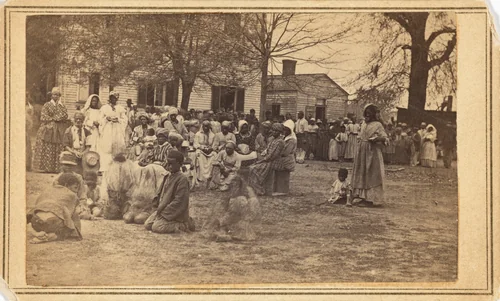
The firm is best known for producing some of the most enduring and politically charged images of the conflict's social consequences. Their documentary rigor is evident in works such as Iron Clad "Essex," Baton Rouge, Louisiana and Our Scouts and Guides in 1863 at Baton Rouge, Louisiana, but their most impactful creation remains the series focusing on formerly enslaved people.
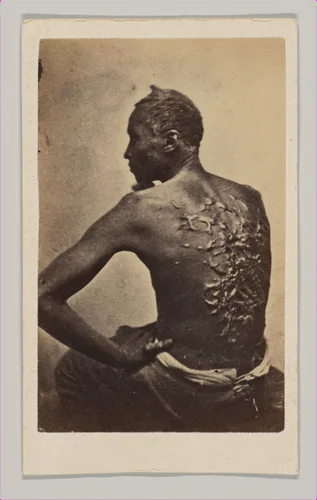
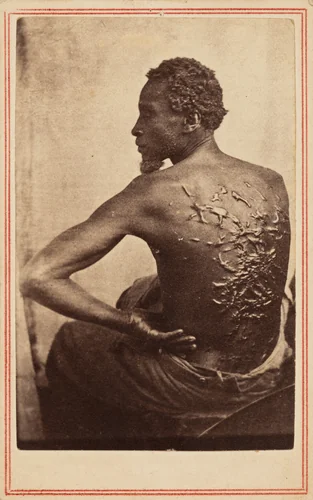
This included the devastating portrait Gordon, A Runaway Mississippi Slave, or "The Scourged Back". While initially distributed as popular documentary evidence, this image quickly transcended mere observation, becoming a powerful visual argument for abolition across the globe. It is one of the few documentary photographs from the period that managed to fundamentally shift from historical record to international political tool. McPherson & Oliver’s original works are held in prestigious institutional collections, including the Metropolitan Museum of Art and the National Gallery of Art, though the widespread early distribution ensures that high-quality prints of their most significant images remain accessible today.