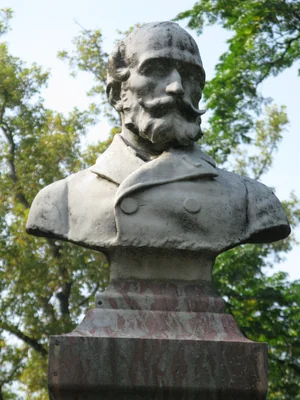
Maxime Lalanne
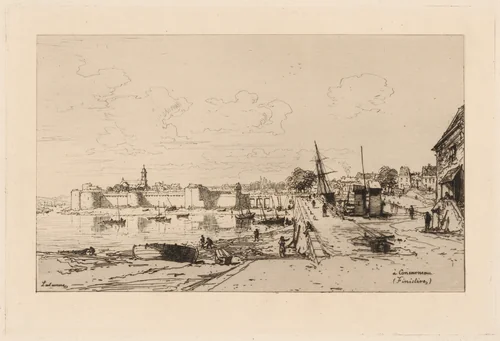
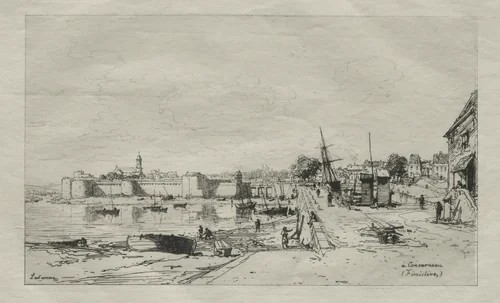
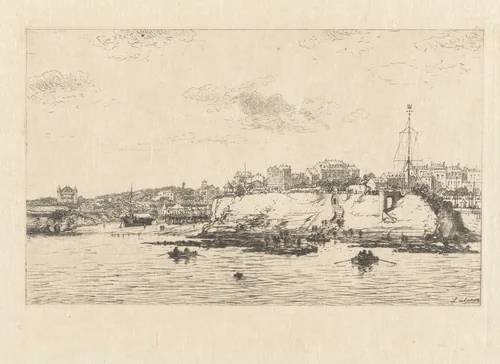
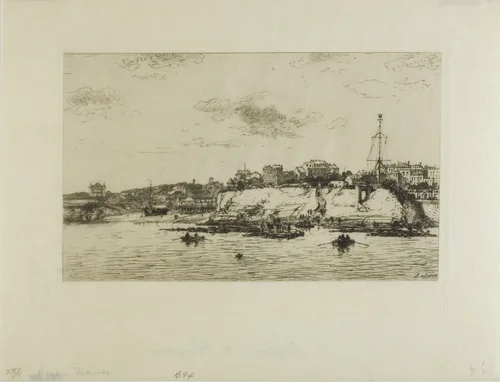
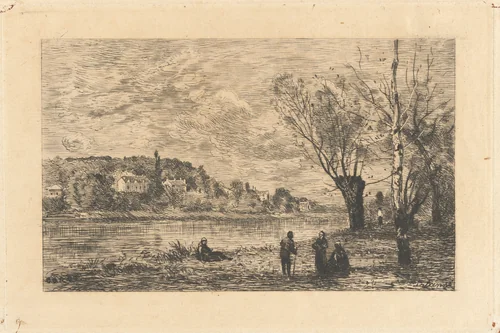
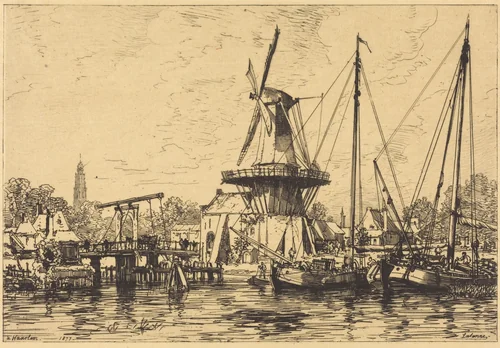
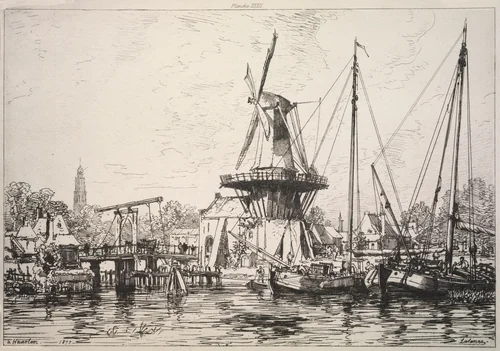
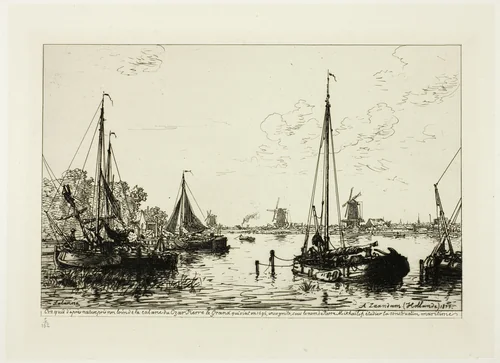
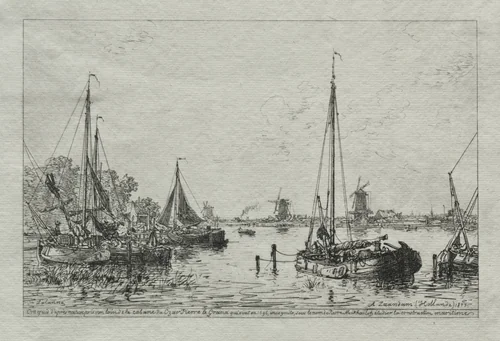
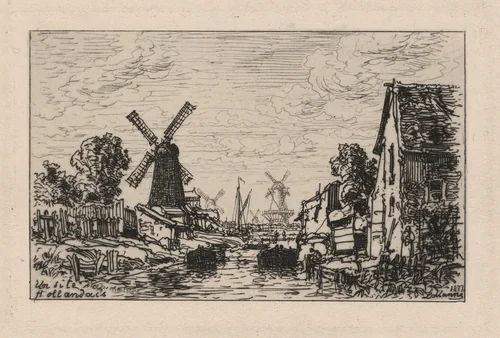
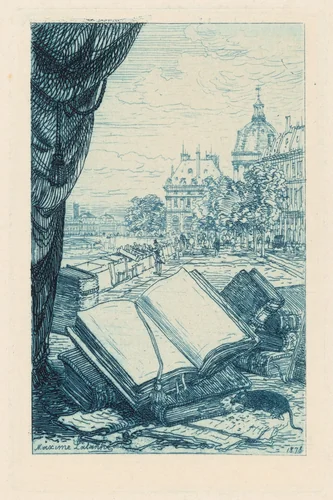
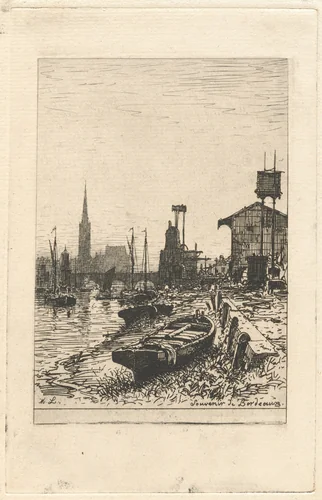
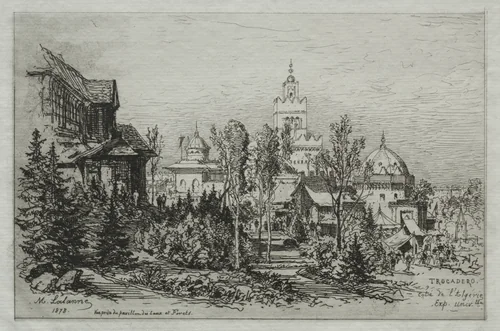
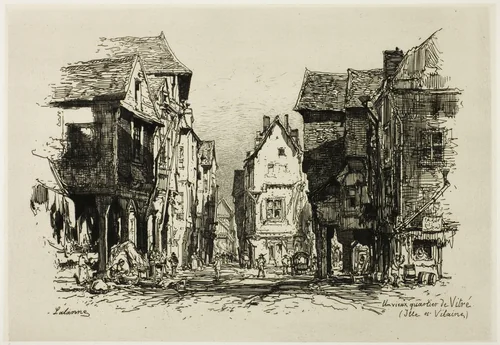
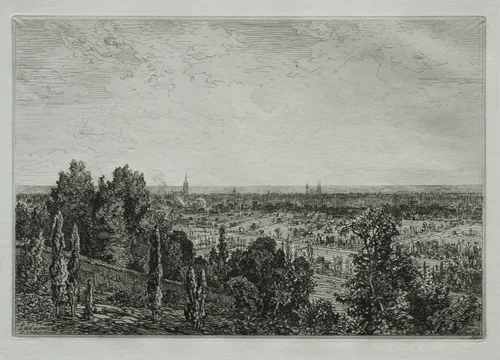
François Antoine Maxime Lalanne was a distinguished French graphic artist and draftsman whose work was central to the mid-19th century revival of etching as a recognized medium of artistic originality. Active primarily between 1827 and 1862, Lalanne moved beyond the reproductive function often assigned to printmaking, demonstrating the medium’s capacity for spontaneous expression and detailed observation. His legacy is robustly maintained across institutional holdings, including the Cleveland Museum of Art, the Art Institute of Chicago, and the National Gallery of Art.
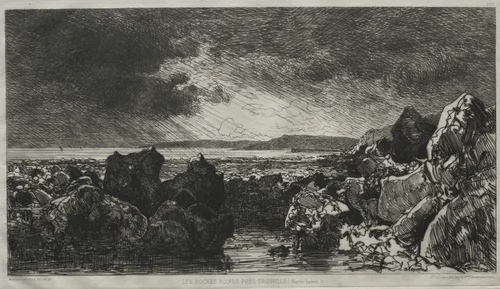
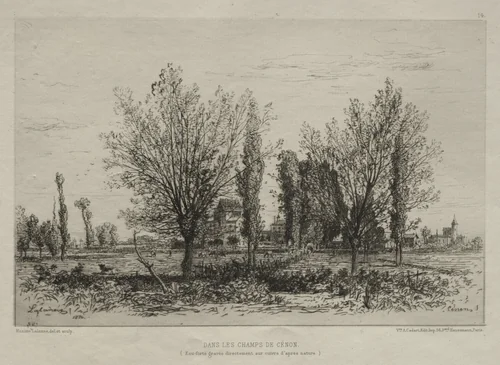
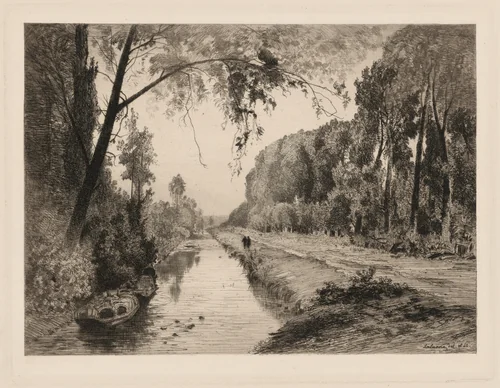
Lalanne was equally renowned for his mastery of fusain, or charcoal drawing. This highly atmospheric technique allowed him to capture immediate effects of light and shadow, lending his landscapes and urban scenes a sense of depth and immediacy. His subjects ranged broadly, encompassing the dramatic naturalism evident in pieces such as Cliffs along the Normandy Coast and the serene pastoral scenes like Dans un parc. This versatility established him as a key figure bridging traditional academic drawing with the emerging focus on capturing fleeting, modern experience.
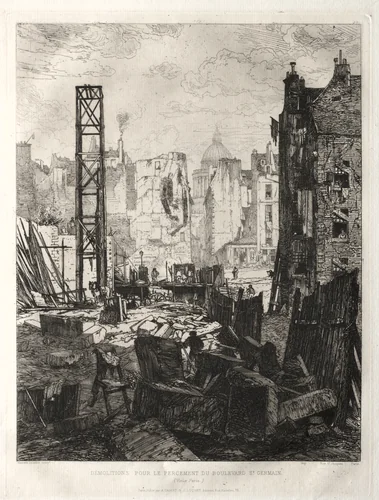
Perhaps Lalanne’s most historically significant works are those detailing the radical transformation of Paris during the Second Empire. While many of his peers lamented the destructive nature of Baron Haussmann’s renovations, Lalanne approached the construction sites with a disciplined eye, finding artistic fertile ground in the spectacle of restructuring. His print Demolition for the Opening of the rue des Ecoles stands as an exceptionally detailed visual document, balancing architectural accuracy with evocative atmosphere. It is one of the clearest artistic records of a city tearing down its past to forge its future.
Lalanne’s meticulous technique ensured that his artistic output, comprising approximately ten prints and four major drawings, maintains its relevance today. His instructional writings on drawing and etching were widely circulated and highly influential. Because many of his early plates are now in the public domain, making them available as high-quality prints, enthusiasts around the globe can easily access and study his masterful compositions. The continued preservation of Lalanne’s works confirms his standing as a quiet yet powerful chronicler of 19th-century French modernity.
Source: Wikipedia · CC BY-SA 4.0