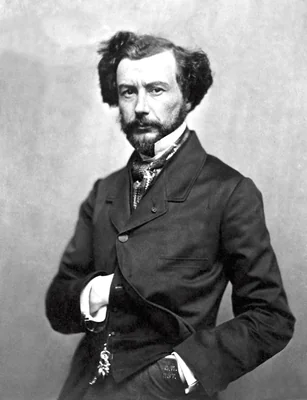
Maxime Du Camp
Maxime Du Camp (1822-1894) holds a crucial position at the intersection of early photography and nineteenth-century French letters. Although known to his contemporaries primarily as an accomplished writer and critic, his brief but seminal photographic career established him as one of the most important pioneers of documentary photography outside of Western Europe.
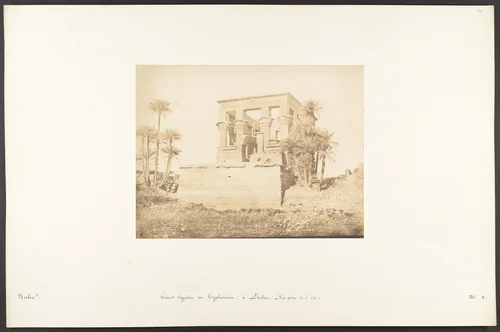
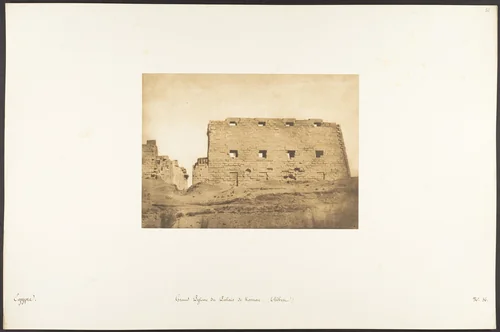
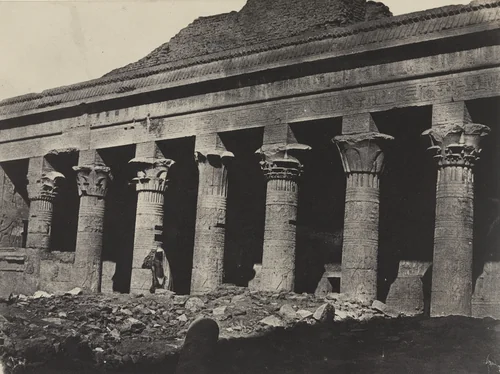
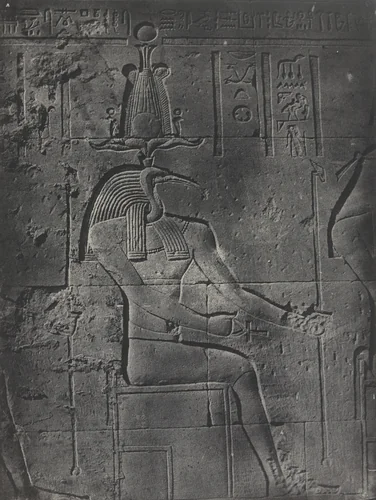
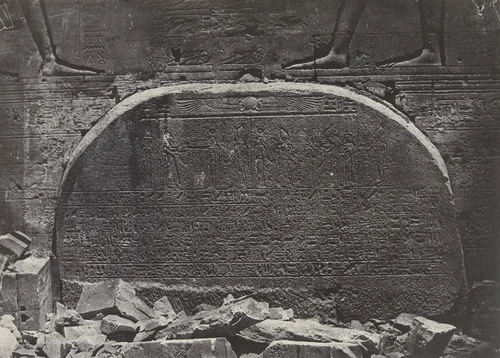
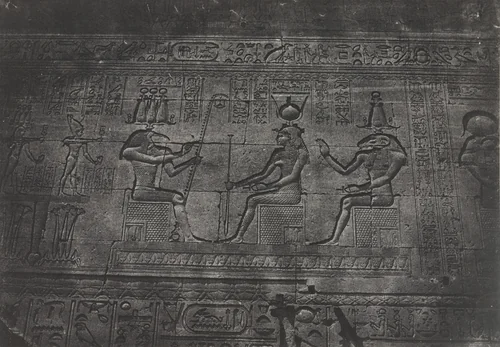
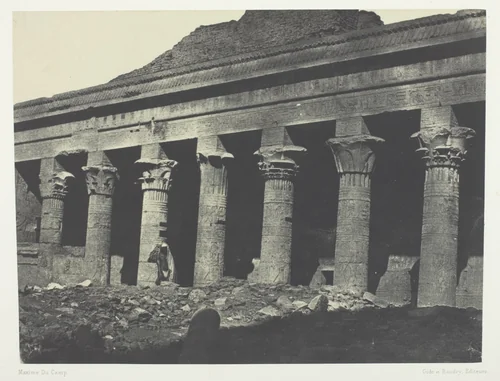
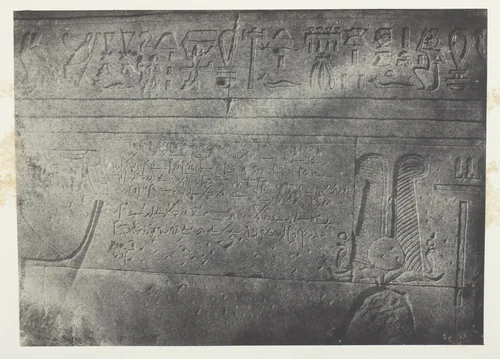
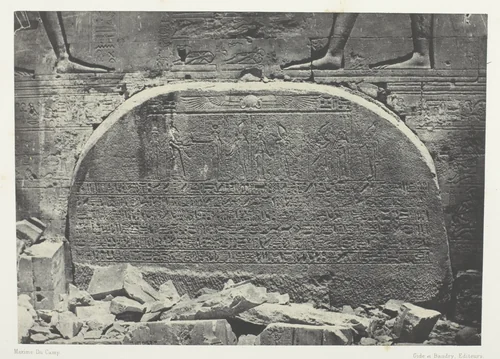
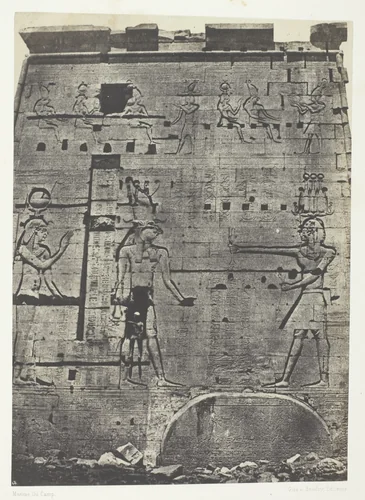
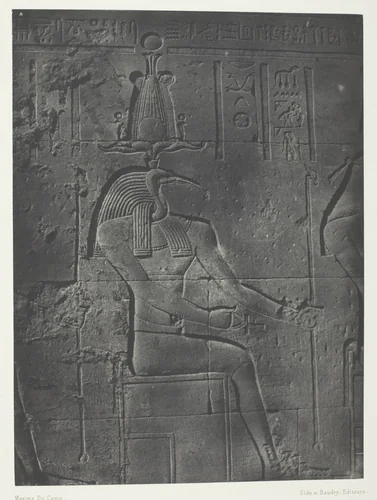
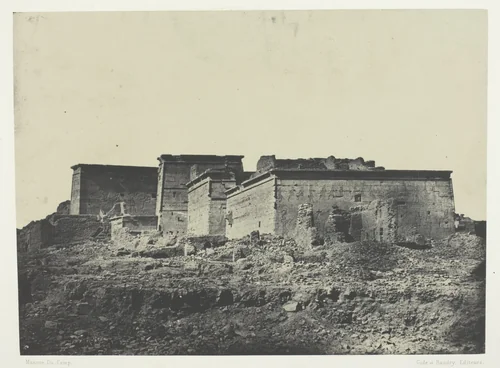
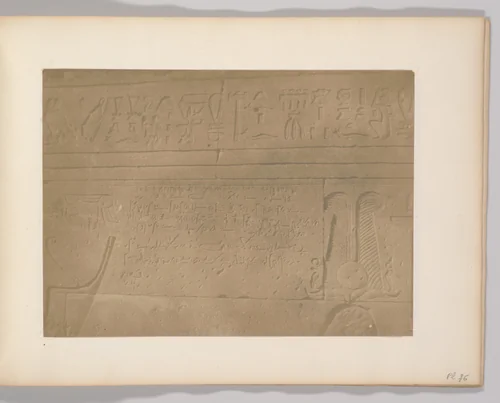
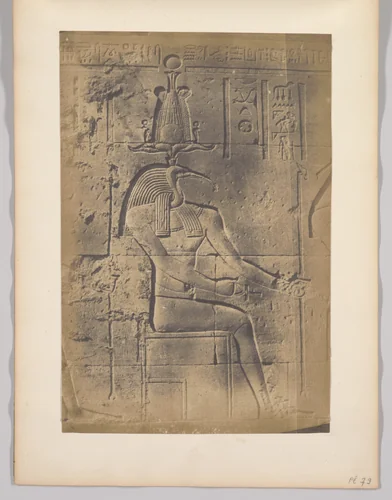
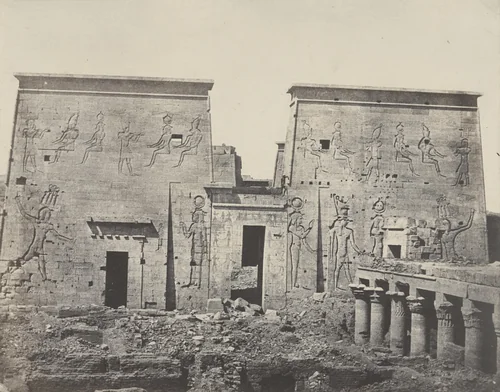
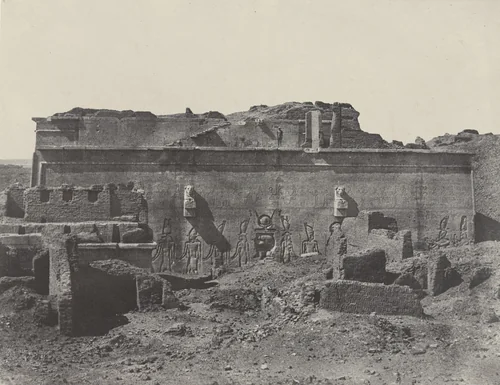
Du Camp’s lasting visual legacy stems almost entirely from the period spanning 1849 to 1851, when he embarked on an extensive journey across Egypt and the Near East, traveling alongside his friend, Gustave Flaubert. This expedition served as a vital early application of the calotype process, a technically challenging method utilizing waxed paper negatives that allowed for the subsequent production of multiple prints. The resulting images, depicting ancient ruins and early Islamic architecture, required immense physical dedication, transporting heavy chemicals and specialized equipment across arduous terrain. Du Camp’s achievement was not merely technical; it was a defining act of visual anthropology, capturing sites such as Ancienne Nécropole de Lycopolis, à Syout before extensive modern erosion or intervention.
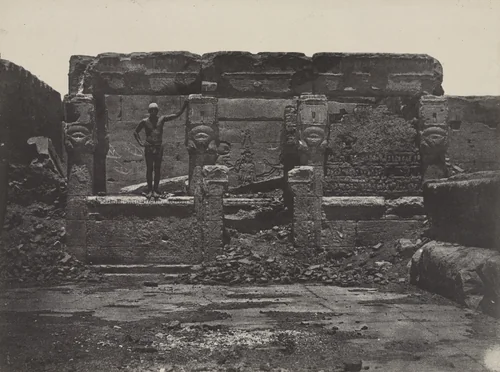
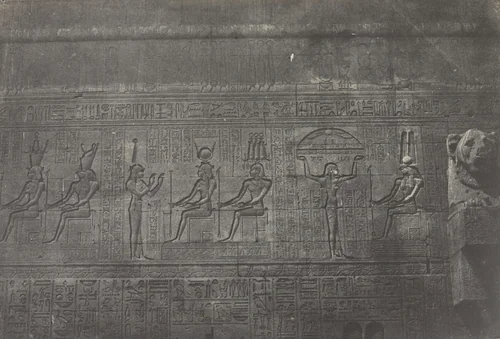
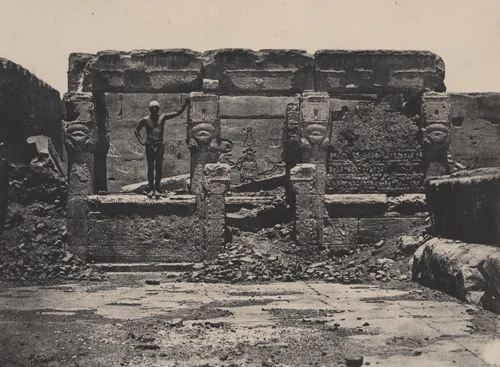
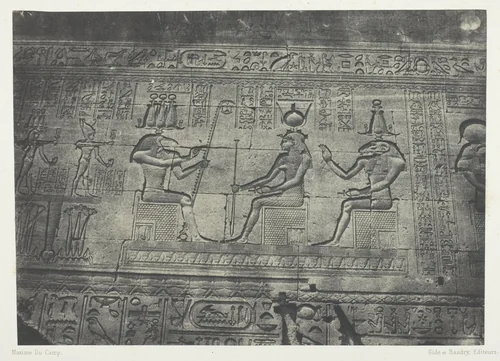
The collected documentation was published in 1852 as the monumental work, Égypte, Nubie, Palestine et Syrie, featuring 125 original salt prints that effectively cemented the artistic and historical validity of photography. Works such as Mosquée de Sultan Kansou-El-Gouri and Baalbeck (Héliopolis), Hémicycle De L'Enciente Des Temples Du Soleil Et De Jupiter; Syrie demonstrate his rigorous approach to composition and commitment to objective visual record. While subsequent photographers provided more detailed views, Du Camp’s images often possess a stark, formal stillness, lending the monumental ruins an almost spiritual permanence.
It is worth noting that Du Camp, unlike many of his contemporaries, viewed the camera as a valuable temporary instrument rather than a lifelong calling; he largely abandoned photography after 1851 to focus intensely on his literary pursuits. Despite this short duration of activity, his photographic contributions continue to be celebrated for their institutional importance. His early prints reside in major institutions globally, including the Museum of Modern Art, the Metropolitan Museum of Art, and the Art Institute of Chicago, testifying to their enduring museum-quality value. His work is now widely accessible in the public domain, allowing historians and enthusiasts worldwide to appreciate and download high-quality prints that retain the powerful historical impact of the originals.
Source: Wikipedia · CC BY-SA 4.0