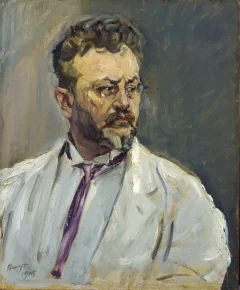
Max Slevogt
Max Slevogt (1868-1932) occupies an essential, pivotal position within German modernism, recognized as a primary exponent of Impressionism in the nation. Working alongside contemporaries Lovis Corinth and Max Liebermann, Slevogt was instrumental in establishing and defining a distinctly German approach to the plein air style. This influential triumvirate effectively shifted the focus of German painting away from rigid academic studio methods, turning instead toward the immediate, sensory capture of light, atmosphere, and subjective perception.
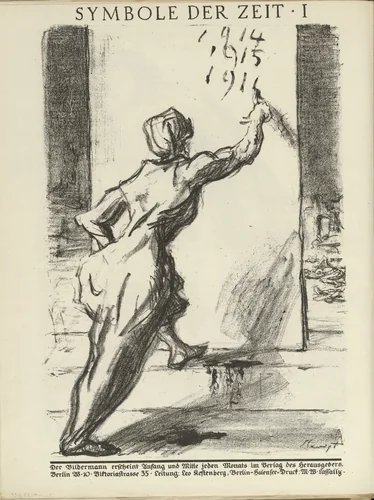
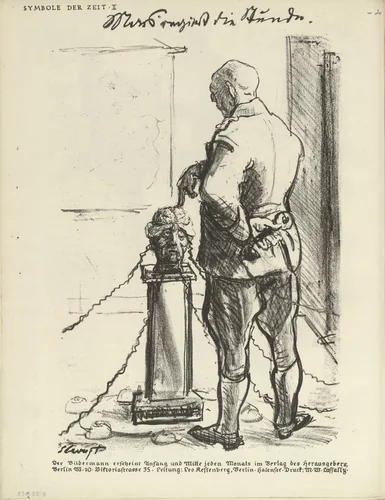
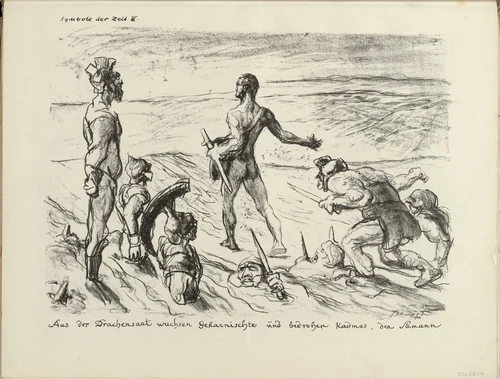
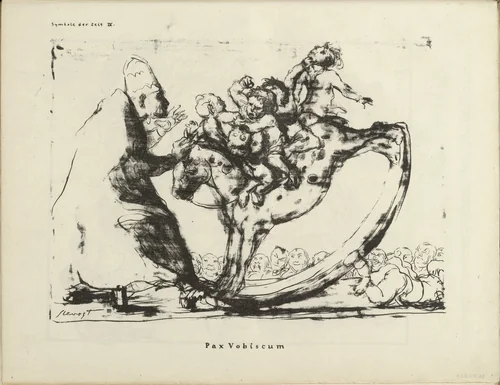
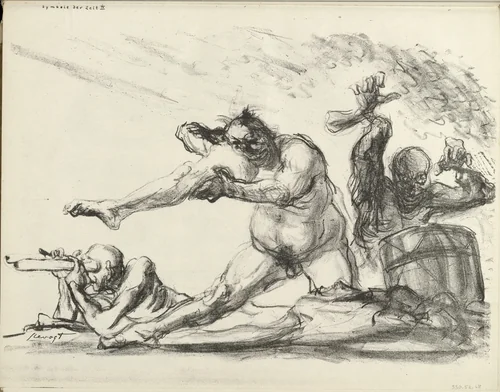
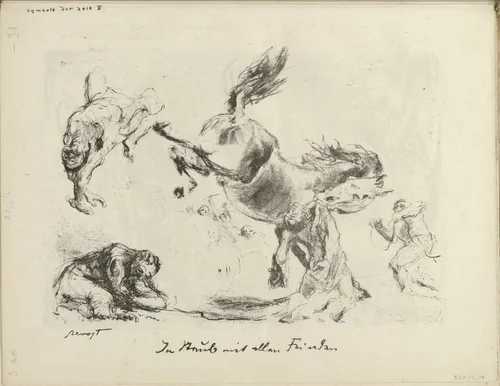
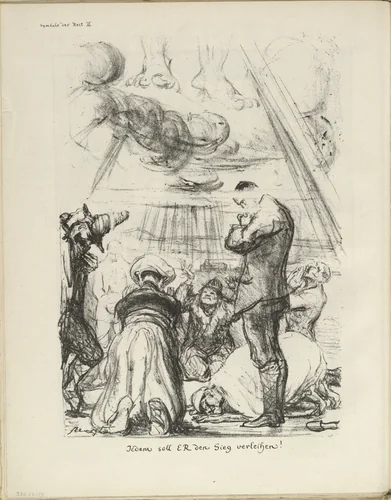
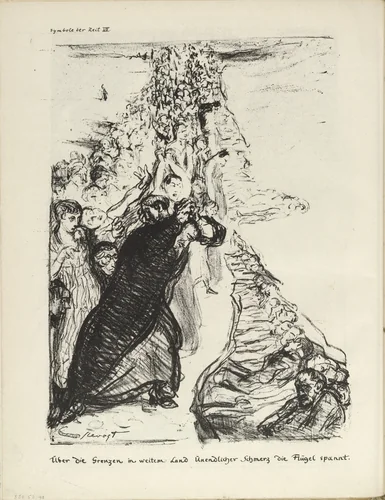
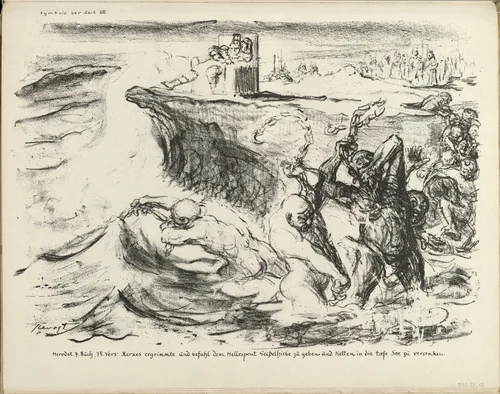
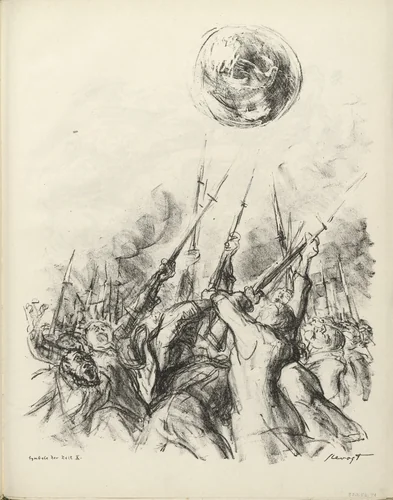
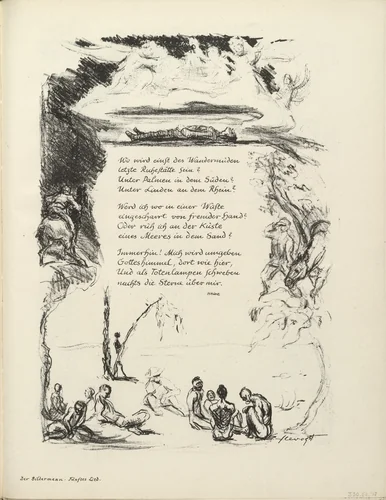
While Slevogt is often celebrated for his vibrant landscapes, his technical mastery extended equally to dynamic portraiture and the rigorous demands of graphic illustration. Unlike the pure, analytical color theories often favored by his French counterparts, Slevogt’s canvases retain a dramatic energy, frequently emphasizing movement and underlying narrative tension even in ostensibly tranquil settings. His active period, particularly documented by the prolific output of prints and illustrations from 1904 to 1916, reveals an artist deeply engaged with storytelling.
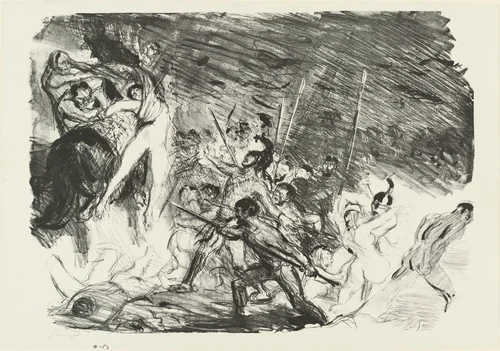
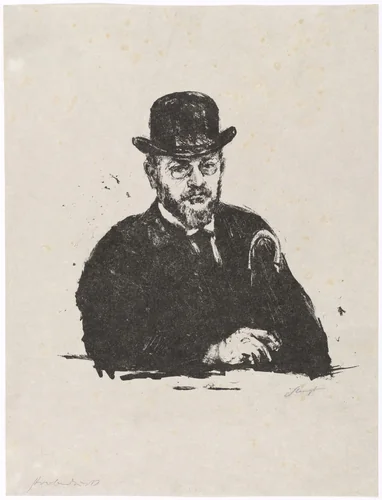
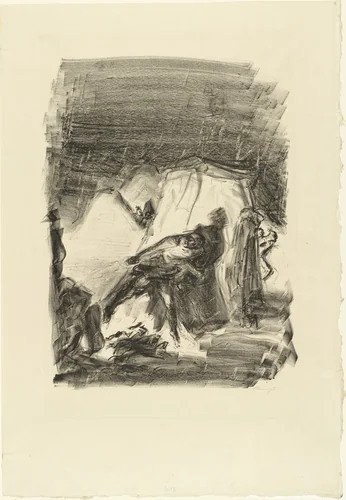
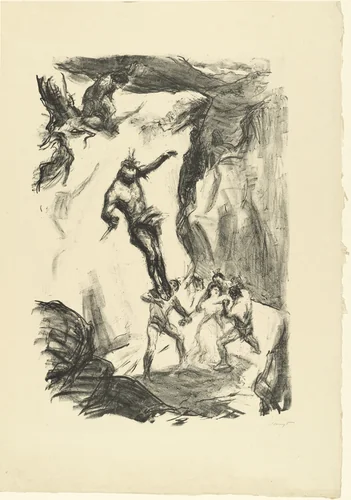
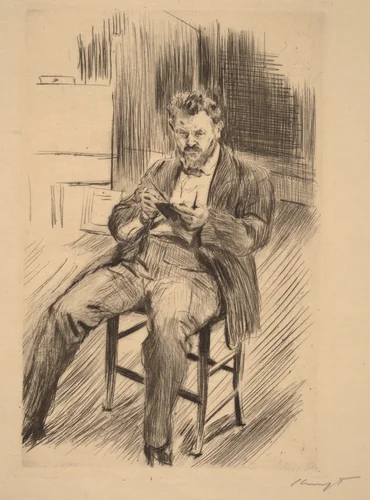
His enduring appeal is evidenced by the inclusion of his major works in significant international collections. Today, original Max Slevogt prints and illustrations are conserved in institutions such as the Museum of Modern Art and the National Gallery of Art. The versatility of his output is apparent when comparing the psychological depth of his Self-Portrait with Hat and Cane to the vigorous linearity found in his illustrations for James Fenimore Cooper’s Lederstrumpf-Erzählungen (The Leatherstocking Tales). Specific plates, such as Unca Jumps Down to Save Cora, showcase a robust graphic energy that complements the lush, fluid quality of his oil paintings. This constant interplay, where the illustrator informs the painter and vice-versa, constitutes a unique characteristic of his legacy.
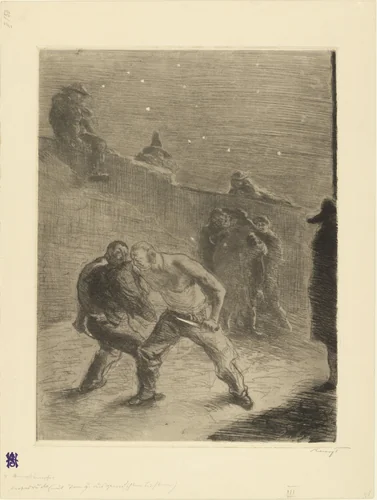
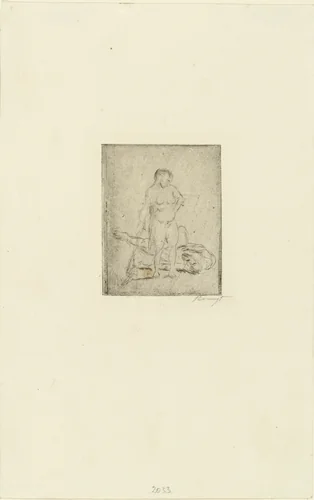
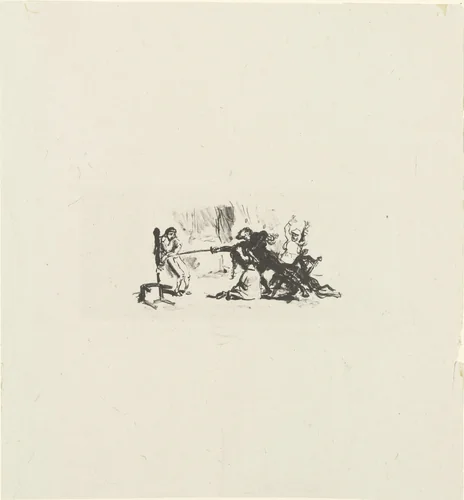
Slevogt’s skill in black and white media is further confirmed by his powerful etching Duel (Zweikampf) from the Schwarze Szenen portfolio. Due to the era in which he worked, much of Slevogt's catalogue is now categorized as public domain. Scholars, curators, and collectors seeking museum-quality reproductions can easily access high-quality prints of these key graphic works, ensuring his influential contribution to both painting and the graphic arts remains accessible for research and appreciation.
Source: Wikipedia · CC BY-SA 4.0