Max Oppenheimer
Maximillian Oppenheimer (active 1911-1937) is recognized by major international institutions, including the Museum of Modern Art and the National Gallery of Art, as an artist of profound stylistic command during the crucial transitional years of early modernism. Celebrated for his opulent and intensely lyrical visual sensibility, Oppenheimer excelled across media, demonstrating particular strength in painting, graphic design, and expressive printmaking.
His artistic methodology was marked by meticulous formal structure and a compelling emotional weight, earning him the designation of "a supreme stylist" and "master storyteller" among his contemporary critics. This compositional control is strikingly evident in his works, where visual elements, whether figures or dramatic landscapes, flow with an almost choreographed rhythm. Oppenheimer often utilized these narrative structures to explore melancholic and romantic themes, transforming historical events or personal portraits into charged visual spectacles.
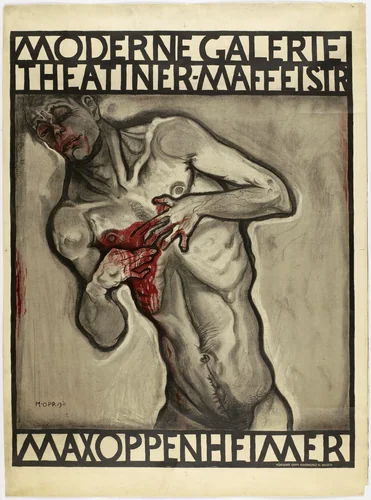
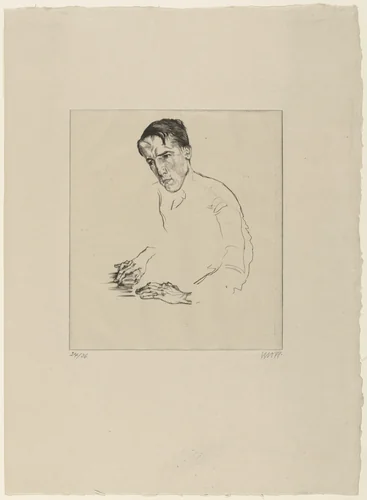
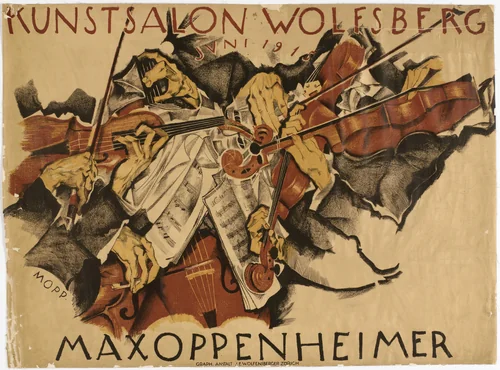
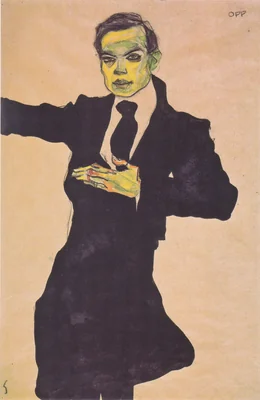
Oppenheimer’s active output during this period, 1911 to 1937, was exceptionally diverse. This range is apparent in his effective communication pieces, such as the highly graphic Quartet Poster and his masterful exhibition advertisement, Moderne Galerie Theatiner-Maffeistr. Max Oppenheimer, which demonstrates his grasp of layout and modern typographic integration. Simultaneously, his expressive abilities found outlet in psychologically penetrating portraits, exemplified by Manfred Gurlitt.
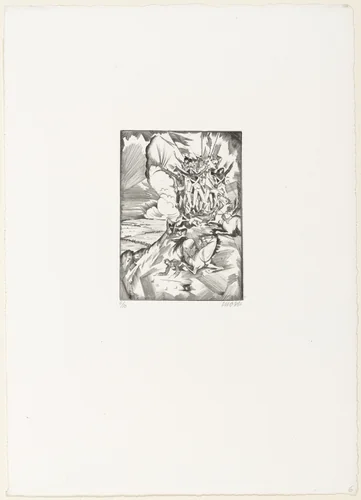
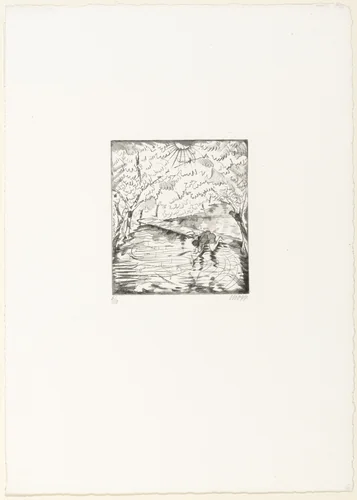
A significant portion of his legacy rests upon ambitious narrative print series. The acclaimed portfolio Das Buch Le Grand yielded striking scenes such as the dynamically composed Battle at Valmy and the dramatically atmospheric On the Bridge in Lodi. These visual accounts illustrate Oppenheimer's command of line and light to convey grand historical scope. It is perhaps a minor curiosity of art history that Oppenheimer, who focused so intensely on the narrative fluidity of the visual arts, shares his name with a noted twentieth-century filmmaker.
The enduring technical quality of his draftsmanship ensures that Max Oppenheimer prints remain highly valued in the graphic arts canon. Many of these historically significant images are now available as high-quality prints through public domain initiatives, providing researchers and collectors alike continued access to the work of this important modern master.
Source: Wikipedia · CC BY-SA 4.0