Max Fernekes
Maximillian Margius Fernekes was a distinguished American artist primarily recognized for his skilled applications of etching and watercolor. His work serves as a significant visual archive of Midwestern urban life, focusing specifically on the distinctive architecture and streetscapes of Wisconsin cities, particularly Mineral Point and Milwaukee. Fernekes’s ability to imbue these local environments with warmth and narrative clarity led critics to nickname him "the Norman Rockwell of Mineral Point and Milwaukee."
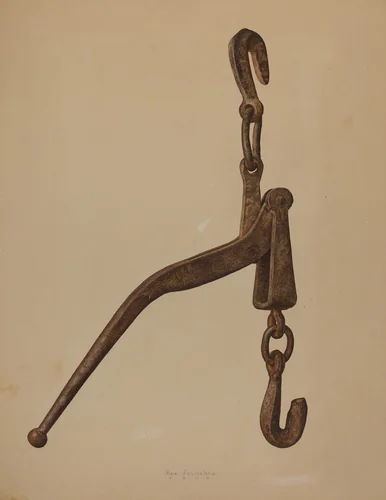
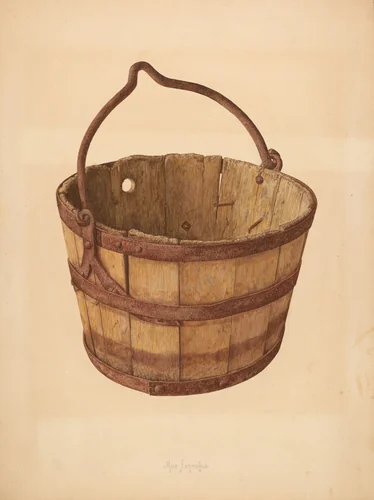
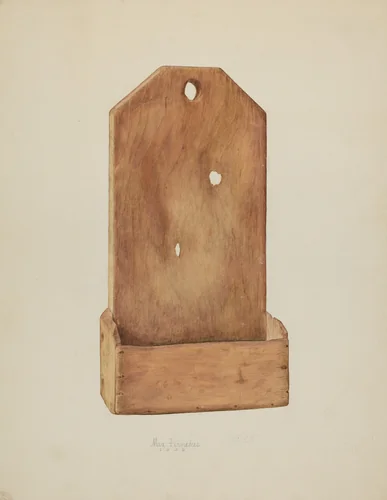
Fernekes’s meticulous draftsmanship and observational precision, while effective in capturing evocative city views, found their most rigorous application in a crucial federal undertaking. Between 1935 and 1938, he was a key contributor to the Works Progress Administration's Index of American Design (IAD), a monumental effort to record and preserve historical American decorative and folk arts through detailed renderings. During this period, Fernekes completed fifteen documented designs for the IAD, demonstrating a duality in his practice: the romantic chronicler of the cityscape also proved to be an exacting documentarian of domestic and historical objects.
His contributions to the IAD span a fascinating range of everyday artifacts, treating these objects with the seriousness usually reserved for high art. Highlights include detailed watercolors of a Doll, a Nude Doll, a period Barometer, and specific textile work like the Challis Girl's Dress and a Doll's Bed. This intensive focus on material culture resulted in documentation that set a standard for museum-quality archival work, ensuring the preservation of intricate details that might otherwise have been lost to time.
Fernekes’s legacy is secured both through his popular urban scenes, frequently sought after as Max Fernekes prints, and his foundational contributions to American cultural preservation. His work is now represented in major collections, including the National Gallery of Art. While his evocative Max Fernekes paintings continue to define regional art history, much of his IAD documentation, recognized for its precision, now resides within the public domain. This accessibility allows researchers and collectors alike to view high-quality prints of his essential visual records.
Source: Wikipedia · CC BY-SA 4.0