Mauro Gandolfi
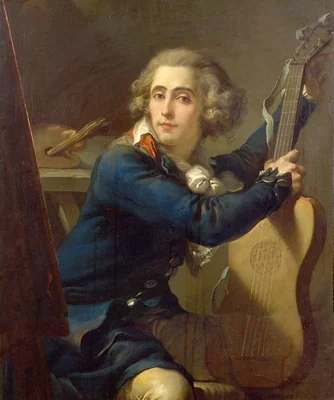
Mauro Gandolfi (1771-1826) was an essential figure within the Bolognese School, bridging the academic traditions of the late eighteenth century with emerging Neoclassical tastes. Though proficient in painting and watercolor, the Italian artist’s enduring influence rests largely upon his sophisticated output of engravings and preparatory drawings, which were critical components of the artistic education and circulation networks of his era. His works are preserved in major American institutions, confirming his significance to the graphic arts tradition.
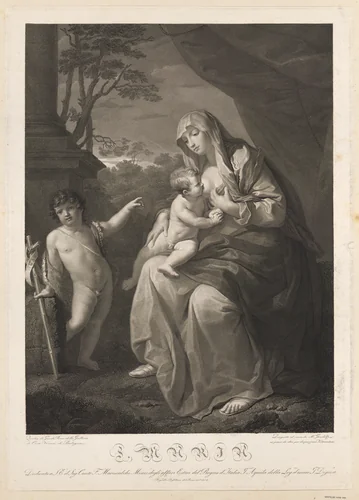
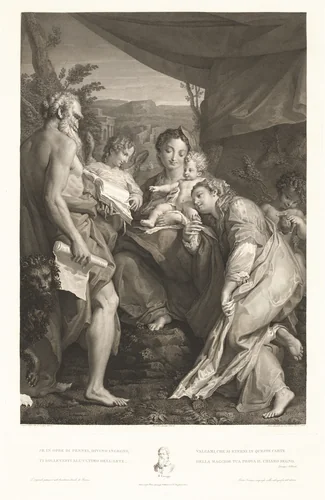
Gandolfi mastered the demanding process of reproductive printmaking, a skill essential for disseminating the aesthetics of the great masters. Works such as The Virgin suckling the infant Christ, the young Saint John the Baptist standing at left, after Reni demonstrate his meticulous ability to translate the luminosity and emotional complexity of oil painting into the precise language of line and shade. This technical precision made many of his interpretations desirable as educational examples and highly sought after as museum-quality reproductions.
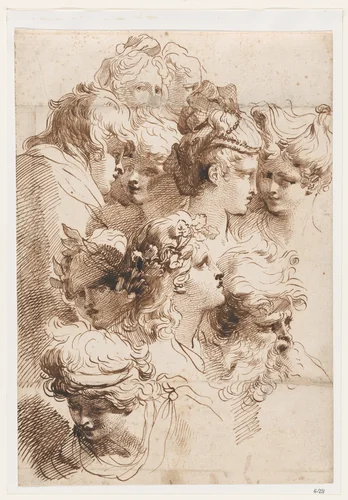
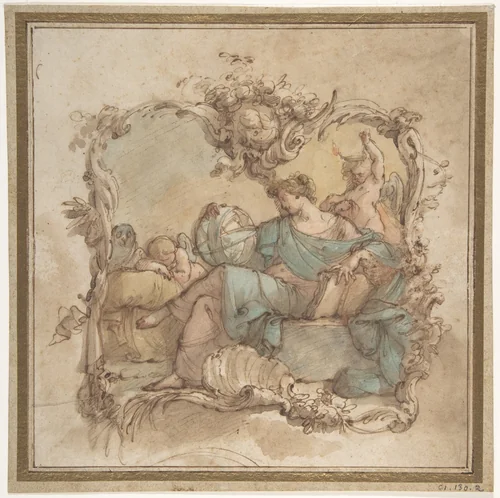
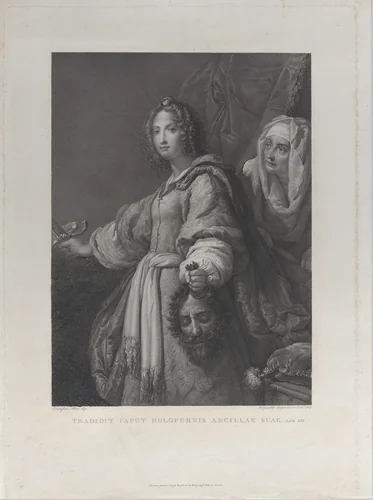
His graphic repertoire extended well beyond academic translation, encompassing complex biblical narrative, seen in the dramatic Judith holding the head of Holofernes and a sword, her maid behind her at right, and specialized allegory, such as Vignette with an Allegorical Figure of Astronomy. These narrative prints, often rendered with dramatic chiaroscuro, showcase his confident handling of historical subjects characteristic of the Bolognese sensibility. His mastery of pure drawing is evidenced by studies like A Sheet of Heads, which exemplify the rapid capture of form fundamental to the Italian academic tradition.
The unique achievement of Mauro Gandolfi prints was their utility. While they reside today in the permanent collections of institutions including the Metropolitan Museum of Art and the National Gallery of Art, these engravings were fundamentally designed for circulation. They served as primary conduits through which his generation consumed and internalized the styles of the old masters. It is perhaps the highest irony that this practical function ensures their longevity: owing to their age and essential purpose, many of these influential works are now freely available as downloadable artwork for scholarly review, ensuring their continuous relevance far beyond their original timeframe. Gandolfi’s contribution confirms his status not merely as an able copyist, but as a skilled interpreter whose graphic work shaped the visual education of the early nineteenth century.
Source: Wikipedia · CC BY-SA 4.0