Maurice Utrillo
Maurice Utrillo (1883-1955) stands as a definitive chronicler of Paris in the early 20th century, holding a distinct and important place within the expansive, diverse movement known as the School of Paris. He was primarily a specialist in cityscapes, capturing the unique essence of the urban environment during a period of intense artistic reevaluation.
Utrillo’s subject matter was rooted deeply in the topography of his childhood neighborhood, Montmartre. Unlike many of his contemporaries who arrived in the capital seeking inspiration, Utrillo possessed an intrinsic authenticity: he was one of the few celebrated artists of Montmartre to have been born directly within the quarter he so meticulously documented. This local knowledge allowed him to move beyond mere picturesque representation, lending his work a unique documentary authority.
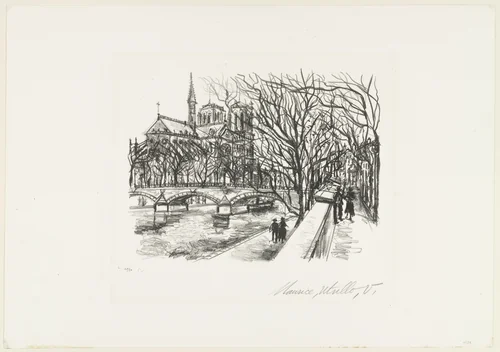
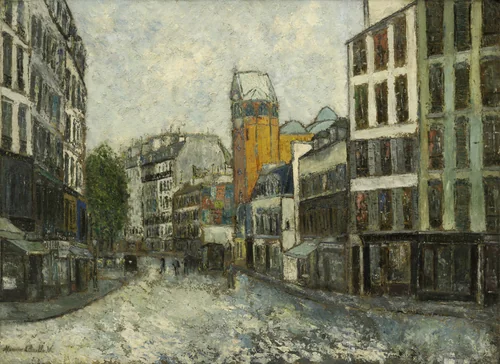
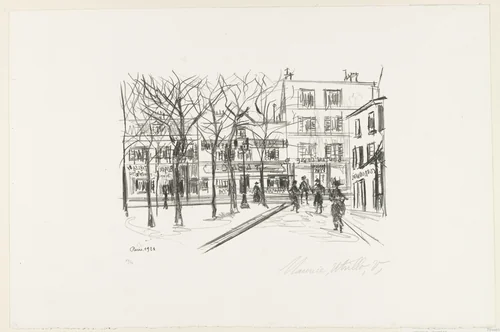
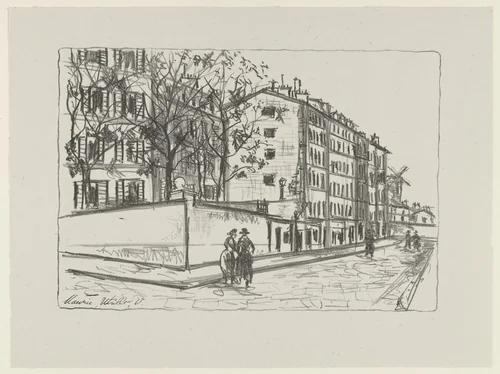
His oeuvre focuses intently on the specificities of Parisian architecture, often emphasizing the quiet dignity of seemingly empty streets, hidden courtyards, and local landmarks. His attention to detail is evident in works such as La Place du Tertre and the topographical precision seen in The Apse of Notre Dame, Paris. During his most celebrated period, his characteristic palette centered on a distinct range of muted tones and textured whites, a technique that often imbued the bustling urban spaces he captured with an unexpected, almost dreamlike silence. It is perhaps ironic that an artist whose personal life was frequently marked by public turbulence and disorder achieved such consistent structural clarity and visual stillness on the canvas.
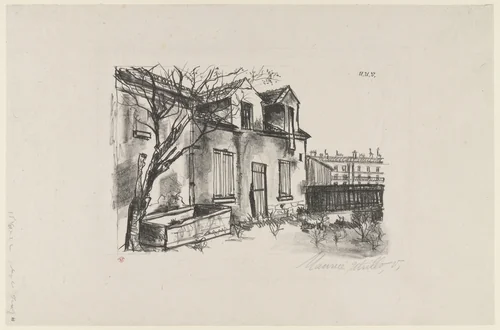
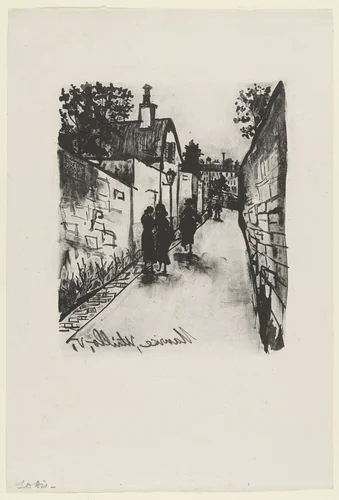
Active between 1898 and 1924, Utrillo produced a substantial output encompassing both unique Maurice Utrillo paintings and preparatory drawings later translated into prints. These compositions, including examples like Street Scene and House and Yard, resonate with both profound emotional depth and historical accuracy. They reside in major international institutions, affirming their museum-quality status, including the Museum of Modern Art in New York. The accessibility of his art continues today; many of his compositions are now available as high-quality prints, ensuring that the distinctive architecture and quiet melancholy of Utrillo’s Paris remain widely observable for contemporary audiences.
Source: Wikipedia · CC BY-SA 4.0