Matthias Pfenninger
Matthias Pfenninger is established in the history of graphic arts as a Swiss draftsman and engraver active during the mid-eighteenth century. Though his recorded activity appears tightly centered around the year 1764, the limited suite of eight known etchings confirms his skill in figure study and dynamic composition, securing his inclusion in significant institutional collections, including the Metropolitan Museum of Art.
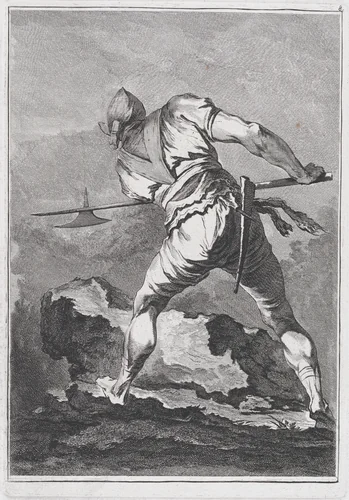
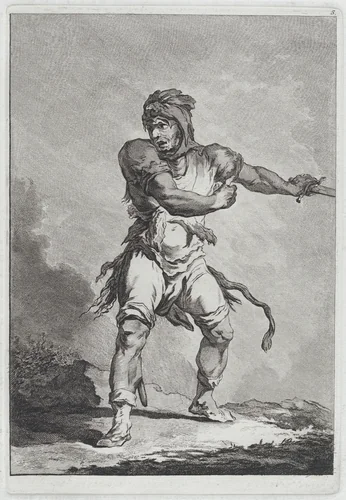
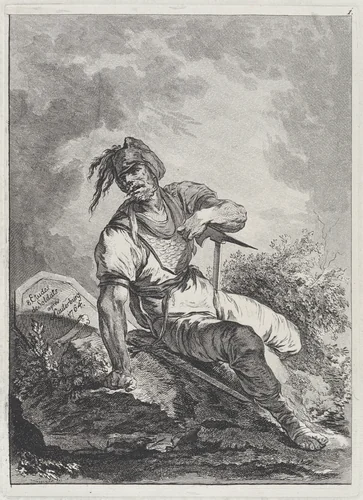
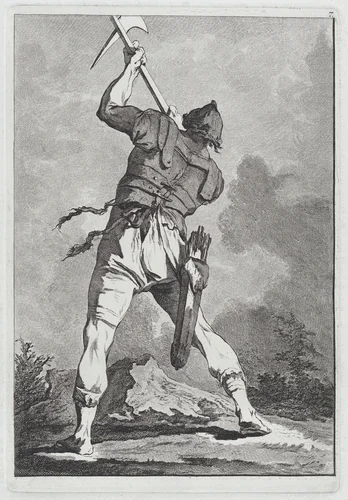
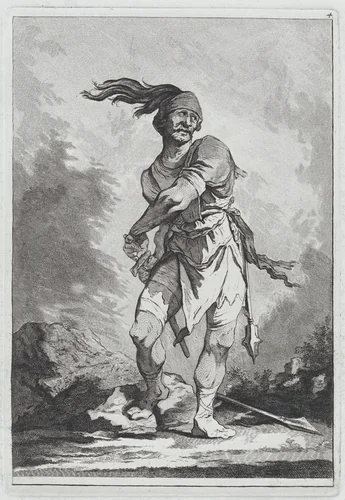
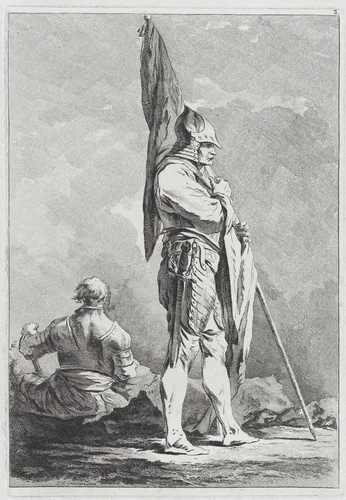
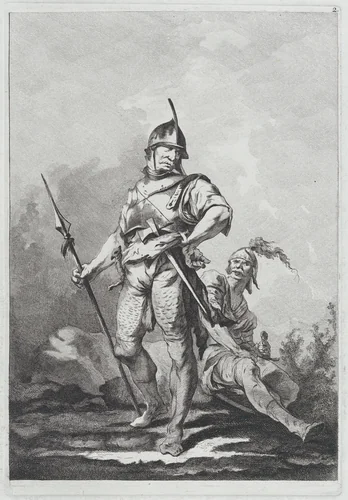
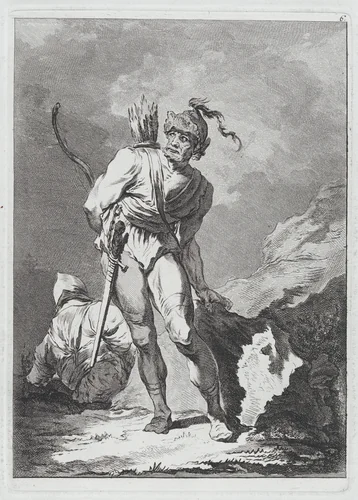
Pfenninger’s surviving oeuvre is remarkable for its narrow, intense focus: the depiction of the soldier in moments of heightened action or strained repose. His engravings are not merely illustrations of military life, but demanding explorations of human anatomy and dramatic positioning. Titles such as Lunging Soldier Seen from Behind, Soldier Wielding a Weapon, Seen from Behind, and Savage Soldier Holding a Sword attest to the artist’s preoccupation with movement, emphasizing forceful diagonal lines and the rendering of muscle tension.
The works appear to have functioned as technical exercises or instructional models for contemporary artists, providing complex examples of foreshortening. The consistent use of figures viewed from the rear, or from unusual, low angles—as seen in the detailed anatomy of Soldier Seated on a Rock—highlights an intriguing dedication to compositional challenge, often prioritizing visual dynamism over clear facial identification. This emphasis on the figure's physical engagement, rather than personality, places Pfenninger squarely within the academic tradition of studying the human form through intense physical stress.
The precise, sharp detailing characteristic of Pfenninger's work provides an invaluable record of high-quality prints from the European Rococo period. While physical examples are preserved in major museums, these technically precise studies are increasingly available as downloadable artwork today, allowing widespread scholarly access to his rigorous technique. The legacy of Matthias Pfenninger, though built on only a handful of compositions, demonstrates the enduring power of concise, focused graphic investigation during the European enlightenment.
Source: Wikipedia · CC BY-SA 4.0