Matthaeus Greuter
Matthaeus Greuter (1564-1638), known to his Italian contemporaries as Matteo Greuter, was a highly accomplished German etcher and engraver who established a significant career in Rome. Operating during the transitional period between the late Mannerist style and the developing Baroque sensibilities of the 17th century, Greuter became internationally recognized, particularly for his innovations in cartographical prints and globes.
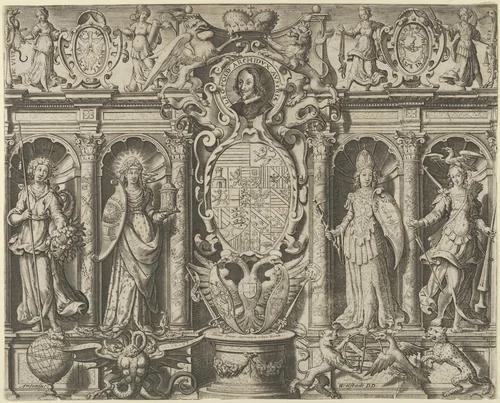
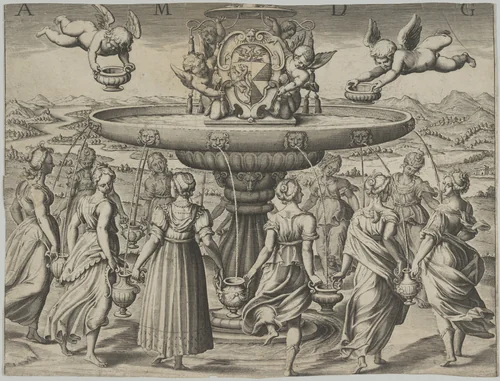
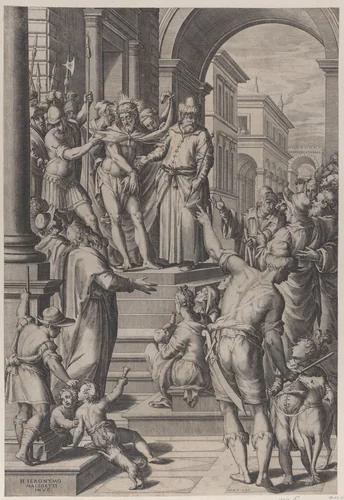
While his fame was rooted in topographical accuracy, Greuter was equally adept at handling complex political and religious allegories for elite patronage. His precision in engraving allowed him to render immense detail across varied subjects, translating high-stakes narratives into durable, reproducible works. His portfolio demonstrates a mastery of composition, encompassing grand historical events, mythical scenes, and contemporary portraiture. Notable examples include the highly detailed Allegory of Leopold V, Archduke of Austria, and the dramatic architectural staging of Christ presented to the people by Pilate, standing atop stairs at left with a crowd at right.
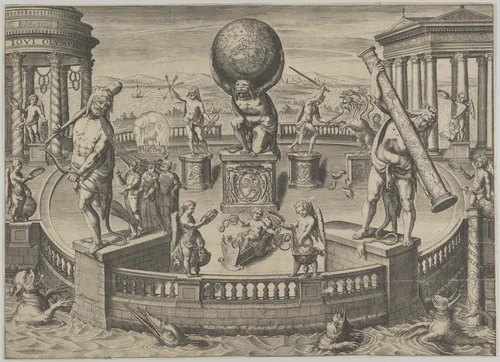
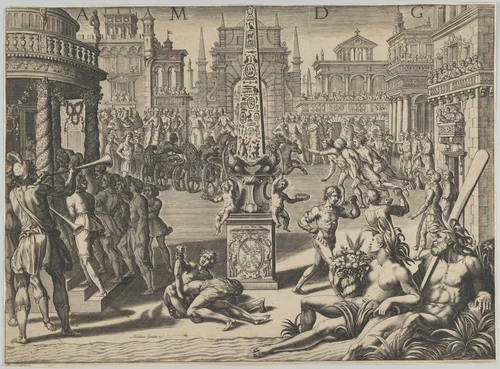
Greuter’s works frequently required the translation of complex ideas into visual metaphors, such as the elaborate Allegory of the Twelve Labors of Hercules Statues in a Circular Garden. The meticulous quality of his line work demonstrates why he secured commissions that required both technical exactitude and rhetorical flair, moving seamlessly between the high seriousness demanded by a Cardinal’s portrait and the classical dynamism of a scene like Horse Racing in a Roman Hippodrome. It is perhaps Greuter’s most distinctive attribute that he applied the same exacting, museum-quality rigor to measuring a continent as he did to illustrating the symbolic weight of political power.
His enduring influence lies in the accessibility of his medium. As a prolific printmaker, Greuter ensured his designs circulated widely across Europe, disseminating both political propaganda and classical imagery. Because of this historical reach, much of his work is now preserved in global collections, ensuring that high-quality prints derived from the original engravings are often available in the public domain for continued study and appreciation.
Source: Wikipedia · CC BY-SA 4.0