Matteo Rosselli
Matteo Rosselli (active 1578-1622) occupies a significant position in the history of Florentine painting. His long and prolific career effectively bridged the transition from the sophisticated piety of late Counter-Mannerism toward the burgeoning theatricality characteristic of the early Baroque. A dedicated practitioner, Rosselli maintained the meticulous drawing traditions inherited from the high Renaissance masters while skillfully adapting to the demands for greater emotional intensity and narrative clarity required by the new century.
Rosselli’s reputation was primarily cemented by his success in securing and executing ambitious historical commissions. Unlike many contemporaries who favored more intimate subjects, Rosselli specialized in highly populated canvases executed in the grand manner. These major works demanded rigorous compositional planning and anatomical accuracy, allowing him to weave complex mythological or religious narratives across monumental surfaces.
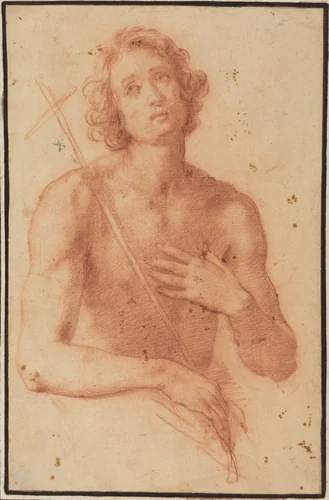
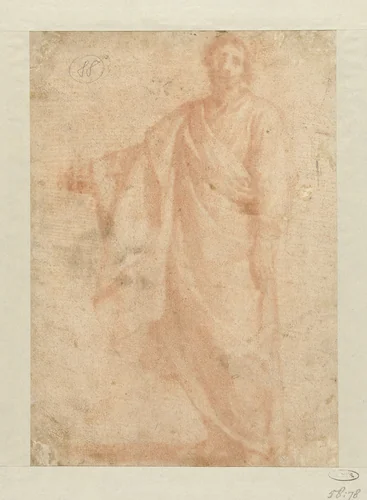
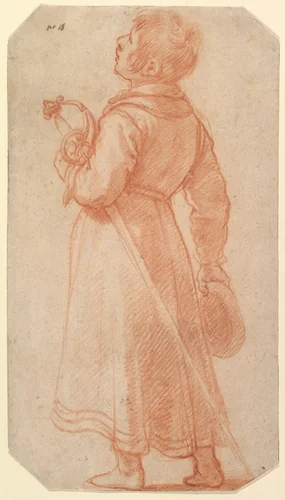
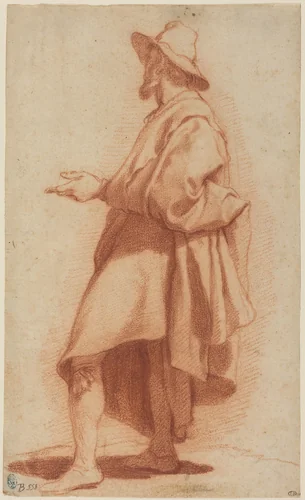
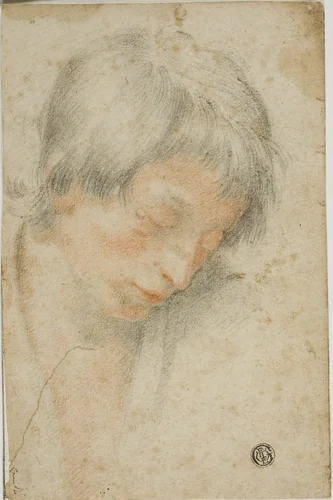
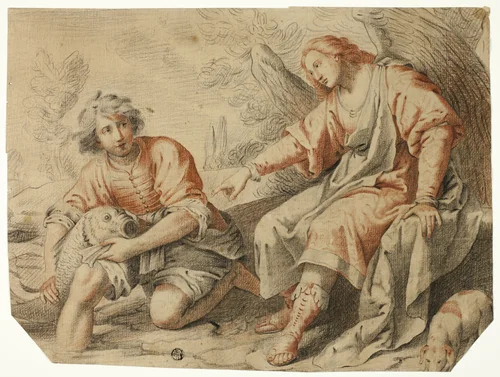
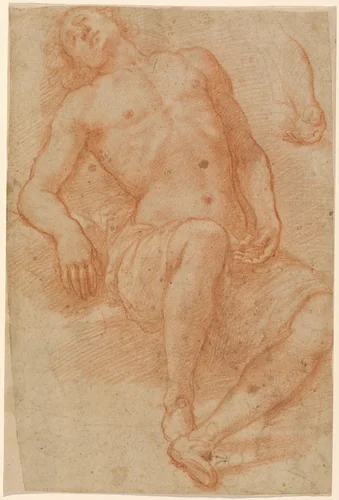
His surviving works on paper provide a crucial window into this methodological rigor. The studies he produced, such as the compelling figure works Man Playing a Lute [recto] and Saint John the Baptist, attest to his capacity for rendering light and human form with precision, ensuring that the final, expansive Matteo Rosselli paintings maintained visual coherence. Perhaps the most interesting element of his production is the contrast between the scale of his public works and the detailed characterizations found in sketches like A Young Boy Seen from Behind, holding a sword and cap, where a single figure study often possesses the weight of a finished portrait.
Rosselli’s sustained impact ensured that the legacy of Florentine draftsmanship was passed on intact. He operated a highly successful and influential studio that served as a training ground for subsequent generations of artists. Today, his oeuvre is globally accessible, housed in major institutions including the Rijksmuseum, the National Gallery of Art, and the Art Institute of Chicago. Though many original canvases remain within institutional walls, the underlying preparatory drawings, frequently found in the public domain, provide museum-quality insight into his process, making high-quality prints readily available to contemporary admirers.
Source: Wikipedia · CC BY-SA 4.0
![Man Leaning on a Rail [verso] by Matteo Rosselli, drawing, 1578-1650](https://img.artbee.org/3a6763fc-a541-415c-b034-2a4bb5ac8b06/small.webp)
![Man Playing a Lute [recto] by Matteo Rosselli, drawing, 1578-1650](https://img.artbee.org/abd1748b-48e9-49f6-b29e-552a77e01918/small.webp)